

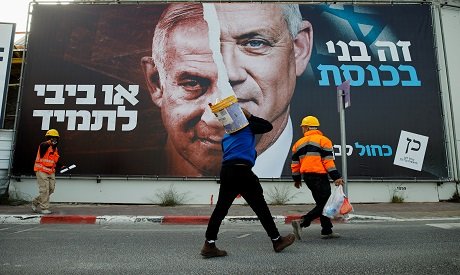
Introduction to Israeli Political Landscape
The Israeli political landscape is characterized by a complex interplay of ideologies, parties, and leaders, making it both dynamic and often contentious. At the forefront of this political arena are two prominent figures: Prime Minister Benjamin Netanyahu and opposition leader Yair Lapid. Each represents a distinct vision for Israel’s future, particularly concerning its role and standing in the Middle East. Netanyahu, long associated with the Likud party, advocates for a hardline approach to security, which has been shaped by his longstanding tenure in office. His policies often emphasize military strength, settlements in disputed territories, and a cautious approach to peace negotiations.
Conversely, Yair Lapid, leader of the Yesh Atid party, embodies a more centrist stance, advocating for diplomatic engagement and addressing socio-economic issues within Israel. Lapid’s approach often resonates with those who seek a balance between maintaining security and pursuing peaceful coexistence with neighboring states. The contrasting visions of these two leaders significantly impact not only their respective voter bases but also the broader geopolitical dynamics in the region.
This polarization in Israeli politics is not just internal; it reflects wider global trends and influences that shape the political framework. The rise of populism, shifting alliances, and external pressures from international actors have contributed to this fractious political climate, which can have profound implications for Israel’s future in a volatile Middle East. The increasing division among political factions hints at a transformative period for Israeli governance, further complicating important policy discussions surrounding security, peace, and social justice. Understanding these dynamics is crucial for anticipating the potential paths forward as Israel navigates its future under starkly differing leadership approaches.
Netanyahu’s Right-Wing Nationalist Vision
Benjamin Netanyahu’s political philosophy is deeply rooted in a right-wing nationalist ideology, characterized by a profound emphasis on national security and an often skeptical stance towards peace negotiations with the Palestinians. Since taking office, Netanyahu has prioritized the security of Israel, arguing that a strong military and defense posture are essential to deter threats from neighboring countries and militant groups. This unwavering focus on security has resonated with many Israeli voters, especially in times of increased regional tensions.
Netanyahu’s approach to peace negotiations has been marked by considerable skepticism, with a significant portion of his tenure devoted to reframing the discourse around these discussions. By expressing doubts about the viability of a two-state solution, he has garnered support from right-leaning factions within Israeli society, who view such negotiations as detrimental to national interests. This skepticism has resulted in a hardening of attitudes towards Palestinians and has affected Israel’s international standing, particularly among Western allies who advocate for a diplomatic resolution.
Controversies surrounding Netanyahu’s administration have also impacted his political legacy. His government has faced numerous corruption allegations, which have sparked widespread protests and public discontent. These legal challenges have not only cast a shadow over his leadership but also raised questions about accountability and governance in Israel. Furthermore, Netanyahu’s hardline policies have contributed to deepening societal divisions, with critics arguing that they foster an atmosphere of hostility towards Arab citizens and undermine democratic principles.
The implications of Netanyahu’s vision extend beyond domestic politics, shaping Israel’s foreign relationships and interactions in the Middle East. His administration’s policies have led to both increased diplomatic isolation and stronger ties with certain allies, particularly in the United States. Ultimately, Netanyahu’s right-wing nationalist vision continues to play a pivotal role in defining Israel’s national identity and its future trajectory in the complex geopolitical landscape of the region.
Lapid’s Centrist Approach and Vision for Cooperation
Yair Lapid, leader of the Yesh Atid party, represents a centrist vision that emphasizes democratic values and regional cooperation, distinguishing himself in the political landscape of Israel. His commitment to fostering a unified and inclusive society resonates with many citizens who yearn for a departure from the political extremes that often dominate debates. Lapid’s approach seeks to bridge divides by advocating for dialogue and collaboration among political factions, aiming to create a stable and constructive governance framework.
In addressing the complex issue of peace with the Palestinians, Lapid has consistently championed diplomacy as the primary means to achieve a sustainable resolution. He believes that meaningful engagement, rather than unilateral actions, is essential for moving towards coexistence. Lapid’s vision includes not just negotiations, but also fostering grassroots relationships that pave the way for mutual respect and understanding. By promoting dialogue, he hopes to diminish the prevailing mistrust that has historically hindered peace efforts.
Lapid’s stance extends to combating extremist elements within Israel’s political sphere, which he perceives as detrimental to the democratic fabric of the nation. He advocates for a balanced approach that prioritizes security while paving the way for peace initiatives. In support of this vision, Lapid views the expansion of the Abraham Accords as pivotal for enhancing Israel’s relations with its Arab neighbors. By strengthening ties through economic cooperation and cultural exchange, he envisions a broader regional accord that could contribute to stability and prosperity in the Middle East.
In his efforts to promote a centrist agenda, Lapid underscores the importance of unity in addressing national challenges. By striving for cooperation across party lines, he aims to cultivate an environment where diverse voices contribute to the welfare of the state, fostering both democratic integrity and regional harmony.
The Future of Israel: Challenges and Opportunities
As Israel navigates the complexities of its geopolitical landscape, the contrasting visions of Prime Minister Benjamin Netanyahu and former Finance Minister Yair Lapid emerge as pivotal influences on its future. Each leader presents unique strategies to address the nation’s pressing challenges, which range from internal divisions to external security threats.
Internal divisions pose a significant challenge for Israel. The political arena is marked by stark ideological differences, which can hinder effective governance and consensus-building. Netanyahu’s vision leans towards a hawkish stance, often emphasizing security and territorial integrity, while Lapid advocates for diplomacy and inclusiveness. As the nation confronts rising social fragmentation, the ability of either leader to unify the diverse Israeli population will be crucial in determining its future stability.
Security concerns remain at the forefront of Israel’s priorities. Ongoing conflicts with neighboring entities and threats from non-state actors necessitate a robust defense strategy. Netanyahu’s historical focus on military strength and defense spending contrasts with Lapid’s aim to bolster diplomatic ties through international cooperation. The balance between maintaining a formidable defense and pursuing peaceful relations will significantly shape Israel’s security landscape.
Furthermore, international expectations are becoming increasingly influential in Israel’s policy decisions. The call for peace initiatives and resolution of long-standing conflicts in the region pressures Israeli leadership to adopt strategies that may not only prioritize national security but also comply with global diplomatic norms. Both leaders’ approaches reflect different methodologies in meeting these expectations, but the challenge remains: how can Israel maintain its sovereignty while fostering relationships that may lead to regional stability?
Therein lies the opportunity for Israel to redefine its place in the Middle East. Investing in peace initiatives, addressing domestic grievances, and fostering international partnerships could pave the way for a new era of stability. The differing paths of Netanyahu and Lapid, encompassing both immediate and long-term strategies, will ultimately influence not just Israel’s domestic landscape but also its role on the global stage in the years to come.
Frequently Asked Questions
I cling on to listening to the newscast speak about receiving free online grant applications so I have been looking around for the most excellent site to get one. Could you advise me please, where could i find some?


I simply could not leave your website before suggesting that I extremely loved the standard information a person provide for your visitors? Is gonna be again continuously to check up on new posts.
It’s in reality a nice and useful piece of info. I am happy that you shared this useful info with us. Please keep us informed like this. Thanks for sharing.
Hi there, just became alert to your blog through Google, and found that it’s truly informative. I’m gonna watch out for brussels. I’ll appreciate if you continue this in future. Many people will be benefited from your writing. Cheers!
I loved as much as you will receive carried out right here. The sketch is attractive, your authored subject matter stylish. nonetheless, you command get bought an impatience over that you wish be delivering the following. unwell unquestionably come more formerly again as exactly the same nearly a lot often inside case you shield this hike.
It?¦s really a nice and useful piece of information. I?¦m satisfied that you simply shared this useful info with us. Please stay us informed like this. Thanks for sharing.
Heya! I’m at work surfing around your blog from my new iphone 3gs! Just wanted to say I love reading through your blog and look forward to all your posts! Carry on the superb work!
Great post. I was checking continuously this blog and I am impressed! Very helpful information specially the last part 🙂 I care for such information much. I was seeking this particular info for a very long time. Thank you and good luck.
Your style is so unique compared to many other people. Thank you for publishing when you have the opportunity,Guess I will just make this bookmarked.2
Wow, superb weblog layout! How lengthy have you ever been blogging for? you make running a blog look easy. The full glance of your site is fantastic, let alone the content material!
I’ve been absent for some time, but now I remember why I used to love this site. Thanks , I will try and check back more often. How frequently you update your site?
Some truly prize blog posts on this internet site, saved to my bookmarks.
Hello.This article was really fascinating, especially because I was browsing for thoughts on this topic last Thursday.
Its excellent as your other content : D, regards for putting up.
Undeniably believe that which you stated. Your favorite justification seemed to be on the web the simplest thing to be aware of. I say to you, I certainly get irked while people consider worries that they just don’t know about. You managed to hit the nail upon the top as well as defined out the whole thing without having side-effects , people can take a signal. Will probably be back to get more. Thanks
Very interesting subject , regards for putting up.
I do love the manner in which you have framed this concern plus it really does give us some fodder for consideration. However, through what I have observed, I just simply hope when the feed-back pile on that men and women keep on issue and don’t get started on a soap box of some other news of the day. All the same, thank you for this superb piece and although I do not necessarily agree with this in totality, I regard your point of view.
Perfectly indited content, Really enjoyed looking through.
I believe this site holds some real excellent information for everyone :D. “Nothing great was ever achieved without enthusiasm.” by Ralph Waldo Emerson.
You got a very fantastic website, Glad I detected it through yahoo.
I got what you mean , thankyou for posting.Woh I am glad to find this website through google. “If one does not know to which port one is sailing, no wind is favorable.” by Seneca.
I was curious if you ever considered changing the layout of your website? Its very well written; I love what youve got to say. But maybe you could a little more in the way of content so people could connect with it better. Youve got an awful lot of text for only having 1 or two images. Maybe you could space it out better?
Can I just say what a relief to find someone who actually knows what theyre talking about on the internet. You definitely know how to bring an issue to light and make it important. More people need to read this and understand this side of the story. I cant believe youre not more popular because you definitely have the gift.
I discovered your weblog website on google and examine a number of of your early posts. Proceed to keep up the excellent operate. I simply further up your RSS feed to my MSN Information Reader. Searching for ahead to studying extra from you later on!…
Wow, incredible blog layout! How long have you been blogging for? you made blogging look easy. The overall look of your website is fantastic, let alone the content!
Hi, Neat post. There is a problem with your site in internet explorer, could test this… IE nonetheless is the market leader and a huge section of folks will miss your fantastic writing due to this problem.
Very interesting subject, thankyou for putting up. “The height of cleverness is to be able to conceal it.” by Francois de La Rochefoucauld.
Hi there would you mind letting me know which hosting company you’re utilizing? I’ve loaded your blog in 3 different internet browsers and I must say this blog loads a lot faster then most. Can you recommend a good hosting provider at a fair price? Thanks, I appreciate it!
Wonderful website. A lot of helpful info here. I?¦m sending it to several friends ans additionally sharing in delicious. And certainly, thank you to your effort!
Way cool, some valid points! I appreciate you making this article available, the rest of the site is also high quality. Have a fun.
I cling on to listening to the newscast speak about receiving free online grant applications so I have been looking around for the most excellent site to get one. Could you advise me please, where could i find some?