






















Understanding Parliamentary Democracy in Albania
Parliamentary democracy in Albania is grounded in the principles of political pluralism, accountability, and the rule of law. Following the drastic changes that accompanied the fall of communism in the early 1990s, Albania embarked on a transformative journey towards establishing a democratic governance structure. This shift laid the foundations for a competitive electoral system that aims to ensure that various political parties can vie for power in a fair manner, contributing to a vibrant political landscape.
The core function of a parliamentary democracy is to foster an environment where elected representatives can express the will of the people, creating a direct line of accountability between the government and its citizens. In an ideal framework, the parliament, as the legislative body, plays a crucial role in deliberating policies, enacting laws, and overseeing the executive branch. The structure is designed to encourage dialogue, compromise, and transparency, essential elements for effective governance.
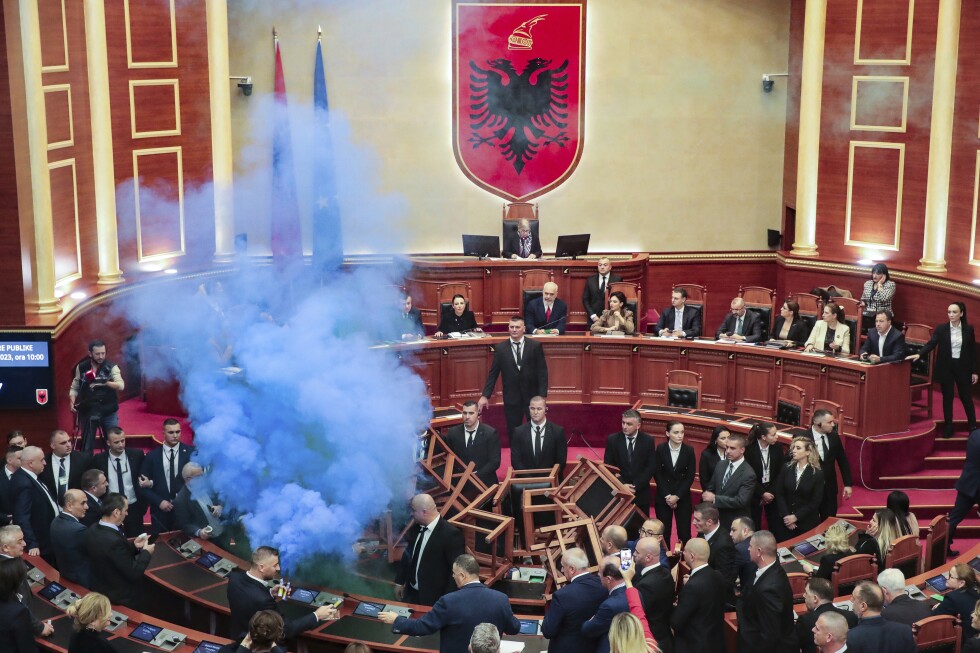
However, the historical trajectory of Albania post-communism reveals a complex interplay between aspirations for democracy and the realities on the ground. Despite having established institutions intended to facilitate democratic processes, the country has faced several challenges that have undermined parliamentary integrity and functionality. Various political crises, instances of electoral manipulation, and marginalization of opposition voices have periodically raised questions regarding the health of its democratic fabric. The systemic issues faced by opposition parties have further exacerbated the situation, leading to a state where dissent is often sidelined.
Understanding the nuances of Albania’s parliamentary democracy is critical for assessing the current political climate and the ongoing struggles faced by the opposition. The need for reform and commitment to democratic principles persists as Albania continues to navigate the complexities of governance within a historically troubled context.
Transitioning from Competitiveness to Dominance
The political landscape in Albania has undergone significant transformation in recent years, transitioning from a competitive parliamentary system to what appears to be a dominant-party model. Under the leadership of Prime Minister Edi Rama and the Socialist Party, there has been a noticeable centralization of power that has gradually eroded the foundational elements of democracy within the country. This shift raises alarms regarding the health of Albania’s parliamentary democracy and its commitment to pluralism.
One of the most concerning developments has been the alteration of legislative procedures that favor the ruling coalition. The government has implemented various measures that dilute the effectiveness of parliamentary checks and balances, thus enabling it to push through controversial laws with diminished opposition. For instance, amendments to electoral laws have facilitated the concentration of electoral advantages, effectively sidelining opposition parties and restricting their ability to compete meaningfully.
Moreover, the systematic use of state resources for political gain has further entrenched this dominance. The government’s manipulation of media narratives and control over public information allows it to maintain a favorable image while discrediting dissenting voices. There have been instances where key political figures within the opposition have faced harassment and intimidation, thereby fostering a climate of fear that stifles open debate and diminishes the role of dissent in legislative processes.
As this dominant-party system consolidates its grip, the implications for democratic governance in Albania are profound. The erosion of competitive politics not only undermines the principles of parliamentary democracy but also raises questions about the future of political diversity in the country. Such conditions risk establishing a precedent where governance becomes synonymous with control, rather than accountability, fundamentally altering the role of the parliament and sidelining alternative viewpoints in national discourse.
Effects of Majoritarianism on Democratic Institutions
In the contemporary political landscape of Albania, majoritarianism has emerged as a significant threat to democratic institutions. The ruling majority often uses its numerical superiority in parliament to assert dominance, which can undermine the foundational principles of democracy. This phenomenon transforms parliament into a mechanism that serves the interests of the executive power rather than functioning as a platform for substantive debate and democratic discourse.
The prioritization of quantitative representation over qualitative engagement leads to several detrimental effects. Firstly, the ruling party’s ability to pass legislation without meaningful opposition diminishes the role of lawmakers who represent different viewpoints and interests. This marginalization of dissent restricts the diversity of opinions that are essential to a robust parliamentary system and erodes the checks and balances integral to democratic governance.
Moreover, the implications of such a shift extend beyond legislative proceedings. The weakening of parliamentary authority can have profound repercussions for civil society and minority rights. When the majority’s voice becomes overwhelmingly dominant, there are fewer opportunities for minority groups to have their concerns addressed or to influence policy decision-making. This systemic marginalization fosters a climate where political opposition is not only discouraged but also silenced, leading to a further entrenchment of authoritarian practices.
As the ruling party consolidates power, it compromises the integrity of democratic frameworks, making it increasingly difficult for civic engagement and political plurality to thrive. The resulting landscape reflects a disconnection between citizens and their representatives, reinforcing the perception that governance is an exclusive domain reserved for the majority, rather than a shared responsibility among all political factions. Such a scenario poses a considerable challenge for fostering a healthy democracy in Albania, necessitating urgent attention and reform.
The Rise of Electoral Authoritarianism
The phenomenon of electoral authoritarianism represents a political condition where rulers maintain a veneer of democracy while systematically undermining genuine pluralism. In the Albanian context, this concept becomes particularly salient as the country grapples with the erosion of democratic processes. Formal electoral mechanisms exist; however, they frequently fail to translate into a meaningful representation of opposition voices. This highlights a troubling trend where the ruling party consolidates power, effectively marginalizing opposition parties and limiting their ability to function as constitutional actors.
The landscape of Albanian politics has increasingly demonstrated characteristics typical of electoral authoritarianism. Elections, while regularly held, have been marred by accusations of manipulation, intimidation, and the use of state resources to benefit the ruling party. Consequently, the opposition finds itself in a precarious position, struggling to engage in a political process that is ostensibly democratic but increasingly skewed in favor of those in power.
As the ruling party intensifies its control, the risk of entrenching authoritarian practices under the guise of legality escalates. Legislative processes that ought to reflect a balance of power have been co-opted, reflecting the interests of the ruling elite rather than the broader population. This dynamic fosters a governance framework that is neither truly democratic nor representative, leading to apathy among citizens and diminishing their trust in the electoral process.
Ultimately, the entrenchment of electoral authoritarianism in Albania illustrates a critical juncture for both the opposition and democratic integrity. The ongoing marginalization of dissent not only threatens the fundamental principles of democracy but poses grave risks to the country’s political future and social stability.