


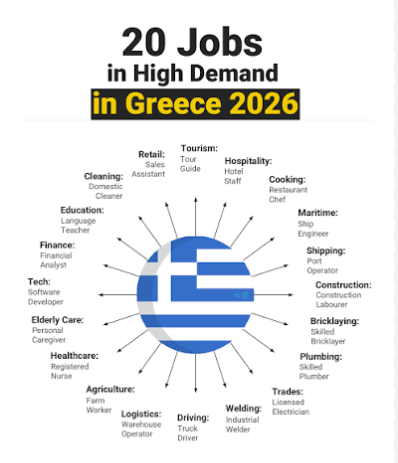
Overview of Unemployment Trends
As of June 2026, the unemployment landscape in Greece exhibits significant variations, marked by a gradual improvement compared to previous years. The Hellenic Statistical Authority reported a noteworthy decrease in the unemployment rate, offering a clearer perspective on the labor market dynamics. When comparing the figures from June 2025, it is evident that the consistently high unemployment rates have begun to stabilize, fostering a more positive outlook for job seekers. Specifically, the unemployment rate as of May 2026 showed a slight decline, setting the stage for continued progress into the summer months.
The analysis of unemployment rates highlights a continuous decrease, reflecting the impact of various governmental policies aimed at stimulating economic growth and job creation. Between June 2025 and June 2026, the unemployment rate fell by approximately 1.5%, a trend that signals an improving economy and increased private sector engagement. This reduction is particularly noteworthy against the backdrop of the previously challenging conditions faced in post-2010 Greece. The measures implemented by the government, including training programs and incentives for businesses to hire, have started to bear fruit.
In an effort to provide a clearer context, it is important to note that the youth unemployment rate, which has historically been a pressing issue in Greece, shows signs of improvement as well. Initiatives targeting young individuals entering the workforce are increasingly contributing to the gradual decline in overall unemployment figures. Despite these positive trends, challenges remain, particularly in regions where unemployment rates continue to be disproportionately high. The labor market in Greece is at a pivotal point, and continued efforts are crucial for sustaining the momentum achieved thus far.
Demographic Insights on Unemployment
Unemployment remains a pressing issue in Greece, with various demographic factors influencing its rates across the population. This section delves into the unemployment figures through a demographic lens, focusing on key variables such as gender and age groups. Understanding these disparities is crucial for implementing targeted interventions aimed at enhancing employment opportunities.
Gender-based analysis reveals significant differences in unemployment rates between men and women. Historically, traditional societal roles have influenced labor market participation, with men generally experiencing lower unemployment rates. However, recent trends indicate a narrowing of this gap, partly due to shifts in labor force dynamics and increased access to education for women. Despite this progress, women often still face higher unemployment rates compared to their male counterparts, largely due to factors such as occupational segregation and family caregiving responsibilities, which can limit their job availability and mobility.
Age also plays a critical role in the landscape of unemployment in Greece. Young adults, particularly those aged 15 to 24, are disproportionately affected by higher unemployment rates. This demographic often experiences challenges such as a lack of experience and limited job opportunities, significantly impacted by economic fluctuations. Conversely, older individuals, especially those aged 55 and over, tend to face unique barriers as well, such as ageism in employment practices and reduced opportunities for retraining or transitioning into new fields.
The implications of these demographic disparities are multifaceted, stretching beyond individual hardship to influence the broader economy. Higher unemployment rates among women and youth can lead to lower consumer spending, reduced economic growth, and increased social inequality. Addressing these issues requires comprehensive policy interventions that consider the specific needs of diverse demographic groups within the labor market.
Employment Growth and Its Implications
Recent statistics indicate a notable increase in employment levels in Greece as of June 2026. The number of employed individuals has seen significant growth in comparison to previous years, marking a positive trajectory for the labor market. This expansion in employment can be attributed to various factors, including economic recovery from earlier downturns and government initiatives aimed at stimulating job creation.
As of June 2026, Greece reported a marked rise in the total workforce, with employment levels rising approximately 4.5% compared to the previous year. This trend can be partially linked to the robust performance of key sectors, including tourism, technology, and renewable energy. Each of these sectors has not only added a multitude of jobs but has also evolved the nature of available positions, illustrating a shift towards more sustainable and innovative industries.
The implications of this employment growth extend beyond individual livelihoods and reflect on the broader economic landscape. Increased employment rates contribute to greater consumer spending, which, in turn, can lead to heightened business activities and economic expansion. Moreover, this growth is likely to encourage foreign investments, as a stable employment rate is typically seen as an indicator of economic health and potential profitability.
However, while the growth in employment is encouraging, it is crucial to remain cautious regarding sustainable practices and workforce training. Ensuring that the workforce is equipped with necessary skills to meet the demands of evolving industries will be key to maintaining this growth trajectory. Additionally, balancing employment growth with quality of jobs created will be essential for fostering a stable economic environment.
Overall, the increase in employment in Greece as observed in June 2026 holds promise for a bright economic outlook, provided that it is managed effectively and inclusively, addressing both immediate employment needs and future economic stability and resilience.
Future Outlook for the Greek Labor Market
The future of the labor market in Greece is influenced by various trends in employment and unemployment rates, which indicate both challenges and opportunities for job seekers and employers. As of June 2026, the labor market shows signs of recovery post-pandemic, yet remains fragile due to ongoing economic uncertainties and geopolitical factors.
One significant trend is the increasing emphasis on digital skills and remote work. The pandemic accelerated the digital transformation within various sectors, pushing employers to seek workers proficient in technology. Consequently, job seekers equipped with these skills may find enhanced opportunities, particularly in tech-driven industries. However, this shift also presents a challenge for traditional roles, particularly in sectors such as manufacturing and hospitality, where automation may reduce the demand for unskilled labor.
Furthermore, demographic changes, including an aging population and declining birth rates, may impact the labor supply in Greece. As the workforce shrinks, there may be a heightened need for younger workers, leading to potential talent shortages in critical areas. Employers may need to rethink recruitment strategies and invest in training programs to prepare both current employees and new hires for evolving job requirements.
Another challenge is the regional disparity in employment opportunities. Urban areas, particularly Athens and Thessaloniki, continue to attract more investments compared to rural regions, where job options are often limited. This imbalance necessitates concerted efforts from the government and private sector to promote economic growth in less developed areas, thereby providing more equitable job opportunities across the nation.
In conclusion, while the Greek labor market is on the path to recovery, it faces various challenges that require proactive measures from stakeholders. Emerging trends, including a focus on digital skills and addressing regional disparities, will shape the job landscape, offering both challenges and opportunities for the labor force in Greece.


