

















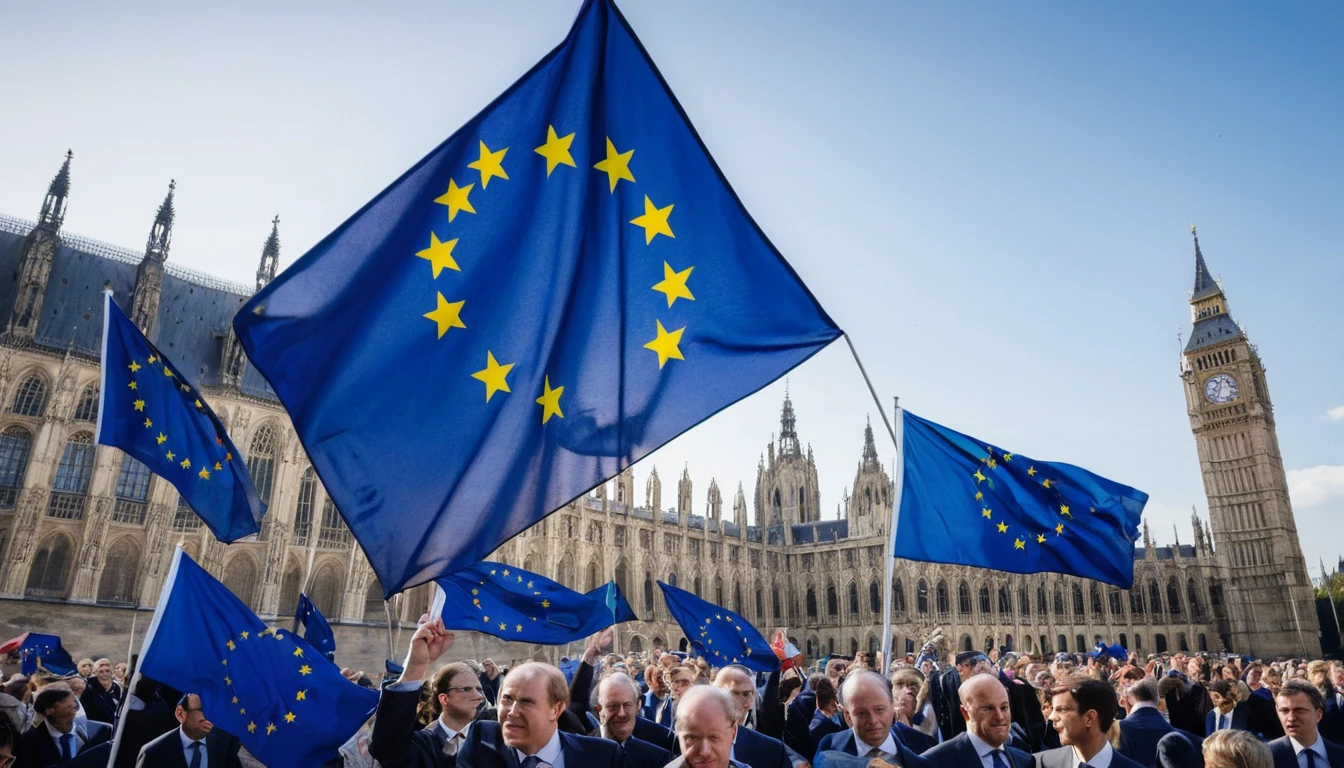
Introduction: The Concept of the European Moment
The term ‘European Moment’ refers to a significant period in contemporary global politics wherein Europe is poised to redefine its role on the world stage. As we navigate through complex geopolitical dynamics, this concept gains relevance, reflecting a crucial juncture for Europe in a rapidly changing global landscape. The European Moment encapsulates not only the present challenges faced by the continent but also the historical trajectories that have led to this point. The significance lies in recognizing the collective potential of European nations to influence international norms, economic policies, and security alliances, thereby shaping a new world order.
Historically, Europe has been a formidable player in global affairs, from the age of colonialism to its current status as a union of diverse nations, each contributing to the collective identity of Europe. Understanding the meaning of the European Moment requires an analysis of how past events have culminated in present-day realities. The convergence of issues such as climate change, migration, and digital diplomacy highlights Europe’s responsibility and opportunity to lead in addressing global concerns.
Moreover, the concept emphasizes the interconnectedness of Europe with other regions, suggesting that Europe’s actions reverberate across the globe. In relation to emerging powers and shifting alliances, the European Moment represents an opportunity for reevaluation of traditional policies and practices. As Europe contemplates its future, it is crucial for policymakers, scholars, and citizens alike to grasp the essence of this moment. By doing so, stakeholders can better understand not only Europe’s trajectory but also its potential to navigate an increasingly multipolar world.
Re-emergence of Authoritarianism: A Cautionary Tale for Europe
The re-emergence of authoritarian governance, both within Europe and globally, has raised significant concerns regarding the stability of democratic systems. Throughout history, authoritarian regimes often gained traction during periods of crisis, when citizens sought security and stability in uncertain times. For example, in the early 20th century, the aftermath of World War I and the subsequent economic turmoil paved the way for the rise of authoritarian leaders across Europe, historically contributing to the onset of totalitarian regimes in countries such as Germany and Italy.
Current trends echo some of these historical precedents, as political polarization and socioeconomic disparities contribute to the public’s disillusionment with traditional democratic institutions. In several member states, political parties that adopt authoritarian practices are increasingly gaining popularity, bolstered by populist rhetoric that capitalizes on fear and uncertainty. This resurgence raises critical questions regarding the resilience of democratic principles in the face of growing dissatisfaction.
Moreover, the rise of authoritarian governance is not just limited to Europe; globally, countries exhibit disturbing patterns of repression and political repression, culminating in societal divisions that challenge democratic frameworks. The case of Hungary exemplifies this troubling trend, where governmental control over media and judiciary has eroded the checks and balances essential for a functioning democracy. Similarly, the actions taken by the Polish government against judicial independence signal a broader shift towards illiberalism across the continent.
As Europe grapples with these realities, the threats posed by authoritarianism must be acknowledged and addressed. The implications of these developments are profound, potentially undermining the democratic evolution that has characterized much of the late 20th century. Engaging in critical dialogue and fostering civic participation will be essential for reinforcing democratic institutions and countering the allure of authoritarian ideologies in the years to come.
Historical Context: Learning from the 20th Century
The 20th century was a period marked by significant upheaval and transformation in Europe. Two world wars, the Cold War, and the subsequent fall of the Iron Curtain not only reshaped national boundaries but also forged a new European identity. The devastation and lessons learned from the first two World Wars highlighted the dire consequences of nationalism and unchecked aggression. In the aftermath, there was a strong desire for unity and cooperation, which eventually materialized through the establishment of institutions like the European Union. This political and economic alliance aimed to foster peace and stability across the continent.
During the Cold War, Europe became a battleground between ideologies: capitalism versus communism. This era solidified the divide between Western Europe, aligned with the United States, and Eastern Europe, dominated by the Soviet Union. The geopolitical tensions of this period prompted intense security measures and military alliances, but also a collaborative spirit among Western nations, leading to economic prosperity and democratic governance. The eventual fall of the Iron Curtain in 1989 symbolized a significant shifting of tides, allowing for the reunification of Germany and the integration of Eastern European countries into the European framework.
Today, Europe grapples with the remnants of these historical events. The rise of populism and authoritarian ideologies challenge the foundational principles put in place after World War II and the Cold War. Analyzing these pivotal moments in European history is crucial for understanding contemporary political dynamics. Observers are left asking whether the lessons of the past can provide a viable path forward. If Europe can maintain a commitment to democratic values while addressing modern challenges, it may not only affirm its identity but also reinforce its role in a rapidly changing global landscape.
Europe as a Beacon of Alternative Governance: Possibilities and Challenges
The global landscape is witnessing a resurgence of ideologies that once seemed to be on the decline. As authoritarianism and populism gain traction in various regions, Europe’s position as a champion of democratic values and governance is becoming increasingly vital. The continent’s historical legacy of human rights, rule of law, and multiculturalism positions it uniquely to counterbalance these outdated ideas. Nevertheless, Europe faces significant internal and external challenges that may hinder its ability to emerge as a credible alternative for global governance.
One of the main values that could define Europe’s alternative vision is its commitment to democratic principles and human rights. These ideals resonate with many around the world, particularly those who suffer under oppressive regimes. By promoting a values-based foreign policy, Europe can foster international standards that reject tyranny and advocate for the sovereignty of individuals. Moreover, the European Union has established frameworks for cooperation and dialogue, which could potentially be a model for other regions aspiring for governance rooted in democracy.
However, the effectiveness of Europe in promoting these values on a global scale depends on its internal cohesion and collective will. Fragmentation caused by economic disparities, differing political priorities, and rising nationalist sentiments within member states poses a challenge to a unified European approach. Additionally, Europe must navigate complex relationships with non-democratic regimes that might view its values as a threat. This necessitates a careful balancing act to engage positively while firmly upholding principles that define European governance.
The possibilities for Europe to redefine global governance are both promising and daunting. By addressing these challenges, Europe can not only position itself as an exemplar of an alternative governance model but also significantly influence the direction of international relations in an increasingly multipolar world. This alternative path could serve as a beacon for nations seeking to transcend inadequate governance structures and embrace democratic values, shaping a more equitable global order.