
Romania’s economic convergence with the European Union has not removed the pressures that shape everyday life. Inflation reached 8.2% in July 2026, while the 2025 budget deficit stood at 7.9% of GDP. At the same time, estimated compliance gaps mean that about 30% of value-added tax and 44% of corporate income tax due are not collected. Poverty risk affects roughly 28% of the population and more than 32% of children, underscoring how national growth can coexist with insecurity at home.
Weak tax compliance is more than a problem for public finances. When some businesses and individuals do not meet their obligations, compliant taxpayers may shoulder a disproportionate share of the cost. That imbalance can reinforce the sense that rules are applied unevenly and that public services do not reflect what people contribute. Against this background, reported trust in government, parliament, and political parties remains low. Citizens have responded in practical ways: leaving to find work, returning with skills and savings, or creating businesses in a changing economy. Institutions, however, have often struggled to adapt at the same pace.
Romania’s constitution locates sovereignty in the people, while the national anthem calls citizens to awaken. Together, these ideas pose a lasting political question: who is government for, and what makes people consent to being governed? The answer depends not only on elections, but also on whether institutions are accountable and daily life offers a fair chance to participate and prosper.
In neighbouring Moldova, poverty, population decline, reliance on remittances, energy vulnerability, emigration, and geopolitical pressure all shape the choices available to households. EU accession can provide direction, but its credibility will depend on results people can experience: stronger incomes, dependable services, trustworthy institutions, and opportunities that allow them to build a future at home. Where societies are changing quickly, political legitimacy rests on whether the state can keep pace and make progress tangible.
War’s consequences are not interchangeable: civilians experience distinct histories, decisions, and forms of harm. In Ukraine, the UN-reported July 2026 toll was 437 civilians killed and 2,610 injured, the highest monthly toll since 2022. Strikes also reach cities far from the front, making distance no guarantee of safety. Sovereignty is not an abstraction when occupation brings repression, deportation, and attacks on identity. Leaders should answer concretely: what, specifically, are people being asked to protect through sacrifice?
In Russia, reported public views register both anxiety and continued allegiance. Fifty-seven percent describe the situation as tense, 13% as critical, and 62% favour peace talks; at the same time, a majority continues to support the armed forces. The state plans about 14.9 trillion roubles for military spending in 2026, equal to 6.3% of GDP. These positions are not necessarily contradictory: citizens may support their country or its servicemembers while growing weary of war’s financial, social, and personal costs.
In Gaza, August 2026 reporting describes widespread displacement and acute water insecurity, conditions that shape every ordinary decision about shelter, health, and survival. The 2023 Hamas attack inflicted grave harm and trauma; Israel has a right to defend itself. Neither fact removes obligations to limit civilian suffering or makes the human cost irrelevant. Israeli citizens, too, face attacks, hostages, mobilisation, and deep polarisation. In July 2026, only 38% reportedly believed security had improved since the war with Iran. Trust also differs by institution: confidence in the military exceeds trust in government, underscoring that national solidarity does not automatically confer political confidence.
Battlefield gains cannot secure trust, safety, or civilians’ future. That requires more than territorial advantage or declarations of resolve: it depends on protecting people, preserving choice, and demonstrating that sacrifice serves a defensible purpose. Without those assurances, victory may remain strategically defined yet fragile.
Political decisions made in capitals become tangible at home when prices rise and choices narrow. In Iran, reported inflation reached 66% in July 2026, while food prices were up 128%. These figures help explain why families are cutting meat from meals—not by preference, but because it has become unaffordable. Authoritarian rule, sanctions and war all shape shortages, uncertainty and household budgets. For people, international conflict is measured in what they can buy and serve, and in whether daily life feels secure.
In the United States, promises of peace and lower costs sit beside a reported August 2026 approval rating of 33% and support of 31% for military action against Iran. Inflation stood at 3.4%, while energy prices rose 14.7% year on year, adding pressure to household bills. Real hourly earnings reportedly declined, reducing workers’ purchasing power. Expectations are weakening too: 34% believe the American dream still works, while 51% say it once worked but no longer does. Political trust is bound up with whether a stable life remains affordable.
China’s achievements in technology, infrastructure and global influence are visible expressions of national strength. Yet that picture sits beside a property crisis, unfinished apartments and reported youth unemployment of 17.9% in July 2026. For young people, the distance between national progress and personal prospects can be stark: large-scale development does not guarantee secure work, a home or confidence about the future. The question is not only how powerful the country has become, but whether its gains translate into opportunity and stability for the next generation.
In Venezuela, the United States’ January 2026 capture of Nicolás Maduro brought sharply mixed reactions. Some opponents welcomed his removal, but a change at the top does not by itself answer whether institutions will function differently or whether people will see better incomes, justice and security. For emigrants and families separated across borders, the practical test is whether prospects improve enough to make return or reunion possible. Political turning points matter most when they alter people’s rights and chances for a stable life, rather than simply changing who holds power.
Greenlanders are being confronted with open U.S. discussion of acquiring their territory, alongside proposals to link tariffs on Europe to that ambition. Such language may be framed as strategy, security, or negotiation, but it concerns a place where people live, work, raise families, and sustain communities. Greenland is not an empty parcel on a map or an asset waiting to be exchanged. Its residents have political voice, attachment to land, and interests that cannot be reduced to the calculations of more powerful governments. The question is not only who might control the island, but whether Greenlanders are treated as participants in decisions that could shape their future.
The use of economic pressure can also unsettle relationships between governments and the people who depend on them. The United States has imposed 50% tariffs on Canada, and Canada has retaliated, illustrating how trade measures can turn an alliance into a source of strain. Tariffs are expressed in percentages and policy announcements, yet their effects can reach workers, households, businesses, and communities through costs and uncertainty. When economic power is used as leverage, those with the least influence over the decision may still bear part of its price. Cooperation between states matters, but so does attention to the lives affected by disputes.
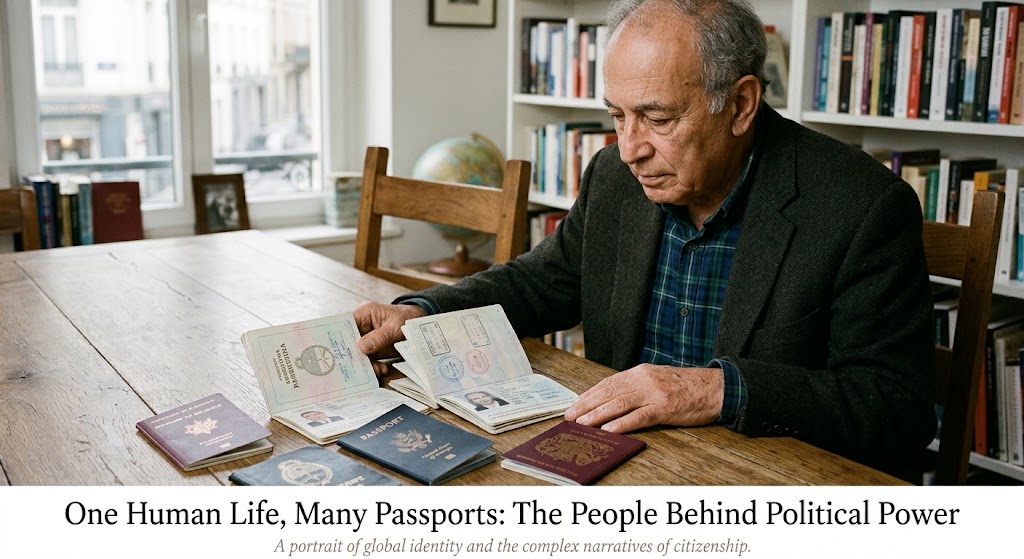
In Sudan, the stakes include the loss of safety and home on a vast scale. By the end of 2025, about 9.1 million people had been internally displaced, the world’s largest such displacement. Leaving home can mean separation from community, disrupted livelihoods, and an uncertain future for children, not simply a change of address. These cases are not equivalent: they involve different political circumstances, conflicts, and degrees of suffering. Yet each makes visible how decisions by powerful actors reach people who may have little control over them. A passport can alter access to protection and opportunity, but it does not alter anyone’s humanity. Citizens, refugees, displaced and stateless people, minorities, soldiers, taxpayers, parents, and children bear political choices in money, time, freedom, fear, and sometimes life. “Who do you govern for?” offers a consistent test for every government and policy: what does it do to the safety, dignity, rights, and real prospects of the people expected to live with its consequences?