
The Era of Fragmentation: Geopolitical and Economic Transformations
The contemporary global landscape is witnessing structural transformations characterized by an era of fragmentation, particularly evident in the geopolitical, economic, and energy sectors. These changes, driven by numerous factors including national interests, historical rivalries, and emerging power dynamics, suggest that the existing frameworks are no longer sufficient to address the complexities of global interactions.
Geopolitically, the world has entered a phase where traditional alliances are being tested, leading to a more fragmented international order. This fragmentation can be observed through the rise of multiple centers of power, where states are increasingly pursuing independent agendas that often contradict established norms. Tensions in regions like the Gulf highlight these shifts, as nations reevaluate their roles and relationships across the political spectrum. In this context, the Iran conflict exemplifies the broader geopolitical realignments that signal a departure from a unipolar world dominated by the United States.
On the economic front, there is a pronounced shift from multilateral trade agreements towards bilateral arrangements, further emphasizing the trend of fragmentation. Countries are prioritizing national interests over collective benefits, resulting in increased competition and reduced cooperation. This shift is particularly notable in energy markets, where geopolitical tensions can lead to significant disruptions in the supply chain. The Gulf region, rich in energy resources, is at the center of these transformations, with its volatility impacting global energy prices and security.
These developments point towards a reconfiguration of global power relations that is not merely episodic but represents a fundamental shift in how nations interact. As the world adjusts to these geopolitical and economic changes, the implications for international stability and security are profound, necessitating a recalibration of strategies among global leaders.
Current Vulnerabilities in the Global Energy System
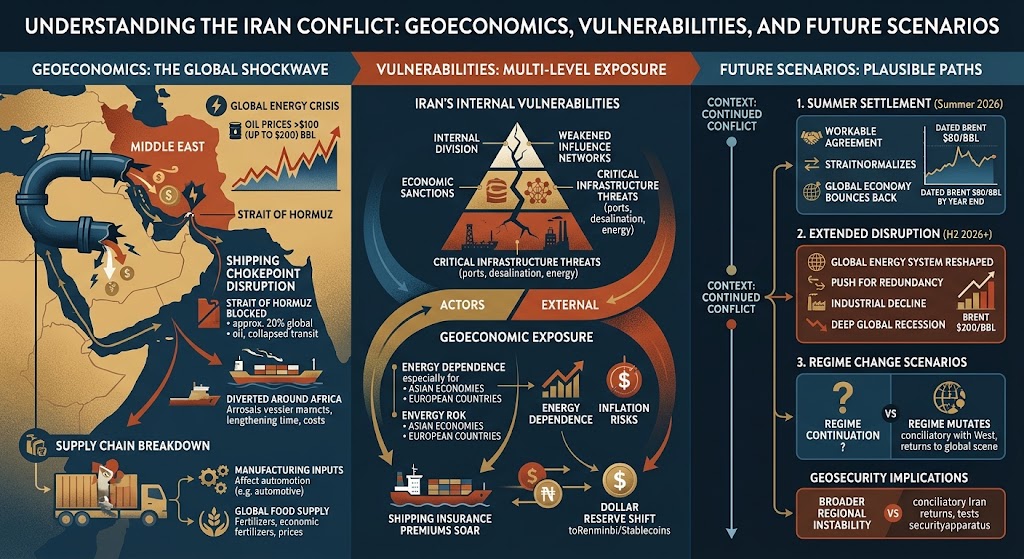
The global energy system today is characterized by its intricate interconnectedness, making it prone to several vulnerabilities. At the heart of this system lies the Strait of Hormuz, a crucial waterway through which a significant percentage of the world’s oil and liquefied natural gas (LNG) passes. Approximately 20% of the oil traded internationally traverses this strait, making it essential for energy security worldwide.
Any disruption in the flow of energy through the Strait of Hormuz can trigger far-reaching consequences not only for producers and consumers in the region but also for the global economy as a whole. Such interruptions can stem from geopolitical tensions, military confrontations, or even natural disasters. The potential repercussions of these disruptions extend beyond immediate supply shortages; they can also lead to rapid fluctuations in oil prices, which correlate closely with global GDP growth. Historical instances illustrate that conflicts or perceived threats in this region have often resulted in spikes in oil prices, placing tremendous pressure on economies across the globe.
Additionally, the vulnerabilities in the global energy system underscore the challenges of energy dependency. Countries heavily reliant on imported oil and gas may find themselves economically destabilized as energy prices rise unpredictably. In an era of increasing climate concerns and a shift toward renewable energy, the existing dependency on fossil fuels highlights another layer of vulnerability. As nations strive to diversify their energy sources, the geopolitical significance of regions like the Strait of Hormuz remains a focal point, emphasizing the need for robust strategies to manage energy security and mitigate risks associated with global energy disruptions.
Potential Scenarios for the Iran Conflict
As the situation in Iran continues to evolve, analysts have outlined three distinct scenarios that could dictate the future trajectory of the Iran conflict. Each scenario carries its own implications, not only for the region but also for global economic stability and energy markets.
The first scenario envisions a ceasefire leading to relative stability. In this optimistic perspective, diplomatic efforts may yield tangible results, creating a framework for de-escalation. Such an environment could pave the way for reconstruction and investment in the region, offering the potential for increased trade flows and cooperation among neighboring states. Additionally, a stable Iran might facilitate a more predictable energy market, positively impacting oil prices and fostering economic growth in various parts of the world.
Conversely, the second scenario illustrates a more volatile situation characterized by intermittent escalations. This perspective acknowledges the possibility of periodic flare-ups of conflict, spurred by both internal unrest and external pressures. In such a scenario, the energy markets could experience increased fluctuations, impacting global oil prices significantly. Regions reliant on Iranian oil exports may face economic difficulties, and tensions could escalate, drawing in foreign powers and leading to broader regional instability.
The third scenario presents a grim picture of no agreement, resulting in prolonged volatility. Should diplomatic efforts fail entirely, the potential for persistent conflict grows, leading to economic sanctions and an isolated Iran. This would likely exacerbate humanitarian crises within the country and destabilize neighboring regions. The ramifications for the global energy market could be severe, with supply disruptions and skyrocketing prices affecting economies worldwide, posing substantial challenges to global energy security.
In conclusion, each of these scenarios highlights distinct outcomes of the Iran conflict, with broad implications for regional dynamics and the global economy, particularly concerning energy markets and international trade.
Concluding Reflections on Energy Security and Global Implications
The ongoing Iran conflict presents significant challenges to energy security and has far-reaching implications for global economic stability. As one of the world’s prominent oil producers, Iran plays a crucial role in the energy markets, and any disruption in its operations can ripple through economies both locally and internationally. The intricate relationship between energy security and geopolitical tensions underscores the complexities of ensuring that energy supplies remain stable amid heightened uncertainty.
Moreover, the energy transition towards renewable sources amplifies these complexities. Countries reliant on fossil fuels face the dual challenge of managing their existing supplies while preparing for a future dominated by sustainable energy. The Iran conflict may hasten the urgency for producing countries to diversify their energy portfolios and reduce dependency on oil exports. Furthermore, this transition not only affects the Middle East but also has asymmetric impacts on regions that are heavily reliant on oil imports, exposing them to price volatility and supply chain vulnerabilities.
The uncertainties surrounding the conflict highlight the necessity for collaborative efforts among nations to enhance energy security. Diversification of energy sources, investments in alternative technologies, and strategic partnerships can help mitigate the risks associated with geopolitical conflicts. As the global community navigates these choppy waters, producing nations will have to adapt to shifting market demands and the realities of a changing energy landscape.
In conclusion, the implications of the Iran conflict on energy security are profound, with potential long-term effects on global energy markets. As countries grapple with these challenges, fostering resilience through innovative solutions will be crucial for maintaining economic stability and achieving a sustainable energy future.