

The Global Context: Challenges Facing Developing Nations
Developing countries today face a multitude of challenges exacerbated by intensifying global tensions. These nations find themselves disproportionately affected by a range of issues, including climate disasters, geopolitical conflicts, and economic instability. The interaction of these factors creates a complex web that undermines the progress and prosperity of these regions.
Climate change, a foremost concern, has precipitated an increase in the frequency and intensity of natural disasters, such as hurricanes, droughts, and floods. Such disasters not only threaten the immediate safety of populations but also damage critical infrastructure, disrupt food supply chains, and impede economic growth. The repercussions of climate events are particularly dire in vulnerable communities, where resources for recovery are scarce. These countries, often least responsible for climate change, bear the brunt of its effects, calling for urgent global action to support their resilience and adaptation strategies.
Moreover, geopolitical conflicts contribute significantly to the challenges faced by developing nations. Wars and disputes over territory or resources lead to instability, displacing communities and creating humanitarian crises. These conflicts divert attention and resources away from essential development programs, heightening the risk of poverty and inequality. The international community must recognize the interconnectedness of geopolitical issues and their local ramifications, advocating for peaceful resolutions and supportive policies targeting affected populations.
Economic instability further complicates the scenario, as global markets become increasingly volatile. Developing nations often rely heavily on exports of raw materials that can be adversely affected by fluctuations in global demand. Consequently, economic downturns can result in job losses and lowered living standards, making recovery efforts more challenging. As these challenges mount, it is imperative for the global community to adopt a collaborative approach, ensuring that the unique needs and realities of developing countries are integrated into discussions and actions aimed at fostering global stability and sustainability.
The Path Forward: Sustainable Development Goals and Financial Reform
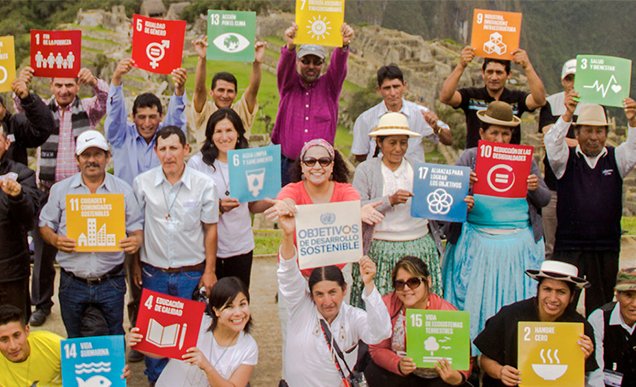
The Sustainable Development Goals (SDGs) established by the United Nations serve as a global blueprint directing international efforts aimed at alleviating poverty, advancing social equity, and promoting sustainability in developing nations. These 17 interlinked goals underscore the shared responsibility of nations, stakeholders, and communities to work collaboratively towards common objectives, fundamentally redefining approaches to financial and developmental assistance. The SDGs not only offer a framework for prioritizing resources but also emphasize the importance of integrating financial reform to secure equitable access to funding.
The reform of the international financial architecture is paramount in achieving the SDGs. Current inequities in resource allocation hinder progress in developing countries, often limiting their capacity to realize long-term developmental aspirations. Commitments such as the Sevilla Commitment, which reinforces the need for accessible financial resources tailored for the unique challenges faced by these nations, represent a crucial step towards establishing a more inclusive financial system. These commitments prioritize the upliftment of low-income countries and highlight the necessity for specialized financial instruments and mechanisms that address specific developmental needs, thereby facilitating sustainable growth.
Multilateral development banks (MDBs) play a vital role in supporting the SDGs through enhanced lending capabilities and innovative financing solutions. By increasing their engagement in developing countries, MDBs can provide critical funding and technical assistance vital for implementing projects that align with the SDGs. The evolution of MDBs’ operational frameworks to integrate sustainability as a core element not only fosters economic stability but also addresses environmental and social governance challenges. Consequently, a concerted effort among global partners to strengthen these institutions and ensure they are well-equipped for their developmental roles remains imperative in advancing toward sustainable and resilient economies.
Confronting Climate Change: Responsibilities and Opportunities
Climate change represents one of the most profound challenges facing humanity today, requiring immediate action from nations around the globe, particularly major emitting countries. The increasing frequency of extreme weather events, rising sea levels, and significant biodiversity loss underscores the urgent need for countries to align their national climate action plans with the overarching global temperature goals set out in accords such as the Paris Agreement. Achieving these goals demands an integrated approach that emphasizes responsibility, transparency, and accountability from all nations, especially those contributing the most to greenhouse gas emissions.
In this context, climate justice plays a crucial role. It highlights the ethical dimensions of climate action by recognizing that the most vulnerable populations, often residing in developing countries, are disproportionately affected by the impacts of climate change. These regions bear the brunt of environmental degradation, despite contributing the least to the problem. Therefore, it is imperative that major emitting countries take responsibility not only for their emissions but also for providing necessary support to developing nations. This support can include technological transfer, financial assistance, and capacity-building initiatives that enable these countries to implement sustainable practices and mitigate climate risks.
Moreover, developing countries have a unique opportunity to participate actively in the renewable energy sector, which is pivotal to making global strides against climate change. By investing in solar, wind, and other forms of sustainable energy, these nations can reduce their dependency on fossil fuels while fostering economic growth. International funding mechanisms are crucial for this transition, enabling developing nations to adapt to climate impacts and address loss and damage resulting from climate-induced events. Greater inclusion in the global climate response not only empowers these countries but also solidifies collective efforts toward a sustainable future for all. With shared responsibilities and opportunities, it is essential for every country to engage in concerted action against climate change.
Advancements and Peacebuilding: The Role of Technology and Human Rights
In the context of sustainable development, the interplay between technological advancements, peace, and human rights becomes increasingly significant. Emerging digital tools and technologies, particularly artificial intelligence (AI), offer substantial opportunities for fostering development in different sectors. By enhancing efficiencies and streamlining processes across healthcare, education, and governance, these innovations can significantly contribute to a nation’s progress. However, the benefits of these advancements must be balanced with robust regulations that prioritize inclusion, safety, and human rights.
The deployment of technology in developing countries can play a pivotal role in promoting peacebuilding. Access to information through digital platforms empowers communities, enabling them to advocate for their rights and voice their concerns. Moreover, technology can facilitate transparency in governance, creating opportunities for citizens to engage with their leaders and hold them accountable. Such engagement is crucial, as it can mitigate the risks of conflict arising from governance failures and socioeconomic disparities. Nevertheless, it is essential that any technological initiative does not inadvertently exacerbate existing inequalities or exclude marginalized populations from participation.
Investment in peace must accompany investments in technology and development. Addressing the underlying causes of unrest, such as poverty and inequity, is critical for long-lasting societal stability. Historical patterns demonstrate a clear correlation between poverty and conflict; thus, development strategies cannot afford to overlook the importance of peace. The observance of human rights serves as a crucial foundation for building peaceful societies, ensuring that all individuals are treated with dignity and respect.
As development objectives are pursued, it is imperative for policymakers and stakeholders to remain vigilant regarding the potential implications of technological advancements. A holistic approach that integrates technology, peacebuilding, and human rights is vital for achieving sustainable development in an equitable and inclusive manner, ultimately contributing to global peace.
Frequently Asked Questions
What i don't realize is actually how you're now not actually a lot more smartly-favored than you may be now. You are so intelligent. You understand therefore considerably when it comes to this topic, produced me in my opinion imagine it from a lot of various angles. Its like men and women don't seem to be involved except it’s something to do with Woman gaga! Your personal stuffs excellent. Always maintain it up!


Hi this is somewhat of off topic but I was wondering if blogs use WYSIWYG editors or if you have to manually code with HTML. I’m starting a blog soon but have no coding knowledge so I wanted to get advice from someone with experience. Any help would be enormously appreciated!
There are actually plenty of details like that to take into consideration. That could be a nice point to bring up. I supply the ideas above as common inspiration however clearly there are questions like the one you bring up the place crucial thing can be working in trustworthy good faith. I don?t know if greatest practices have emerged round things like that, however I am certain that your job is clearly identified as a fair game. Both girls and boys really feel the affect of just a second’s pleasure, for the remainder of their lives.
Loving the info on this site, you have done outstanding job on the content.
I’m still learning from you, as I’m making my way to the top as well. I absolutely love reading everything that is written on your website.Keep the stories coming. I enjoyed it!
Perfect piece of work you have done, this site is really cool with superb info .
Hello, Neat post. There’s an issue together with your site in internet explorer, might check this… IE still is the marketplace chief and a good part of other people will leave out your magnificent writing due to this problem.
Hiya, I’m really glad I have found this info. Today bloggers publish just about gossips and internet and this is really frustrating. A good website with exciting content, this is what I need. Thank you for keeping this web-site, I will be visiting it. Do you do newsletters? Can’t find it.
you might have a terrific blog right here! would you wish to make some invite posts on my weblog?
Good write-up, I am regular visitor of one?¦s web site, maintain up the excellent operate, and It is going to be a regular visitor for a long time.
Today, while I was at work, my cousin stole my iPad and tested to see if it can survive a thirty foot drop, just so she can be a youtube sensation. My apple ipad is now destroyed and she has 83 views. I know this is completely off topic but I had to share it with someone!
I truly wanted to construct a note in order to express gratitude to you for those fantastic hints you are sharing on this website. My rather long internet lookup has now been recognized with useful concept to write about with my relatives. I ‘d state that that many of us visitors actually are undoubtedly lucky to live in a decent network with so many wonderful professionals with insightful tips and hints. I feel really fortunate to have come across the website and look forward to so many more excellent moments reading here. Thanks a lot once again for everything.
Heya i’m for the primary time here. I found this board and I find It truly useful & it helped me out a lot. I hope to give one thing back and help others like you aided me.
Hi there very cool blog!! Man .. Beautiful .. Superb .. I’ll bookmark your blog and take the feeds alsoKI am happy to find a lot of useful info right here within the submit, we’d like develop more techniques on this regard, thank you for sharing. . . . . .
Hi my family member! I want to say that this post is amazing, nice written and come with almost all vital infos. I¦d like to see extra posts like this .
Hi my friend! I want to say that this post is awesome, nice written and include almost all vital infos. I would like to see more posts like this.
I like the efforts you have put in this, appreciate it for all the great posts.
I like this weblog very much, Its a rattling nice post to read and incur info . “If at first you don’t succeed, you’re running about average.” by M. H. Alderson.
It¦s really a cool and helpful piece of info. I¦m satisfied that you just shared this helpful information with us. Please keep us up to date like this. Thank you for sharing.
Can I simply say what a aid to find someone who truly is aware of what theyre speaking about on the internet. You definitely know the way to convey a difficulty to light and make it important. More people must read this and perceive this aspect of the story. I cant imagine youre not more well-liked because you positively have the gift.
As I website possessor I believe the written content here is really superb, regards for your efforts.
he blog was how do i say it… relevant, finally something that helped me. Thanks
Very nice info and right to the point. I am not sure if this is truly the best place to ask but do you folks have any ideea where to hire some professional writers? Thanks in advance 🙂
Howdy, i read your blog occasionally and i own a similar one and i was just curious if you get a lot of spam comments? If so how do you reduce it, any plugin or anything you can suggest? I get so much lately it’s driving me mad so any help is very much appreciated.
Super-Duper website! I am loving it!! Will be back later to read some more. I am bookmarking your feeds also.
Just wanna input on few general things, The website design and style is perfect, the subject material is rattling good. “To the artist there is never anything ugly in nature.” by Franois Auguste Ren Rodin.
I in addition to my guys have already been viewing the excellent tactics on the website then unexpectedly got an awful feeling I had not thanked the site owner for them. My guys became for this reason joyful to learn them and have now very much been tapping into those things. I appreciate you for actually being well accommodating and then for picking out varieties of high-quality resources millions of individuals are really desperate to learn about. My very own honest apologies for not saying thanks to you sooner.
I like this web site because so much useful stuff on here : D.
Hi, I think your website might be having browser compatibility issues. When I look at your website in Opera, it looks fine but when opening in Internet Explorer, it has some overlapping. I just wanted to give you a quick heads up! Other then that, awesome blog!
What i don’t realize is actually how you’re now not actually a lot more smartly-favored than you may be now. You are so intelligent. You understand therefore considerably when it comes to this topic, produced me in my opinion imagine it from a lot of various angles. Its like men and women don’t seem to be involved except it’s something to do with Woman gaga! Your personal stuffs excellent. Always maintain it up!