

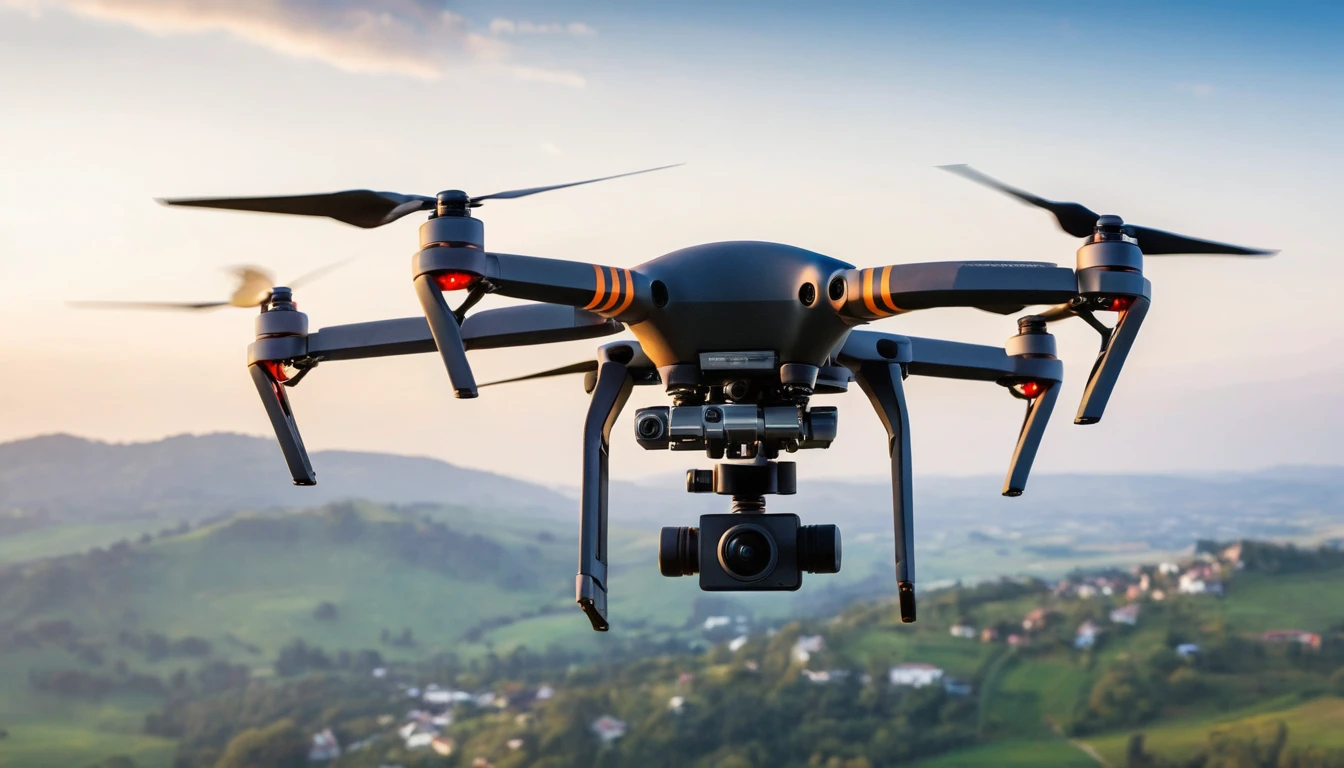
The Expanding Landscape of Drone Applications
The applications of drone technology have experienced significant expansion in recent years, driven by advancements in aerial capabilities and regulatory environments. Drones, or unmanned aerial vehicles (UAVs), are utilized across various industries, reflecting their versatility and efficiency in completing tasks that were once labor-intensive or hazardous. This growing adoption of drone technology is transforming traditional methodologies, thereby creating new opportunities across sectors.
One of the most notable applications is in aerial photography and videography. Professionals in real estate, filmmaking, and tourism are incorporating drones to capture stunning visuals from unique perspectives. This advancement allows for comprehensive documentation of events and properties, enhancing marketing strategies and artistic expression. The ability to deploy drones for aerial photography has made it an indispensable tool in industries requiring detailed imagery.
Another significant development in the drone landscape is package delivery services. Companies like Amazon and Google are pioneering the use of drones to expedite logistics processes. By enabling quicker and more efficient deliveries, drone technology not only reduces costs but also mitigates the environmental impact associated with traditional delivery methods. The emergence of drone delivery systems represents a shift towards highly efficient supply chains, particularly in urban settings.
In emergency response and disaster recovery efforts, drones are proving crucial. They facilitate rapid assessments of affected areas, allow for the delivery of medical supplies, and support search operations in hard-to-reach locations. By providing real-time aerial views, drones enhance situational awareness for first responders, improving their ability to make informed decisions in critical situations.
Overall, the broadening scope of drone applications signifies a transformative period for various industries, reshaping them to be more efficient, effective, and innovative. Additional sectors, such as agriculture and infrastructure inspection, are also beginning to harness the potential of drones, indicating that the evolution of this technology will continue to create new possibilities in the years to come.
Drones in Modern Warfare and Public Safety
The advent of drone technology has significantly reshaped the landscape of modern warfare and public safety operations. These unmanned aerial vehicles (UAVs) have emerged as critical tools for military forces globally, providing capabilities that enhance reconnaissance and surveillance missions. Drones can gather real-time intelligence, enabling military decision-makers to respond more effectively to threats. Their ability to operate remotely minimizes the risk to human personnel, making them ideal for high-stakes environments.
In the context of military operations, drones are employed for a variety of purposes including targeted strikes, intelligence gathering, and border surveillance. The operational efficiency afforded by drones is remarkable; they can cover vast areas quickly and can be equipped with high-resolution cameras and sophisticated sensors. This technological edge allows militaries to maintain situational awareness and respond to emerging threats with unprecedented speed. Furthermore, the use of drones in warfare has changed traditional combat roles, resulting in a paradigm shift in how conflicts are managed.
Similarly, in the realm of public safety, drones have become indispensable tools for first responders. Firefighters, law enforcement, and emergency medical teams utilize drones for assessing situations from above, helping to guide their response efforts. For instance, during natural disasters, drones can quickly survey affected areas, provide vital information, and assist in search and rescue operations. This integration of drone technology in emergency services has the potential to save lives by facilitating more efficient response strategies.
However, the implementation of drones in these sensitive areas is not without ethical concerns. The potential for civilian harm during military operations and the misuse of drones raise critical questions about accountability and oversight. The expanding capabilities of drones necessitate an ongoing dialogue about their ethical implications, particularly regarding civilian safety during military actions and the need for regulatory frameworks to govern their use in public safety scenarios.
Challenges and Threats: Criminal Use and Ethical Concerns
The rapid advancement of drone technology has undoubtedly transformed various sectors, including delivery services, agriculture, and surveillance. However, the proliferation of drones also presents significant challenges and threats, particularly when it comes to their acquisition and use by criminal elements and malicious actors. Drones have become increasingly accessible, often leading to their deployment in illegal activities such as smuggling, poaching, and unauthorized surveillance. These applications highlight a darker side of drone technology that requires urgent attention.
One of the primary criminal uses of drones is in the realm of smuggling. Criminal organizations have begun to exploit drones to transport illegal goods across borders, circumventing traditional security measures. For instance, drones can carry drugs, weapons, or even contraband, entering restricted zones with minimal detection. This capability has raised serious concerns among law enforcement agencies, who must adapt their strategies to counteract this novel method of crime.
Moreover, drones can also facilitate surveillance for illicit activities. They can be employed to gather intelligence on individuals or organizations, allowing criminals to strategize their operations with precision. This raises ethical dilemmas regarding privacy and consent, as drones can easily invade personal spaces without the knowledge or approval of those being surveilled. The potential for harassment through drone technology further complicates the issue, as it can be misused to instill fear and exert control over victims.
Considering these growing threats, it becomes imperative to establish robust regulations and legislative frameworks aimed at mitigating the misuse of drones. Policymakers face the dual challenge of fostering innovation while safeguarding citizens from potential abuses. Striking this balance will require collaboration between law enforcement, technology developers, and civil liberties organizations to ensure that drone technology is both secure and ethically applied.
Regulating the Sky: Legal Frameworks and Security Implications
The rapid advancement of drone technology has prompted a significant evolution in the legal frameworks governing airspace. International and national laws are continually adapting to address the unique challenges posed by the proliferation of drones. For instance, the International Civil Aviation Organization (ICAO) plays a pivotal role in establishing guidelines for the safe integration of unmanned aerial systems (UAS) into existing air traffic management systems. Countries have been tasked with drafting legislation that ensures public safety while fostering innovation in the drone industry.
One critical aspect of these legal frameworks is airspace regulation. National aviation authorities, such as the Federal Aviation Administration (FAA) in the United States, have implemented specific rules regarding where drones can operate, how high they can fly, and who can control them. These regulations are fundamental in mitigating risks to manned aircraft and maintaining orderly airspace. Furthermore, the growing use of drones raises important questions surrounding privacy rights. With their capacity to capture high-resolution images and data, drones can easily infringe upon individuals’ privacy, necessitating clear guidelines to protect citizens from unwarranted surveillance.
Ethical considerations also come into play when governing drone use. Policymakers must weigh the benefits of using drones for various applications, such as delivery services and disaster response, against the potential for misuse. The security implications of drone technology cannot be ignored, especially regarding its potential use in terrorist activities. The accessibility of drone technology poses challenges for law enforcement and national security agencies, prompting discussions on how to monitor and control non-state actors utilizing drones for malicious purposes.
In conclusion, as drone technology continues to evolve, so too must the legal frameworks designed to regulate it. Balancing innovation, privacy rights, and security will remain crucial in shaping an effective governance structure for the use of drones in modern society.

