

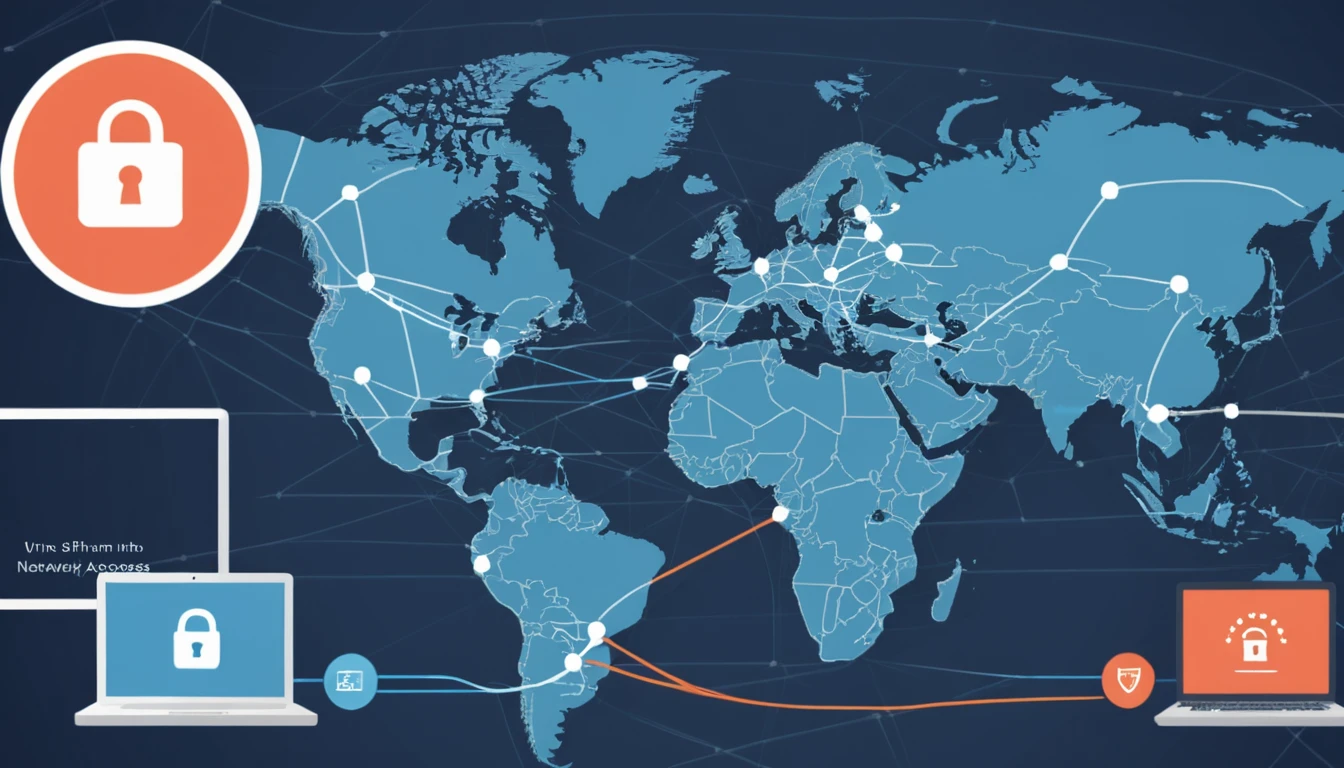
The Inherent Risks of Traditional VPNs
While Virtual Private Networks (VPNs) have long been a staple in the realm of cybersecurity, they are not without their vulnerabilities. Recent years have unveiled a host of security risks associated with traditional VPNs that organizations must recognize and address. A concerning statistic is that over half of companies using VPNs have reported experiencing security incidents linked to this technology. This alarming figure underscores the inherent risks tied to expansive network access, whereby attackers can exploit vulnerabilities to facilitate lateral movement within the network.
One critical issue with traditional VPN architectures is their tendency to grant users broad access to the network, which can become a double-edged sword. When users gain this extensive access, the potential attack surface increases significantly. An attacker who compromises a single account may find it relatively easy to navigate the network and access sensitive data, as the VPN does not inherently distinguish between users based on their actual needs or roles. This situation can lead to severe breaches and data exposure, which is a significant concern for organizations striving to maintain robust security postures.
In addition to the security vulnerabilities, traditional VPNs also suffer from performance drawbacks that can hinder user experience. Centralized traffic routing often leads to increased latency, resulting in slower connection speeds and interruptions that can frustrate users. These performance issues can discourage employees from utilizing VPNs effectively, which could drive them to seek alternative, and potentially less secure, methods of accessing company resources. Furthermore, the complexities involved in managing and maintaining a VPN infrastructure can strain IT resources, diverting attention from other pressing security priorities. In light of these challenges, organizations are increasingly seeking modern solutions like Zero Trust Network Access (ZTNA) to address the limitations of traditional VPN frameworks while enhancing overall security.
Understanding Zero Trust Network Access (ZTNA)
Zero Trust Network Access (ZTNA) represents a significant evolution in security architecture, directing its focus towards a fundamentally different access model compared to traditional Virtual Private Networks (VPNs). At its core, ZTNA operates on the premise that no device or user should be trusted by default, regardless of whether they are inside or outside the network perimeter. This model shifts away from the conventional approach of granting blanket access to the entire network, instead advocating for a more nuanced, identity- and context-based resolution before allowing entry to specific applications.
Central to the ZTNA framework is the principle of least privilege, which dictates that users and devices should only be granted access to the resources absolutely necessary for their roles. This reduces the attack surface and minimizes the risk of internal and external threats. Users accessing the network under ZTNA must first undergo rigorous verification processes, which include validating their identity through multi-factor authentication and scrutinizing their environmental context—such as device health and location.
ZTNAs operate dynamically, continually reassessing user identity and context throughout their session. This adaptive method enables real-time adjustments to access permissions based on the user behavior analysis and other contextual clues, rather than relying on static access rights. By implementing such criteria, organizations can enhance their overall security posture, significantly reducing the likelihood of unauthorized access and data breaches that are prevalent with traditional VPN solutions.
Furthermore, the ability to closely monitor and log user activity provides organizations with invaluable insights into access patterns, enabling swift identification of any anomalies. This proactive stance is in stark contrast to the reactive nature of traditional VPNs, showcasing why the transition to ZTNA is considered a forward-looking approach to modern cybersecurity challenges.
Key Use Cases for Implementing ZTNA
The adoption of Zero Trust Network Access (ZTNA) has become increasingly relevant in today’s security landscape, particularly in hybrid work environments. One of the primary use cases for ZTNA is its ability to provide secure, granular access for remote employees. Unlike traditional VPNs that grant broad access to corporate networks, ZTNA ensures that users obtain only the permissions necessary for their specific roles and responsibilities. This capability enhances security by minimizing the attack surface and allowing organizations to maintain better visibility into user activities, regardless of their geographical location.
In addition to accommodating remote work, ZTNA plays a vital role in facilitating cloud migration. As more organizations move their applications and data to the cloud, ZTNA enables direct, secure connections to these resources. This approach not only enhances performance by reducing latency but also improves efficiency as users access critical applications without the need for complex configurations typical of legacy VPN systems. Consequently, enterprises can experience seamless integration between on-premises and cloud environments, creating a unified approach to security.
Another important use case involves enabling secure access to corporate resources from unmanaged devices. In today’s mobile-first world, employees often utilize their personal devices for work purposes. ZTNA’s architecture allows stakeholders to securely authenticate and connect to the company network from these devices while enforcing security policies to prevent unauthorized access. Furthermore, ZTNA integrates effectively with SD-WAN technologies, ensuring that remote contact center operations can maintain high-quality service regardless of the user’s location. This adaptability showcases ZTNA’s relevance in modern enterprise settings, highlighting its potential not just for improved security but also enhanced operational efficiency.
ZTNA’s Role in Enhanced Security for Legacy Applications
Legacy applications present a unique set of challenges for organizations striving to maintain robust security measures. Often, these systems are not compatible with newer security technologies, which can lead to vulnerabilities that cybercriminals may exploit. Zero Trust Network Access (ZTNA) provides a modern solution aimed at ensuring secure access to these older, on-premise applications while maintaining compliance with evolving security standards.
One of the key advantages of ZTNA is its ability to implement a granular access control model. This model allows organizations to verify every user and device attempting to access legacy applications. By establishing identity-based access controls, ZTNA ensures that only authenticated users are granted entry. This significantly enhances security as it eliminates the need for a traditional perimeter, often seen as an inadequate measure in today’s cyber landscape. Through continuous authentication and authorization, ZTNA monitors the behavior of users, reducing the risks associated with legacy systems.
Furthermore, ZTNA can streamline access processes during critical business transitions, such as mergers and acquisitions. By providing a flexible and secure framework, organizations can integrate legacy applications into their security protocols without overhauling existing infrastructure. This is particularly beneficial for maintaining operational continuity and protecting critical data during times of change, allowing businesses to focus on strategic growth rather than cumbersome security adjustments.
In summary, the implementation of ZTNA not only addresses the inherent risks associated with legacy applications but also positions organizations for future growth. By enabling secure access and enhancing overall security measures, ZTNA serves as a pivotal component of an organization’s broader security strategy, ensuring that both legacy and modern applications coalesce in a secure environment.
Frequently Asked Questions
I amazed with the analysis you made to make this particular post amazing. Fantastic task!


I like this internet site because so much utile material on here : D.
Good post and straight to the point. I am not sure if this is really the best place to ask but do you folks have any thoughts on where to hire some professional writers? Thank you 🙂
Very good site you have here but I was curious about if you knew of any message boards that cover the same topics talked about in this article? I’d really love to be a part of community where I can get responses from other experienced individuals that share the same interest. If you have any suggestions, please let me know. Thanks a lot!
I’m really enjoying the design and layout of your site. It’s a very easy on the eyes which makes it much more enjoyable for me to come here and visit more often. Did you hire out a developer to create your theme? Excellent work!
Some truly interesting points you have written.Helped me a lot, just what I was looking for : D.
I like this web site very much, Its a real nice place to read and receive information. “One man’s religion is another man’s belly laugh.” by Robert Anson Heinlein.
Some genuinely fantastic info , Gladiola I detected this. “Traffic signals in New York are just rough guidelines.” by David Letterman.
You really make it seem so easy with your presentation but I find this topic to be actually something which I think I would never understand. It seems too complex and extremely broad for me. I am looking forward for your next post, I will try to get the hang of it!
Very interesting info !Perfect just what I was looking for!
You are a very clever person!
I have been absent for a while, but now I remember why I used to love this site. Thank you, I’ll try and check back more frequently. How frequently you update your website?
Thanks for your marvelous posting! I really enjoyed reading it, you might be a great author.I will make certain to bookmark your blog and will eventually come back someday. I want to encourage that you continue your great writing, have a nice holiday weekend!
I got what you mean , thankyou for putting up.Woh I am lucky to find this website through google.
Great post, I think website owners should larn a lot from this site its very user friendly.
Hiya, I am really glad I have found this information. Today bloggers publish just about gossips and internet and this is actually annoying. A good site with exciting content, that’s what I need. Thank you for keeping this web-site, I will be visiting it. Do you do newsletters? Cant find it.
so much wonderful information on here, : D.
I will immediately seize your rss feed as I can not find your email subscription hyperlink or newsletter service. Do you’ve any? Kindly permit me realize so that I may just subscribe. Thanks.
Only a smiling visitor here to share the love (:, btw outstanding pattern. “The price one pays for pursuing a profession, or calling, is an intimate knowledge of its ugly side.” by James Arthur Baldwin.
As a Newbie, I am permanently browsing online for articles that can help me. Thank you
I like what you guys are up also. Such intelligent work and reporting! Keep up the excellent works guys I have incorporated you guys to my blogroll. I think it will improve the value of my web site :).
I’m not sure where you are getting your information, but good topic. I needs to spend some time learning more or understanding more. Thanks for great information I was looking for this information for my mission.
Hiya, I am really glad I have found this information. Nowadays bloggers publish just about gossips and web and this is actually annoying. A good web site with exciting content, that’s what I need. Thanks for keeping this website, I will be visiting it. Do you do newsletters? Cant find it.
Hi there, You’ve done a great job. I’ll definitely digg it and personally suggest to my friends. I’m sure they will be benefited from this website.
Generally I do not read article on blogs, but I wish to say that this write-up very pressured me to take a look at and do it! Your writing taste has been amazed me. Thank you, very nice article.
Hey! I just wanted to ask if you ever have any trouble with hackers? My last blog (wordpress) was hacked and I ended up losing months of hard work due to no back up. Do you have any solutions to stop hackers?
Today, I went to the beach with my kids. I found a sea shell and gave it to my 4 year old daughter and said “You can hear the ocean if you put this to your ear.” She placed the shell to her ear and screamed. There was a hermit crab inside and it pinched her ear. She never wants to go back! LoL I know this is completely off topic but I had to tell someone!
Thank you for the good writeup. It in fact was a amusement account it. Look advanced to far added agreeable from you! By the way, how could we communicate?
Someone essentially assist to make severely posts I would state. This is the first time I frequented your web page and to this point? I amazed with the analysis you made to make this particular post amazing. Fantastic task!