





















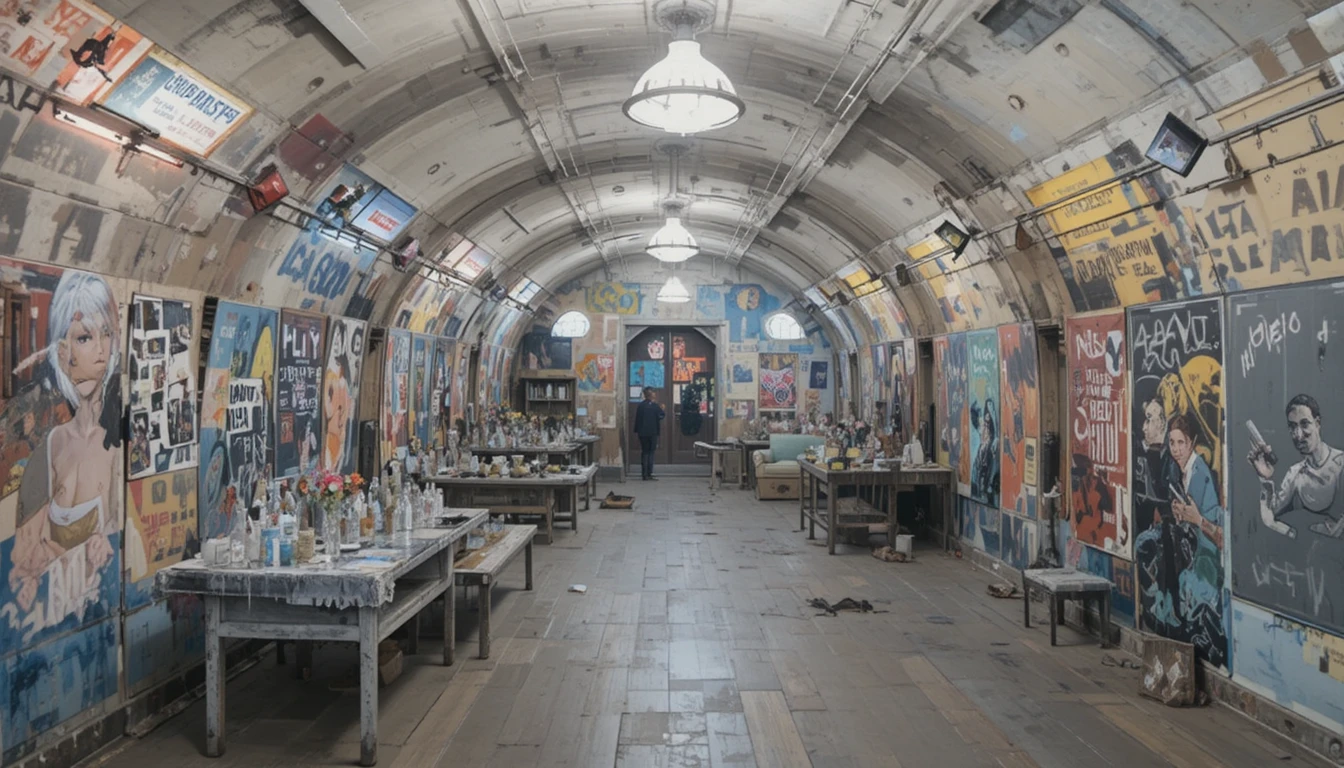
The Historical Context of Underground Culture in Berlin
The fall of the Berlin Wall in 1989 marked a pivotal moment in the city’s history, serving as a catalyst for the emergence of a vibrant underground cultural scene. This transformation was not merely about the physical dismantling of barriers but also about the emotional and societal unification of a city long divided. As East and West Berlin began to interact more freely, a new identity, heavily infused with creativity and expressive cultural practices, began to emerge.
Central to this evolution was the rise of techno music, which became synonymous with the underground culture blossoming in Berlin during the 1990s. Techno, often characterized by its pulsating beats and hypnotic rhythms, provided a distinctive soundtrack to this cultural renaissance. Clubs and venues, many situated in former industrial spaces and abandoned buildings, quickly transformed into hubs for artistic expression, where individuals from diverse backgrounds could come together. These gatherings fostered a sense of community and belonging, allowing the once disparate elements of the city to converge.
Moreover, many of these underground venues began as squats and raves, platforms where creative ideas and alternative lifestyles could flourish. This democratization of culture was critical in a period when traditional structures of authority were being questioned. The act of occupying spaces and repurposing them into cultural hotspots not only highlighted artistic resilience but also sparked discussions about societal values and identity. In this context, these underground hubs played a significant role in reimagining public spaces and reshaping Berlin’s rapidly evolving cultural landscape.
Through this melding of diverse influences and communal experiences, the underground scene became a testament to Berlin’s capacity for reinvention, illustrating how culture can thrive in times of crisis and transformation. As this cultural metamorphosis took shape, it laid the groundwork for a city that continues to celebrate its multifaceted identity today.
Contemporary Underground Scenes in Eastern Europe
In recent years, Eastern Europe has witnessed a remarkable resurgence of underground cultural spaces, particularly in regions affected by ongoing conflicts, such as Ukraine, Serbia, Moldova, and Georgia. These venues, including Closer in Kyiv, K41 in Bucharest, Bassiani in Tbilisi, and Khidi in Batumi, have become vital hubs for resilience and cultural life amid turmoil. As cities grapple with the impacts of war and societal upheaval, these spaces have emerged not only as places of entertainment but also as essential platforms of protest and community solidarity.
The role of these underground scenes extends beyond music and nightlife; they serve as incubators for cultural expression that fosters identity formation and resistance against external forces. Closer, with its avant-garde approach, has become a symbol of artistic courage in Ukraine, hosting events that challenge the status quo and providing a voice for those affected by conflict. Similarly, Bassiani, renowned for its immersive techno environment, has transformed into a site of civic engagement and collective healing, particularly in the context of Georgia’s quest for identity and autonomy.
Moreover, K41 and Khidi illustrate the diverse ways cultural spaces can unite individuals from different backgrounds, facilitating dialogue and collaboration. These venues often host art exhibitions, discussions, and performances that address political and social issues, allowing communities to process trauma and mobilize for change. By bringing people together under a shared roof, they create an atmosphere of support and strength, essential for fostering a sense of belonging and hope in uncertain times.
Ultimately, the vibrant underground cultural scenes in Eastern Europe exemplify how artistic spaces can become catalysts for resilience, creating a sense of identity and purpose among individuals navigating the complexities of their environments. Their ability to adapt and respond to crises showcases the profound impact of culture in shaping societal narratives and promoting unity in the face of adversity.
The Role of Creative Communities in Times of Crisis
In various urban environments, creative communities play a vital role during periods of crisis, such as brain drain, economic instability, and political unrest. The commitment of urban creatives to remain in their cities, despite the challenging conditions, stems from a deep-seated belief in the power of art and culture as means of resistance and resilience. These individuals often find themselves motivated not only by personal passion but also by a desire to contribute to the fabric of their communities. They recognize that their artistic expressions can foster a sense of belonging and solidarity among the people around them.
Temporary autonomous zones, a concept that emerged from the juxtaposition of societal critiques and artistic experimentation, serve as crucial spaces for these communities. These zones promote social cohesion and provide environments in which democratic values can flourish. Within these creative spaces, marginalized voices can express dissenting opinions, share collective concerns, and ultimately forge stronger connections with one another. This helps to reinforce a shared European identity amidst the adversity faced within their regions.
Several multimedia projects have emerged to document the resilience and resistance of artists navigating these turbulent times. By showcasing stories of creative collaboration and innovation, these projects highlight the role of artistic expression in fostering hope and revitalization amidst despair. The dedication of urban creatives manifests not only in their art but also in community-building efforts that engage local residents, thereby enhancing the overall well-being of society.
In essence, creative communities act as catalysts for change, illustrating how the creative spirit endures even in the face of immense challenges. Their commitment to their cities underscores the importance of nurturing environments that value culture, expression, and shared identity, thereby reinforcing the notion that art can indeed serve as a platform for transformation and resilience.
Lessons from Berlin’s Transformation for Current Cultural Movements
The post-1989 era in Berlin provides a significant case study, illustrating how cultural movements can thrive amidst systemic changes and societal upheavals. Shortly after the fall of the Berlin Wall, the city became a canvas for artists, musicians, and activists, showcasing resilience and innovation. This transformation illuminated how underground cultural spaces can act as sanctuaries for creativity, fostering identities that may otherwise be suppressed in more repressive environments.
Berlin stands as a testament to the power of cultural expression in catalyzing social change. In response to emerging challenges, local artists and communities fostered vibrant cultural landscapes, leading to a renaissance of artistic freedom and the establishment of diverse cultural identities. This rebirth not only allowed Berliners to reclaim their narratives but also attracted global attention, marking the city as a cultural powerhouse and a symbol of transformation.
Similarly, contemporary cultural movements in Eastern Europe underline the crucial role of underground spaces as conduits for freedom and expression. In frontline states facing authoritarian governance, artists are leveraging cultural practices as a form of resistance. These cultural spaces offer platforms where marginalized voices can be amplified, promoting community solidarity and resilience. The parallels with Berlin are undeniable, as both historical contexts illustrate that even during crises, cultural endeavors can serve as vital forms of protest and channels for social cohesion.
If we reflect on Berlin’s journey, it becomes evident that cultural spaces represent more than mere locations for artistic expression; they are bastions of hope and resilience. The influence of Berlin’s transformation resonates profoundly in today’s underground movements in Eastern Europe, reminding us of the enduring power of culture to inspire change, nurture identity, and foster community even amid adversity.