
The Historical Context of Economic Transformation
The global economic landscape has undergone dramatic changes since the onset of the Industrial Revolution in the late 18th century. Initially, the Western powers—particularly European nations and later the United States—dominated global trade and industry, leveraging their technological advancements and colonial ambitions to amass wealth and influence. The Industrial Revolution not only catalyzed economic growth through mechanization but also facilitated the rise of capitalist economies that thrived on competition and innovation.
As these Western economies continued to progress, they established frameworks of global trade that favored their interests. This created a persistent economic hierarchy where nations in Europe and North America held most of the power. In contrast, several Asian nations remained largely agrarian, facing internal conflicts or colonial exploitation, which delayed their industrialization. However, significant shifts began to surface in the latter half of the 20th century as various Asian countries embarked on ambitious development strategies, leveraging their demographics, natural resources, and an increasing global demand for technology and manufactured goods.
The rise of economies such as Japan, South Korea, and later China marked a significant turning point in global economic dynamics. These countries adopted policies focused on education, technological innovation, and export-led growth, which rapidly transformed their economies. The influx of foreign direct investment, coupled with a commitment to modernization, positioned these nations as formidable competitors in the global market.
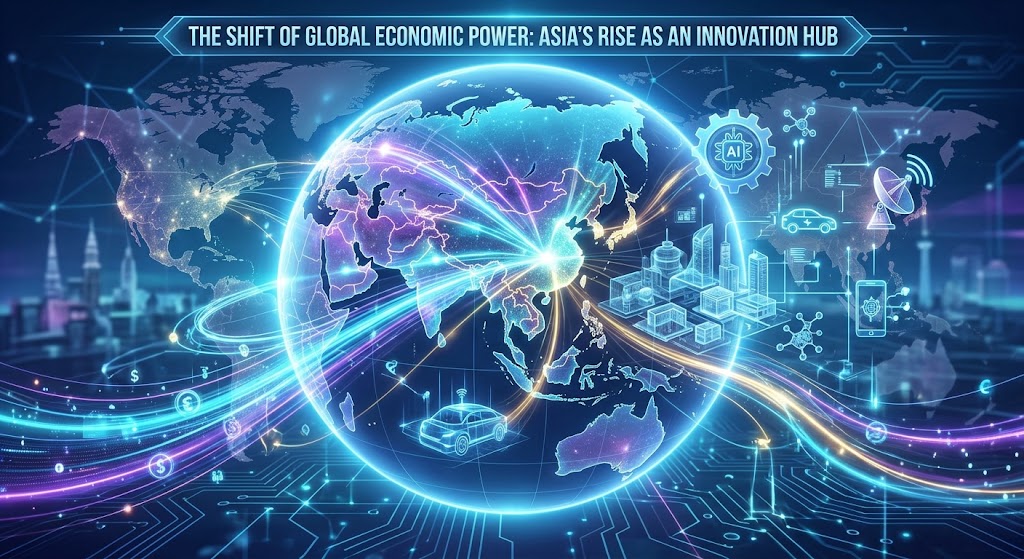
Today, this evolution of economic power is underscored by a shift from a West-centered model to a more multipolar world. Emerging economies in Asia are not just growing; they are setting trends in innovation and technological advancement. This ongoing transformation signals a pivotal change in the global economy whereby Asian countries are establishing themselves as critical players, paving the way for unprecedented economic developments in the years to come.
China: From Manufacturing to Innovation Powerhouse
China has undergone a remarkable transformation over the past few decades, evolving from being known as the “world’s factory” to emerging as a global leader in innovation and technological advancements. This evolution is primarily driven by China’s strategic focus on shifting its economic model from low-cost manufacturing to high-value innovation. The initial phase of China’s economic growth was characterized by mass production, leveraging its vast labor force to become a hub for various industries. However, with rising labor costs and increasing international competition, the necessity for a new model of growth became evident.
To facilitate this transition, the Chinese government has made substantial investments in research and development (R&D). Programs such as the “Made in China 2025” initiative signify a deliberate attempt to upgrade the manufacturing sector and bolster domestic innovation. This strategic shift emphasizes key industries, including advanced manufacturing, robotics, clean energy, and artificial intelligence. By prioritizing these sectors, China aims to reduce its dependency on foreign technology and become self-sufficient in high-tech capabilities.
Moreover, the Chinese government has fostered partnerships between corporations and educational institutions to create a synergistic environment that promotes innovation. Universities are encouraged to collaborate with industries, facilitating knowledge transfer and accelerating technological advancements. These partnerships aim to produce a skilled workforce adept at meeting the demands of a rapidly changing global economy.
In addition to domestic efforts, China has also embraced international collaborations. These partnerships with foreign companies and research institutions have augmented its capabilities in innovation and technology. Such collaboration offers an exchange of ideas and practices that is vital for fostering a robust ecosystem that supports innovation.
Asian Cities as Innovation Ecosystems
In recent years, several Asian cities have emerged as pivotal innovation ecosystems, positioning themselves at the forefront of technological advancement. Among these, Beijing, Shanghai, Suzhou, and Shenzhen play crucial roles in fostering environments that drive creativity and entrepreneurship. These cities are increasingly viewed as experimental hubs where new ideas and technologies are cultivated, attracting talent and investment from both domestic and international markets.
Beijing, the capital of China, has become synonymous with innovation due to its vibrant startup culture and support from governmental policies aimed at promoting technology. The city is home to numerous tech giants, venture capital firms, and research institutions that collaborate seamlessly to convert innovative concepts into viable products. The presence of leading universities also facilitates knowledge transfer and skill development, ensuring a constant influx of fresh ideas into the market.
Similarly, Shanghai stands out as a global financial and technology center. Its comprehensive infrastructure supports a vibrant ecosystem where entrepreneurs can access both resources and talent. The city’s emphasis on international trade and cooperation has further established it as an attractive destination for multinational corporations seeking innovation opportunities and partnerships.
Suzhou, known for its high-tech industrial parks, exemplifies how cities can create conducive environments for innovation. It effectively merges traditional industries with advanced manufacturing and technology sectors, fostering synergies that bolster economic growth and technological development. Meanwhile, Shenzhen has gained recognition as a powerhouse for hardware innovation and rapid prototyping, with its rich supply chain ecosystem allowing for quick iterations and market responsiveness.
Through enhanced collaboration among these cities, Asia is positioning itself as a leader in global innovation. Each city, with its unique strengths, contributes not only to the local economy but also to the broader landscape of technological advancement, ensuring that Asia remains a significant player in shaping the future of global innovation.
Implications of this Global Shift
The rise of Asia as a preeminent innovation hub signifies a transformative evolution in the global economic landscape, with profound implications for international markets and geopolitical relations. A notable impact of this shift is the emergence of new business models that prioritize agility, sustainability, and digital integration. Asian companies are increasingly capitalizing on advanced technologies such as artificial intelligence, blockchain, and the Internet of Things, fostering innovative practices that can redefine traditional business paradigms and consumer expectations.
Moreover, the global supply chain strategies are undergoing significant alterations due to this emergence. Businesses are now reevaluating their supply chain frameworks to optimize efficiency and resilience, often shifting their focus toward regional supply chain networks closer to Asian manufacturing hubs. This adjustment not only enhances logistical operations but also reduces dependencies on long-reaching supply chains that were previously commonplace, thereby fostering a more responsive economic environment.
Another important aspect to consider is the evolution of regulatory standards as nations adapt to the rapid pace of innovation driven by Asian advancements. Policymakers are now tasked with creating environments that support technological growth while ensuring consumer protection and sustainable practices. This balancing act is crucial in maintaining competitive advantages in a landscape that is becoming increasingly dictated by rapid technological disruption.
Additionally, the employment of Asian innovation is reshaping the landscape of global competitiveness. Countries that harness the insights and capabilities emerging from Asia stand to benefit significantly in terms of market positioning and technological leadership. In essence, as Asian economies continue to bolster their roles as innovation powerhouses, their influence on global economic dynamics will likely grow, leading to a more interconnected and competitive global marketplace.