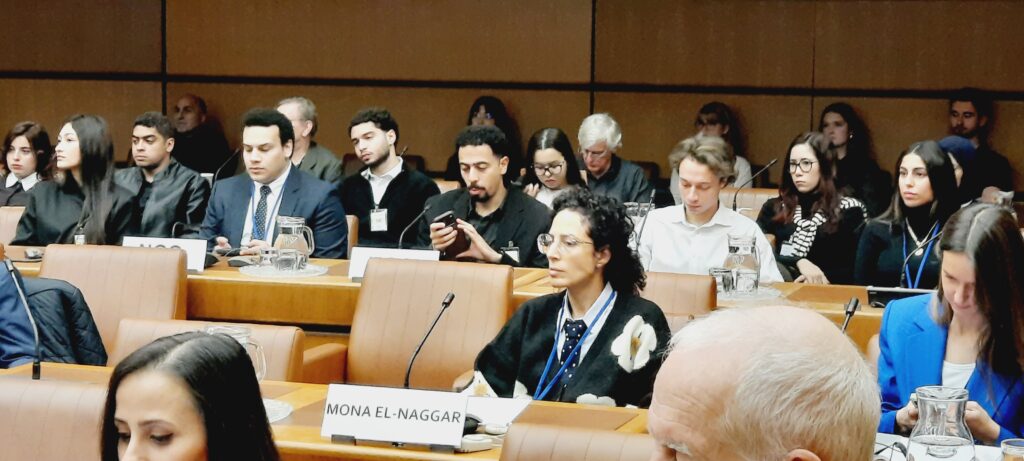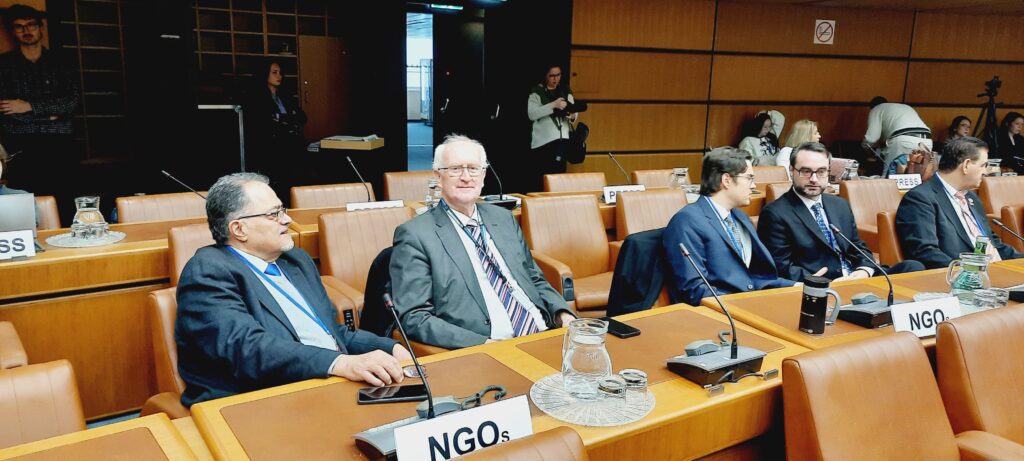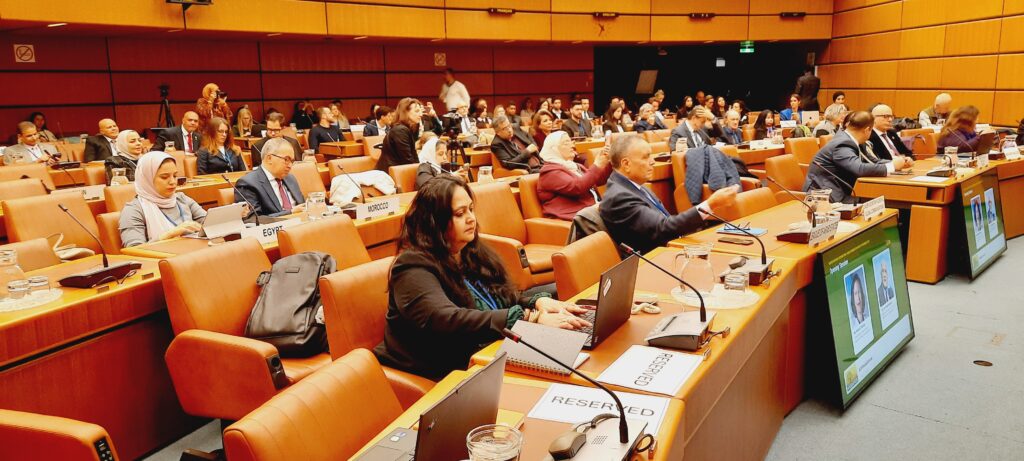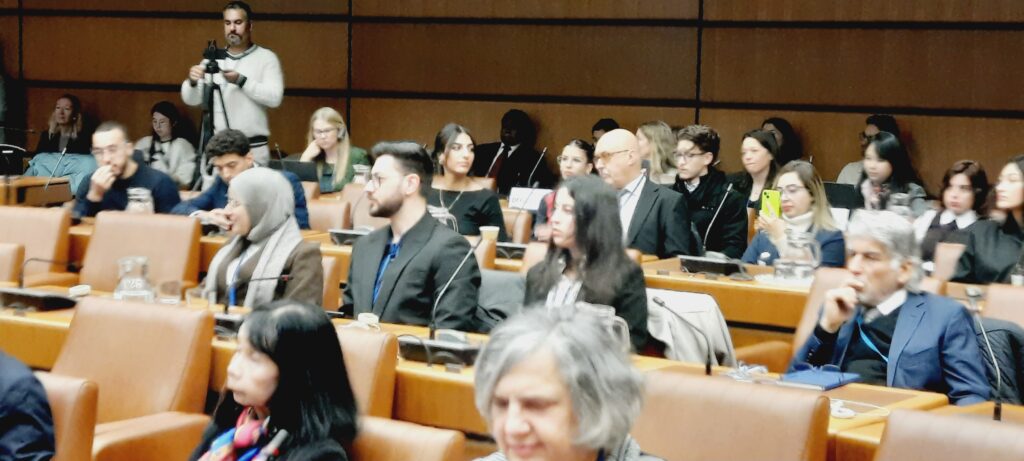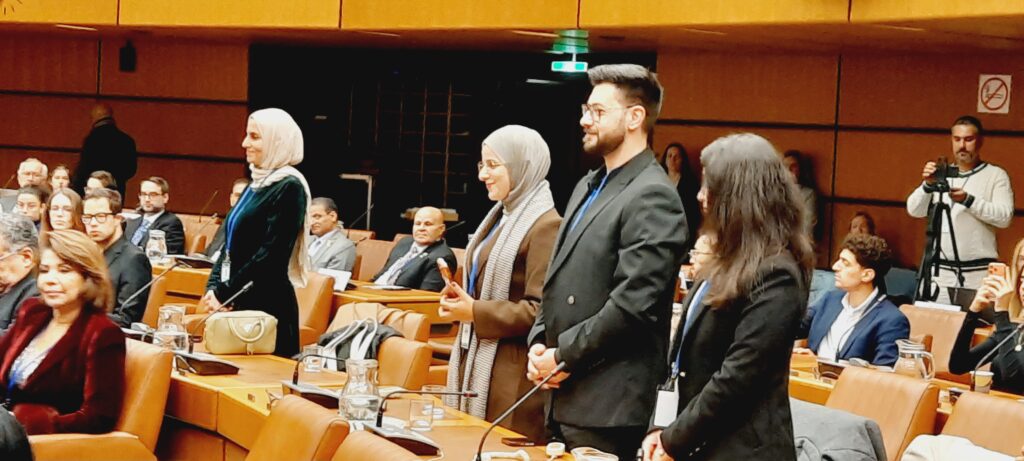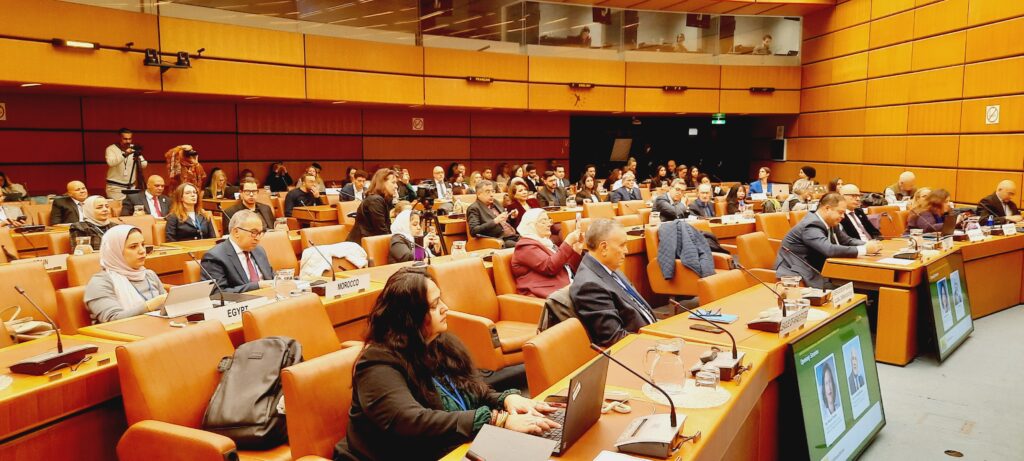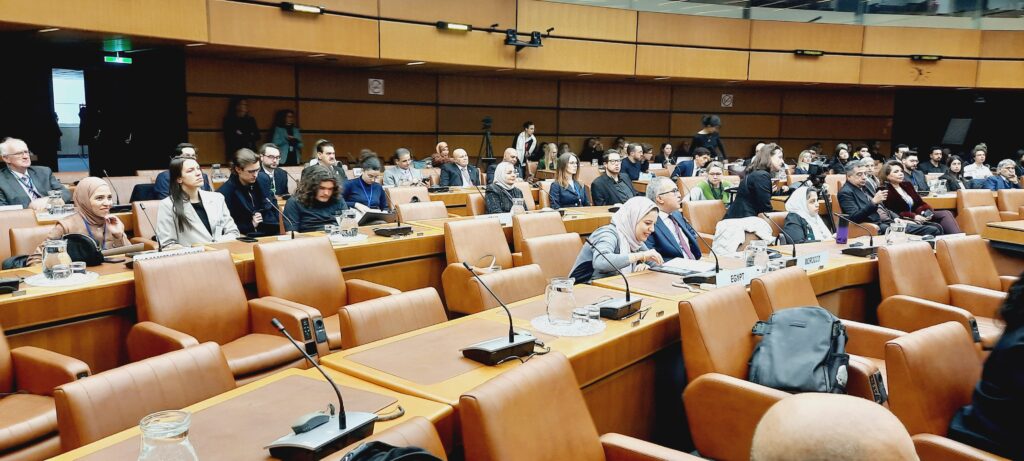


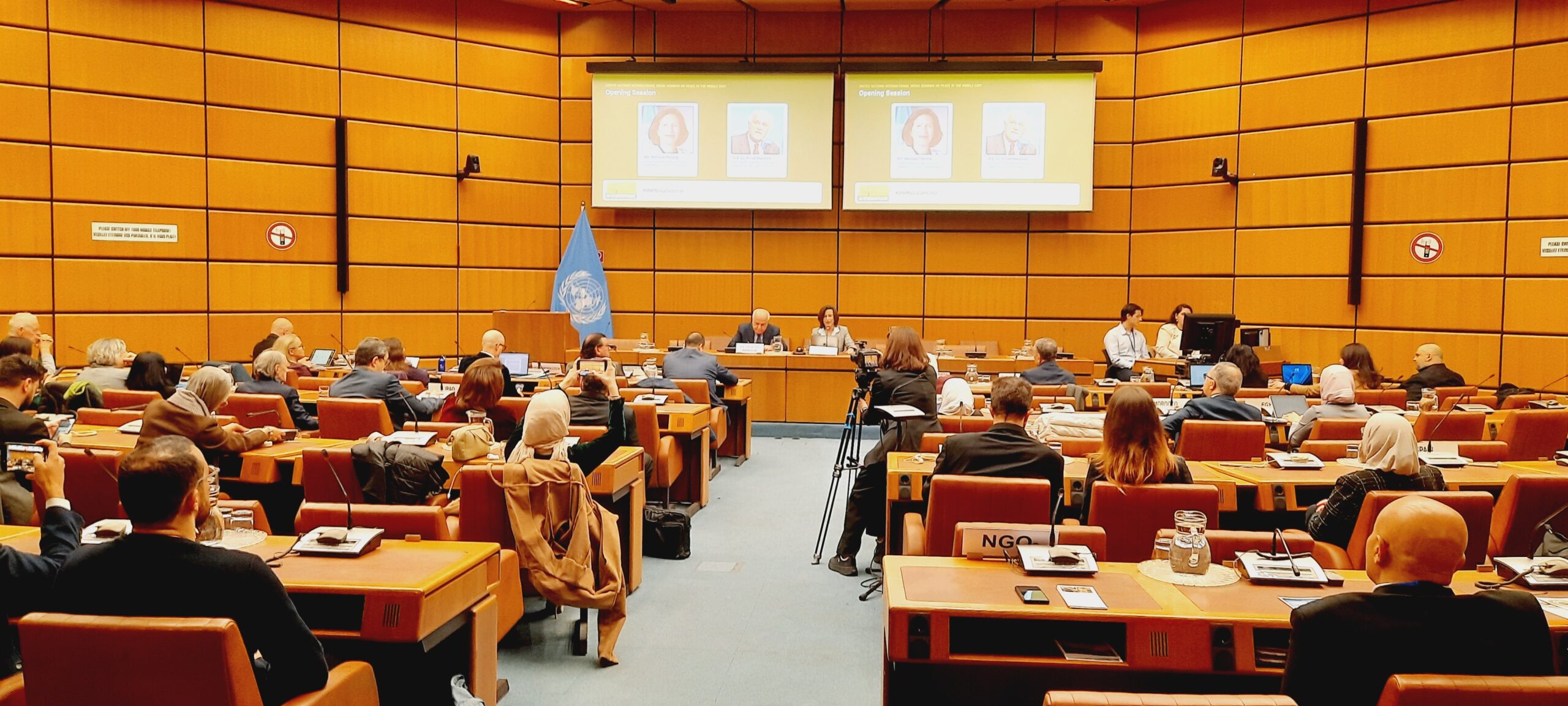
The thirty-fifth United Nations International Media Seminar on Peace in the Middle East took place on November 16–17, 2026, at the Vienna International Centre. Convened by the United Nations, the annual gathering brought media professionals and other participants together to examine reporting on the Israeli-Palestinian conflict and the wider question of Palestine. Its setting in Vienna offered a shared space for discussion across professional and regional perspectives. The seminar’s long-running format reflects the recognition that coverage of this issue is shaped not only by events on the ground, but also by choices about language, evidence, access, and whose experiences receive attention.
Established in 1991, the seminar is intended to raise awareness of the question of Palestine and encourage dialogue among media professionals. Over more than three decades, it has provided a recurring opportunity to consider how news organizations describe developments, select sources, and explain the historical and political context to audiences. The United Nations’ role in convening the event places the discussion within a broader effort to sustain international attention on the issue. At the same time, the seminar’s media focus recognizes that public understanding depends in part on the quality, reach, and credibility of reporting.
The gathering matters because journalism about the conflict involves practical and ethical challenges that can influence what audiences learn. Participants can examine obstacles such as limited access, safety risks, competing accounts, misinformation, and the difficulty of verifying events during periods of violence. Discussion also creates room to assess how editorial decisions and terminology may affect the portrayal of people and events. By bringing practitioners into conversation, the seminar can help identify shared concerns without assuming that all participants hold the same views or face identical conditions. Its value lies in creating a forum for questioning established approaches, exchanging professional perspectives, and considering how coverage can be clearer and more contextual. More informed reporting can support public debate by helping audiences distinguish verified information from claims, understand differing experiences, and follow developments beyond immediate headlines. In that way, dialogue about media practice becomes part of the wider effort to foster understanding and keep attention on the pursuit of peace.
At the UN’s 2026 Vienna seminar, Secretary-General António Guterres called for an end to attacks on journalists reporting from the occupied Palestinian territory and urged that those responsible be held accountable. His appeal underscored that protecting media workers is not optional: journalists must be able to document events, seek information and communicate their findings without being targeted for doing their work. Where attacks occur, credible investigations and accountability are essential to deter further violence and uphold the protections afforded to journalists under international law.
Guterres highlighted the heavy toll on Palestinian journalists in Gaza since October 7, 2023. Reporting from the territory has taken place amid severe danger, with local media workers facing the consequences of sustained hostilities while trying to inform audiences about conditions on the ground. Their work is particularly important when access to reliable information is limited. The risks they face should not be treated as an inevitable feature of conflict reporting; practical safeguards, respect for civilian protections and meaningful accountability are needed to reduce the threat to journalists and their colleagues.
The Secretary-General also appealed for restrictions preventing international journalists from entering Gaza to be lifted. Independent access would allow reporters to observe developments directly, verify accounts and provide a fuller picture to the public. It would also reduce the burden on Palestinian journalists, who have often continued reporting under exceptional pressure. Across the West Bank, including East Jerusalem, media workers likewise face threats and violence that can obstruct coverage and endanger those seeking to report. Ensuring safe reporting requires more than statements of concern: authorities and all parties must respect journalists’ ability to work, prevent intimidation and attacks, and investigate alleged violations. Protecting access and safety enables the media to report on events with greater independence and helps preserve public access to information. Guterres’s call therefore links physical protection, accountability and access: each is necessary for journalists to carry out their work safely across Gaza and the West Bank.
At the UN’s 2026 Vienna seminar, sessions on media narratives examined how accounts of the conflict are framed, circulated and interpreted. Participants considered the ways in which differing descriptions of events can shape public understanding, including which details receive attention and how responsibility, context and consequences are presented. These discussions treated narratives as part of the reporting environment rather than as a substitute for evidence. For journalists, the challenge is to explain competing accounts clearly while distinguishing what is confirmed, what remains disputed and whose perspective is being represented. The seminar addressed these issues as features of coverage, without implying that all narratives are equally supported or that participants resolved their differences.
Practical discussions also focused on the conditions under which journalists can report from affected areas. Participants raised access hurdles encountered by international and European journalists, including limits on where reporters can travel, whom they can meet and what they can observe directly. Such constraints matter because on-the-ground reporting can depend on physical access, reliable communication and opportunities to check accounts against available evidence. When those conditions are restricted, reporters may have to rely more heavily on remote interviews, documentation or statements from others, each of which brings distinct verification needs. The discussion therefore connected access to the everyday process of gathering and assessing information, not only to the logistics of travel.
Restricted access can narrow what reporters are able to verify firsthand and, in turn, what they can convey with confidence. It may leave gaps in the record, make independent corroboration harder, or constrain the range of voices available to audiences. At the same time, differing narratives influence how information is selected, described and understood. A report may need to identify the source of a claim, explain relevant context and make clear where evidence is incomplete, rather than present contested accounts as settled facts. The seminar’s sessions highlighted these practical and interpretive pressures as issues journalists face when covering the conflict, without advancing conclusions beyond the challenges and narrative differences discussed.
At the Vienna seminar, UN Secretary-General António Guterres reaffirmed the United Nations’ support for a two-state solution, presenting it as the stated political path toward a just and lasting peace. The position rests on the principle that Israelis and Palestinians should be able to live side by side in two independent, sovereign states, with security, dignity, and rights for both peoples. It reflects a longstanding framework rather than a new proposal produced by the seminar. Guterres’s remarks placed that framework within a discussion of the responsibilities involved in reporting on a conflict marked by competing narratives, profound human consequences, and persistent political obstacles.
Under the parameters described, Israel and Palestine would exist alongside one another on the basis of the pre-1967 lines, with agreed land swaps potentially forming part of a negotiated settlement. Gaza and the West Bank would constitute parts of a single Palestinian state, rather than separate political entities. Jerusalem would serve as the capital of both states. These elements outline the broad vision endorsed by the UN, but questions of borders, security, governance, access, and the status of the city remain matters for the parties to address through negotiations. Restating the framework does not itself settle those issues or establish that the necessary political conditions are in place.
The seminar’s discussion of this position also underscored how reporting can inform public understanding without substituting for diplomacy. Journalists and other participants can clarify what the two-state framework entails, distinguish established UN positions from developments on the ground, and convey the human impact of choices made by political actors. Careful reporting can create space for informed dialogue by representing perspectives accurately and placing claims in context. At the same time, the event did not resolve the conflict, produce a new agreement, or guarantee progress toward implementation. Guterres’s reaffirmation therefore served as a reference point for the seminar’s broader examination of reporting and dialogue: a clear statement of the UN’s preferred direction, alongside recognition that achieving peace requires sustained political engagement and decisions beyond the scope of a single gathering.