

The term “Carpathian anomaly” describes a marked gap between the European Union’s retreat from Russian oil and the continued reliance of Slovakia and Hungary on Russian energy. Russian crude accounted for about 27% of EU imports in 2022, but roughly 1% by 2025. Hungary moved in the opposite direction: reported Russian crude dependence rose from 61% in 2021 to around 93% by 2025. Russian gas imports also increased, from approximately 60% to 90% over the same period. These figures distinguish the two countries from the broader pattern of European diversification.
Geography helps explain the available routes, but it does not explain the full divergence. Both countries are landlocked and connected to Russian supplies through established pipeline infrastructure. Their refineries have also been configured to process particular grades of crude, making alternative supplies costly and operationally demanding to secure. Russian oil and gas have offered commercial advantages, while governments have made political choices about how quickly to diversify and which costs to accept. The persistence of these flows therefore reflects infrastructure, refinery requirements, price considerations, and policy—not geography alone.
EU exemptions also shaped the outcome. Measures restricting Russian oil imports included arrangements that allowed landlocked member states to continue receiving pipeline crude, but those exemptions were not tied to firm end dates. This reduced pressure for a rapid transition and left oil diversification unresolved. The trajectories now appear different: by 2026, gas policy is moving toward alignment with EU restrictions, while the future of Russian oil remains contested. Nuclear fuel adds another dimension, but dependence on Russian nuclear technology and fuel is a wider European challenge, not a problem unique to Slovakia and Hungary. The exception is thus neither purely geographic nor simply a matter of technical necessity; it emerged through policy decisions and persistent commercial and industrial constraints.
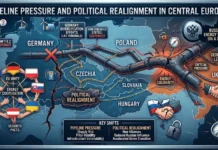
The Druzhba pipeline has connected Russian oil fields with Central European refineries since the 1960s, embedding energy trade in infrastructure built for long-term, high-volume flows. Its southern branch runs through Ukraine toward Hungary and Slovakia. By 2026, it remained the last route carrying Russian crude into the European Union, supplying MOL Group’s Duna refinery near Budapest and Slovnaft in Bratislava. The route’s continued operation reflected both its physical importance and the difficulty of replacing established supply chains quickly.
Discounted Russian crude has supported commercial advantages for refiners able to process it, while pipeline transit has generated fees for countries along the route. MOL’s refineries were configured around a range of crude grades, but changing the feedstock mix can require operational adjustments, additional logistics, and investment. Access to lower-cost crude can also widen refining margins: companies buy oil, turn it into fuels and other products, and sell those products in regional markets. These incentives are distinct from pipeline constraints, but they reinforce the attraction of maintaining existing supply.
Substitution is especially consequential for Slovakia. Slovnaft is the country’s one major refinery, and Slovakia has less storage capacity than many larger energy markets. A disruption therefore presents fewer domestic options for sustaining refinery operations and meeting demand while alternative supplies arrive. Imports through other routes may be possible, but they depend on available pipeline capacity, port access, transport arrangements, and compatible crude grades. Infrastructure limits do not make alternatives impossible; they make a rapid transition more exposed to cost and interruption.
Political and commercial choices have also shaped the arrangement. European sanctions provided exemptions for certain landlocked countries, while the absence of clear, binding deadlines for ending Russian oil imports reduced pressure to make an immediate break. Such provisions recognized practical vulnerabilities, but also allowed incumbent supply relationships and refinery economics to persist. The result is an oil bind in which geography and installed infrastructure narrow short-term choices, while discounted supply, transit income, and refining margins give governments and firms reasons to preserve the route.
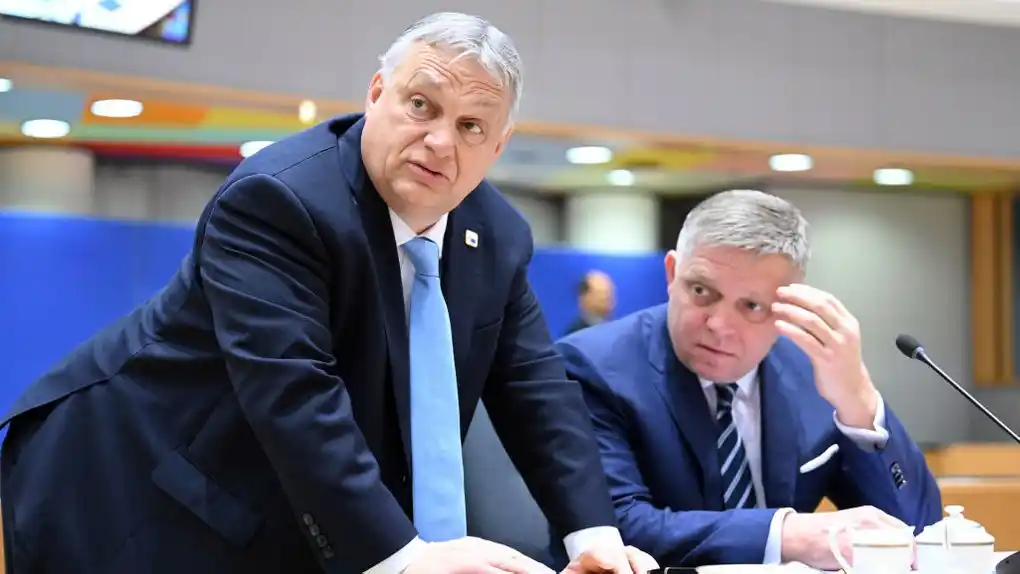
When Ukraine’s agreement permitting the transit of Russian gas expired on 31 December 2024, flows through the country stopped, ending a route that had supplied several Central European markets. Slovakia faced an immediate change in how Russian gas could reach it. The shift followed a politically charged period: Prime Minister Robert Fico visited Moscow shortly before the transit ended, underscoring Bratislava’s effort to preserve Russian supply even as the route’s future remained uncertain.
Gazprom redirected deliveries toward the TurkStream pipeline, which carries gas across the Black Sea to Türkiye and onward into southeastern Europe. From there, supplies can reach Hungary and connect with Slovakia through the Hungary–Slovakia interconnector. Consequently, deliveries entering Slovakia shifted from the east, through Ukraine, toward the south. The physical change also altered the balance of influence: Hungary became more important to Slovakia’s access to Russian gas, including as a transit and supply partner.
The interconnector provides an established route, but its capacity is not unlimited. Its annual capacity is about 3.5 billion cubic metres, equivalent to roughly three-quarters of Slovak gas demand. That volume makes it significant for national supply, while also highlighting the dependence involved in relying more heavily on a southern corridor and cross-border infrastructure. Availability through Hungary does not by itself settle questions about the volume, timing, or commercial terms of deliveries.
The dispute is compounded by Slovakia’s existing contract. Slovak importer SPP has a long-term agreement with Gazprom that runs until 2034. Bratislava argues that European Union restrictions on Russian gas could leave the country paying for contracted supplies it is unable to receive, particularly if alternative routes or exemptions are unavailable. This claim places the issue at the intersection of supply security and contractual responsibility: Slovakia emphasizes the risks of stranded commitments, while the wider debate concerns the political choices behind continued dependence on Russian gas. The end of Ukrainian transit therefore did more than change a pipeline map; it shifted practical leverage, exposed infrastructure constraints, and sharpened disagreements over who should bear the costs of disrupted deliveries.
Gas policy is moving, gradually, toward closer alignment with the European Union’s direction. The bloc has set a course to end Russian gas imports by 2027, giving governments and companies time to adjust contracts, infrastructure, and supply portfolios. Slovakia and Hungary therefore face choices about how quickly to diversify and how to manage the transition without undermining affordability or reliability. That timetable does not, however, resolve the more immediate uncertainty surrounding Russian crude oil. Both countries remain exposed to the Druzhba pipeline, and the route’s future depends on political decisions, technical constraints, and the availability of workable alternatives.
Nuclear ties add another layer, but reliance on Russian nuclear fuel should not be portrayed as a uniquely Central European condition. Russian-origin supplies and services remain relevant to nuclear operators elsewhere in the EU, while replacing them can require licensing, fuel qualification, and long lead times. Hungary must decide how to proceed with Paks II, the planned expansion involving Russian technology and financing, amid scrutiny over costs, implementation, and compatibility with European rules. The choices include continuing on the current path, seeking changes, or reconsidering the project, each carrying consequences for future generating capacity and relations with Moscow and Brussels.
Slovakia’s calculations are also shaped by domestic politics. The government has renewed political dialogue with Moscow, while the country approaches parliamentary elections scheduled for 2027. Energy policy may consequently become more contested, with parties weighing the value of established supply links against diversification and EU commitments. Neither government can treat these questions in isolation: refinery configurations and pipeline limits constrain how quickly crude sources can change; gas contracts create financial exposure; and nuclear projects demand long-term decisions. The outcome will depend on balancing energy security, infrastructure and industrial needs, contractual obligations, EU rules, and domestic priorities. That balance remains unresolved, and policy may evolve differently for oil, gas, and nuclear power rather than through a single break with Russian energy.