
For decades, policies focused on containing Iran have shaped security planning across the Gulf. They have influenced military deployments, sanctions, and diplomatic alignments, but have not eliminated recurrent tensions or prevented crises from affecting shipping, energy infrastructure, and regional economies. Deterrence can raise the costs of hostile action, yet it does not resolve the political disputes, mutual suspicions, and security fears that can trigger confrontation. A strategy centered chiefly on limiting one state’s influence therefore offers no dependable path to lasting stability.
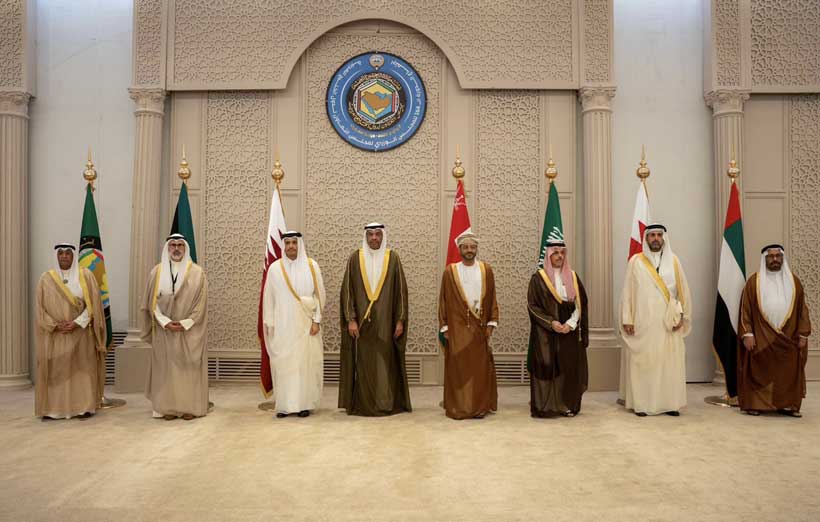
A proposed regional process would bring together all eight states with coastlines on the Gulf: Oman, the five members of the Gulf Cooperation Council—Bahrain, Kuwait, Qatar, Saudi Arabia, and the United Arab Emirates—alongside Iran and Iraq. Their circumstances are changing. Economic diversification, new trade and investment priorities, evolving relationships with global powers, and shared exposure to environmental and maritime risks all strengthen the case for sustained dialogue. Gulf states have also shown that they can protect their populations, critical infrastructure, and economies, including during periods of heightened threat. That capacity provides a basis for engagement from a position of confidence rather than vulnerability.
Military readiness and partnerships with powerful allies, including the United States, remain important. Defense capabilities can deter attacks, while international relationships can provide support, coordination, and reassurance. But neither can, by itself, establish durable stability among neighboring states whose security is closely interconnected. The central question is how Gulf countries can influence the conditions that give rise to crises, rather than concentrating only on responses once a crisis has begun. Regular regional consultation could help clarify intentions, manage incidents, and identify practical areas for cooperation, even where deeper disagreements persist. Taking greater responsibility for regional security would complement existing international partnerships, not require their abandonment. A wider forum offers a way to connect those partnerships with direct communication among the states most immediately affected, and to treat security as a shared concern rather than solely a contest to contain rivals.
A diplomatic agreement can mark a shift, but a single event rarely creates durable regional security. It may ease tensions or signal political intent, yet its effects can fade when leaders change, crises erupt, or implementation stalls. Lasting stability depends on a continuing process: governments meet repeatedly, exchange information, test expectations, and develop habits of restraint. Over time, limited understandings can become predictable conduct and regional rules. This distinction matters in the Gulf, where unresolved disputes make settlement difficult. A process need not deliver reconciliation; it keeps channels open and progress possible despite disagreement.
The Helsinki process, launched in 1975, demonstrates how dialogue and confidence-building can advance amid political divisions. Participants did not first resolve every dispute; instead, negotiations created opportunities to state principles, discuss security concerns, and build measures that made intentions more transparent. Its significance for Gulf diplomacy is therefore a principle, not a blueprint. Gulf states face histories, power balances, and security pressures that require institutions and measures to reflect local realities. The lesson is that engagement need not wait for trust or a comprehensive accord. Structured contact can help create conditions in which trust grows, while disagreements remain acknowledged and managed.
Regular contact can reduce miscalculation by clarifying signals, correcting false assumptions, and giving officials dependable counterparts to reach when events move quickly. During periods of tension, established communication channels may prevent incidents from escalating and preserve space for political decisions. Early cooperation should focus on practical, shared interests rather than forcing agreement on divisive questions. Maritime safety, crisis communication, protection of critical infrastructure, humanitarian assistance, disaster response, and economic connectivity offer possible starting points. Joint work in these areas can produce benefits, build professional relationships, and demonstrate that limited coordination is worthwhile. Such modest gains can gradually reinforce confidence and support regional security discussions.
A durable Gulf order cannot depend solely on choices made in distant capitals. External powers will remain consequential, but arrangements designed without sustained regional participation are vulnerable to changing priorities and uneven legitimacy. Smaller and middle powers can help correct this imbalance by convening rivals, preserving channels for communication when formal ties are strained, and identifying practical areas where cooperation offers mutual benefit. These may include maritime safety, emergency response, trade, environmental pressures, or public health. Shared projects do not resolve strategic disputes, but they can create habits of contact and demonstrate that restraint and coordination produce tangible gains for all.
The Helsinki experience offers a useful precedent. In the Cold War, states with less power helped assemble a process that brought adversaries into sustained dialogue and articulated principles for conduct. Its value did not rest on forcing major powers to abandon competing interests. Rather, a shared framework raised the political cost of disregarding agreed rules, provided recurring forums for discussion, and allowed cooperation to expand over time. The lesson for the Gulf is not to copy European institutions wholesale, but to recognize that convening states can shape the setting in which stronger actors operate. Carefully negotiated commitments, transparent procedures, and regular meetings can encourage powerful states to explain their actions and keep communication open, even when consensus on disputes remains out of reach.
Oman is well suited to this convening role because its diplomatic tradition emphasizes dialogue, discretion, and continuity. Muscat has maintained relationships across regional divides and with external actors, giving it credibility as a host without requiring it to claim authority over participants. Patience is an asset where confidence is limited and political conditions shift quickly. A Muscat initiative should proceed deliberately: begin with consultations and modest, useful measures; keep channels functioning through tension; and establish a dependable rhythm of contact. Its early achievement would be consensus on process, not an elaborate institution or sweeping declaration. As trust develops, participants could widen the agenda, formalize selected practices, and invite broader involvement. This gradual path would give smaller and middle powers agency while making cooperation practical enough for larger states to sustain.
The purpose of a Muscat process would be to give Gulf states a sustained setting in which they can shape their own security arrangements over time. Rather than relying on occasional meetings prompted by crises, participants could establish regular channels for discussing shared risks, testing proposals, and identifying areas for practical cooperation. Deterrence, dialogue, and international partnerships need not be treated as competing approaches. Credible defensive capabilities may reduce incentives for coercion, while communication can help prevent miscalculation and clarify intentions. External relationships can contribute expertise and reassurance. The central task is to connect these elements within a permanent regional process that reflects Gulf priorities and gives regional ownership practical meaning.
A supporting group of friends of the process could help sustain that effort. Willing partners, potentially including the United States, European states, Britain, and China, might provide technical assistance, diplomatic encouragement, or opportunities for discussion. Their participation could signal that a regional initiative has broad international support, while helping maintain attention between formal meetings. Such a group would need a clearly defined, limited role: partners could enable and encourage the process, but Gulf participants would set its agenda, determine its pace, and make decisions about its future. This distinction matters. International support is most useful when it strengthens local capacity and confidence rather than transferring responsibility away from the states whose security is at stake.
The process should not promise immediate settlement of disputes or assume that longstanding differences can be resolved through a single framework. Its value should instead be judged by practical changes: whether communication becomes more dependable, cooperation more achievable, and future agreements more possible. Regular contact can build habits of consultation even when positions remain far apart, and modest collaboration may create experience that participants can draw on when circumstances change. Progress may therefore be gradual and uneven. Institutions often emerge not because disagreements have disappeared, but because participants recognize the need for frameworks to manage them. A lasting regional architecture would provide Gulf states with space to address tensions, preserve dialogue, and develop shared arrangements without requiring consensus on every issue at the outset.