


Greece, Albania and North Macedonia have renewed their commitment to cooperate in protecting and promoting the cultural heritage they share across borders. The initiative reflects recognition that historic connections, landscapes and traditions can support dialogue as well as cultural development. The three countries intend to strengthen practical cooperation, helping ensure that heritage is preserved, interpreted responsibly and made accessible to communities and visitors. Their priorities extend beyond conservation alone: they also include professional training in the cultural sector and support for contemporary creative work. By combining preservation with skills development and new artistic activity, partners can connect heritage with the present.
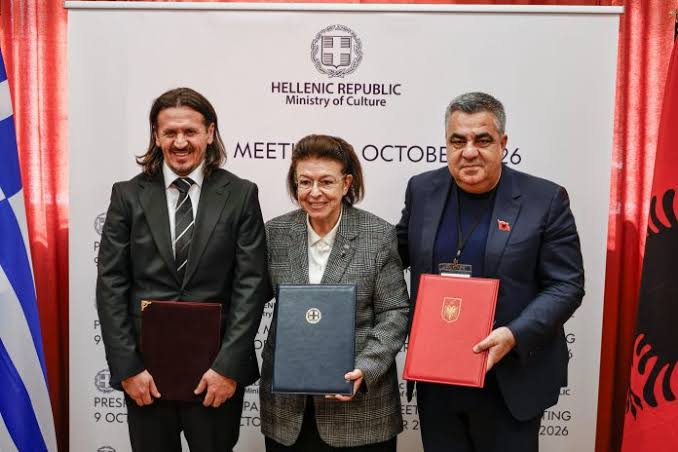
These priorities were discussed by Greece’s Culture Minister Lina Mendoni in separate meetings with Albania’s Minister of Tourism, Culture and Sport Blendi Gonxhja and North Macedonia’s Minister of Culture, Tourism, Sport and Youth Sedat Sulejmani. The talks provided an opportunity to review ways to deepen cooperation, with attention to safeguarding shared cultural assets and encouraging exchange between institutions and professionals. Training can help cultural-sector workers build expertise, share methods and develop durable partnerships across the region. At the same time, backing contemporary creative work recognizes that culture is continually shaped by artists and communities today. Together, these strands offer a broad basis for collaboration.
The discussions also took place amid a positive atmosphere following the trilateral Prespa meeting, where Greece, Albania and North Macedonia are pursuing a joint bid to have the Prespa region included on UNESCO’s World Heritage List. That shared effort gives added context to the renewed cultural commitments: it demonstrates how cooperation can bring neighboring countries together around a place of exceptional cultural and natural significance. Coordinated work on heritage protection, professional development and creative initiatives can complement the bid and build wider public understanding. In this setting, ministerial dialogue signals an intention to translate goodwill into sustained regional cooperation.
The Prespa discussions offered Greece, Albania, and North Macedonia a setting to consider how shared cultural interests could support broader regional cooperation. Rather than treating heritage as an isolated subject, the meetings connected its protection with opportunities for sustained dialogue and practical collaboration. The Greek Ministry of Culture’s account describes conversations about new joint initiatives and closer cultural ties, indicating an interest in building relationships that can continue beyond a single meeting or project.
A proposed joint UNESCO World Heritage bid for the Prespa region reflects this shared interest in recognizing and safeguarding a place of cultural significance. Preparing a nomination together can encourage the countries to exchange research, compare approaches to conservation, and identify the values and traditions that link communities across borders. The process also provides a framework for raising awareness of the region’s heritage while respecting the distinct histories and perspectives of each participating country. A coordinated bid would therefore be both a recognition effort and a possible starting point for continued cooperation.
The partnership envisioned through the Prespa discussions extends beyond one heritage nomination. Practical cooperation could include sharing expertise in conservation, documentation, museum practice, and the care of cultural sites. Professional exchange among specialists and cultural institutions can help develop skills, create lasting working relationships, and make it easier to respond to common challenges. Joint cultural activity, including exhibitions, research, and public programs, may also bring regional stories to wider audiences and encourage contact among communities.
Such collaboration depends on ongoing communication and on initiatives that deliver value across borders. By linking heritage protection with professional exchange and cultural programming, the three countries can create a broader foundation for cooperation. The Prespa platform thus points toward a flexible partnership: one in which a shared nomination may provide momentum, while practical projects and regular engagement sustain closer cultural ties over time.
The ministers highlighted the restoration and handover of the Byzantine Church of St George in Kurbinovo as a practical example of Greece–North Macedonia cultural cooperation. Following the completion of conservation and restoration work on the church’s frescoes, the monument was handed over, marking an important step in safeguarding a treasured part of the region’s shared heritage. The frescoes are of exceptional historical and artistic value, and their preservation helps protect both the physical fabric of the church and the cultural record represented by its images. Their care also supports continued appreciation of Byzantine art and its influence across national borders.
The work was carried out by the European Centre for Byzantine and Post-Byzantine Monuments, with funding from Greece’s Ministry of Culture. This partnership built on a cooperation memorandum signed in 2021 by the Centre and North Macedonia’s Ministry of Culture. The agreement established a framework for joint efforts, including the conservation of the church’s frescoes. By combining specialist expertise with financial support and coordination between public institutions, the project helped address the technical demands of conservation while reinforcing cultural links between the two countries. It shows that cross-border cooperation can deliver tangible benefits when partners work together to preserve vulnerable monuments.
The ministers also discussed further measures to protect cultural heritage and opportunities for additional cross-border cultural initiatives. These conversations place the Kurbinovo restoration within a broader approach to cooperation, in which conservation projects can be complemented by exchange, professional collaboration and shared public engagement. Such initiatives can help institutions respond to common preservation challenges, strengthen knowledge of regional histories and make heritage more accessible to local communities and visitors. The church’s restored frescoes therefore represent more than a completed intervention: they illustrate how sustained dialogue and practical cooperation can protect significant monuments while fostering constructive relations between neighboring countries.
A meeting between Greece’s Culture Minister, Lina Mendoni, and her Albanian counterpart focused on turning close cultural ties into practical, sustained cooperation. The discussions highlighted the value of shared heritage as a foundation for stronger bilateral relations, while identifying areas where the two countries can work together more directly. Both sides expressed interest in deepening cultural links, developing joint initiatives, and creating synergies between institutions and specialists.
A central proposal was an agreement to combat the illicit trafficking of cultural goods. Such cooperation could strengthen efforts to identify, prevent, and respond to the unlawful movement of archaeological and other heritage objects. By improving coordination between the relevant authorities, Greece and Albania could make it harder for trafficked objects to enter or circulate through the market. The proposed framework also carries an important restorative purpose: supporting the return of cultural property to its country of origin. Clear procedures and ongoing communication would help translate that principle into effective action and reinforce respect for the cultural identity of both societies.
The ministers also discussed reactivating the 2021 memorandum of cooperation on the restoration and conservation of monuments. Renewed implementation would provide a basis for experts to share knowledge, methods, and experience in preserving historic sites. This work can address common challenges, including the need for skilled conservation, careful planning, and long-term maintenance. Reviving the memorandum would therefore give existing commitments fresh momentum and create opportunities for practical collaboration on individual projects.
Together, these proposals show how cultural diplomacy can move beyond declarations. Measures against illicit trafficking, procedures that facilitate the return of objects, and cooperation on monument conservation offer concrete ways to protect heritage while strengthening trust. Their success will depend on sustained engagement, institutional coordination, and follow-through over time. By combining shared priorities with workable agreements, Greece and Albania can safeguard cultural resources for future generations and build a durable partnership rooted in respect for the histories and heritage of both countries.