


Greece plans to increase its heating allowance by 30% compared with the amount recipients received last year. The announced rise is intended to offer households additional help as they prepare for the colder months and face continuing pressure on their budgets. Heating is a significant seasonal expense, and a larger allowance could provide some relief to families that rely on fuel or other forms of energy to keep their homes warm.
The measure has been presented against the backdrop of an international energy crisis, which has contributed to uncertainty and higher costs for consumers. By raising the allowance, the government aims to help households manage heating expenses during a period when energy prices remain an important concern. The support is expected to reach hundreds of thousands of families nationwide, making it a broad household assistance measure rather than help limited to a single locality.
However, the announcement does not yet specify how much each recipient will receive. A 30% increase describes the change from last year’s allowance, but it does not establish a uniform payment amount for every household. Individual support may depend on details that have not been provided in the announcement. Eligibility rules, application procedures, payment dates, and any differences based on household circumstances also remain unconfirmed. Until those details are released, families cannot determine their exact entitlement or when they might receive the money. The planned increase therefore signals a stronger level of assistance, while leaving practical questions open. Further official information will be needed to clarify who qualifies, how the allowance will be calculated, and how the expanded support will be delivered. For now, the central commitment is a 30% rise intended to cushion heating costs for households across Greece during the energy crisis.
Alongside the proposed increase in Greece’s heating allowance, the government has announced a direct subsidy for heating oil at the pump. The measure is presented as the second strand of the support package, addressing the price consumers encounter when they purchase fuel rather than relying solely on a separate payment. Its stated purpose is to reduce the amount households pay at the point of purchase. This places the intervention within the transaction itself, distinguishing it from an allowance delivered independently of a particular purchase. The announcement frames both measures as elements of a broader effort to ease heating costs during the season.
The pump subsidy is intended to offer more immediate relief to households buying heating oil. Because the support is tied to the purchase point, it is designed to affect the cost consumers face when obtaining fuel, rather than arriving as a separate benefit at another time. That distinction may matter to households managing near-term expenses, especially when they need to buy heating oil to keep their homes warm. The allowance and the pump measure therefore address household costs through different routes: one provides support separately, while the other aims to reduce the price paid at purchase. The government has described the latter purpose, but has not set out further mechanics in the announcement.
Details about the subsidy remain limited. The announcement did not specify an amount per litre, explain how the support would be applied at the pump, or provide other operational terms. Those points should not be assumed until further information is released. For now, the stated objective is clear: to make heating oil less costly for consumers at the moment they buy it. The measure adds a point-of-purchase element to the wider package, complementing the planned increase in the heating allowance without being the same kind of assistance. Its practical effect will depend on details that have yet to be announced, so households should distinguish the stated aim from confirmed implementation arrangements.
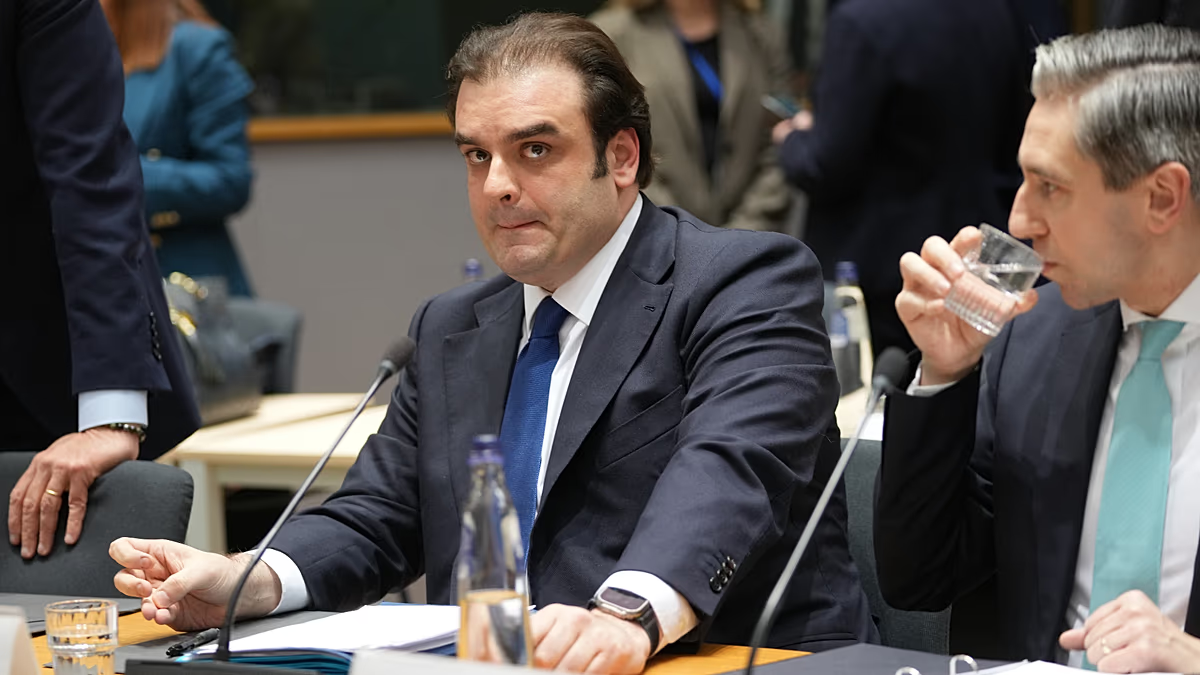
Pierrakakis framed the proposed increase in the heating allowance and the pump subsidy as a response to mounting pressure on household budgets. The central concern, he said, is that global energy pressures are affecting families through the cost of heating and transport, making everyday expenses harder to manage. Those pressures are international in origin and can change beyond the reach of any single national government. His argument therefore distinguished between controlling the source of the strain and addressing its consequences at home. Greece, he acknowledged, cannot stop an international crisis, but it can take steps to prevent households from being left to absorb its costs alone.
The two-part package is intended to provide assistance through separate channels linked to energy spending. A higher heating allowance would help eligible households meet seasonal heating costs, while the pump subsidy would offer support related to fuel purchases. Pierrakakis’s explanation places both measures within a wider effort to cushion the effects of elevated energy costs, rather than presenting government policy as a means of resolving the international pressures themselves. The underlying reasoning is that public support can reduce the burden on families when external conditions push up essential expenses. In this way, the measures respond to the impact of the crisis on household finances while recognizing that its causes extend beyond Greece’s control.
Pierrakakis also committed the government to continuing support for as long as necessary. That pledge signals an intention to maintain assistance while households remain exposed to the pressures described, without setting out a fixed end date in the statement. It is a commitment about the duration of support, not a claim that Greece can determine how long the international crisis will last or prevent its effects altogether. The minister’s position links the government’s responsibility to the needs of families facing those effects: although national policy cannot halt global developments, it can help ensure that people do not bear the resulting costs alone. The proposed allowance increase and pump subsidy are presented against that principle.
Environment and Energy Minister Stavros Papastavrou and Deputy Minister of National Economy and Finance Thanos Petralias are expected to present the government’s measures in greater detail on October 14. Their forthcoming explanation is intended to clarify how the planned increase in the heating allowance and the pump subsidy will operate. The initial announcement outlined the broad direction of the support but did not provide the practical information households and other potential beneficiaries may need before deciding whether, or how, to apply.
Among the outstanding questions is eligibility. The announcement did not specify which households or consumers will qualify, whether income, property, location, or fuel-use criteria will apply, or whether the measures will include different rules for particular categories of applicants. Nor did it explain what documents or other evidence may be required. These points are significant for people assessing whether the proposed assistance will be available to them, and are expected to be addressed when the ministers provide the detailed framework.
Application procedures and payment timing also remain unclear. No application opening date, deadline, submission channel, or review process was included in the initial information. The government has likewise not stated when eligible recipients could expect to receive the heating allowance or how the pump subsidy would be delivered. In addition, the exact value of the subsidy for pump-related costs has not yet been disclosed. The October 14 presentation is therefore expected to supply details needed to understand the measures in practice, including how the support will be calculated and distributed. Until that explanation is provided, households should treat the published announcement as a broad outline rather than a complete guide to applying. Any assessment of individual eligibility or likely payments will depend on the criteria and procedures formally announced by the ministers. Further clarification should also indicate whether the two forms of assistance require separate applications, whether existing benefit processes will be used, and what steps recipients may need to take. These operational details will determine how quickly the measures can offer practical support during the heating period and how consumers can access the announced subsidy.