
Citizens do not ask those who govern to be flawless, nor do they expect politics to be free of conflict, difficult choices, or cost. They ask for candor about the price of public policies and credible evidence that their benefits reach the people who bear that price. They also expect leaders to protect rights that cannot be traded away for convenience, speed, or a promise of greater efficiency. These are not optional courtesies; they are the terms on which public power is held in trust.
When a policy fails, failure cannot become an excuse to expand authority, raise taxes without clear justification, conceal decisions, or weaken independent oversight. The public interest is not identical to the interests of government institutions, which may seek to preserve their budgets, influence, or reputation. Nor is either the public interest or institutional survival the same as the private interests of officeholders. Responsible leadership requires making these distinctions visible, inviting scrutiny, and accepting correction rather than treating accountability as an obstacle to action.
Those entrusted with power must not purchase present comfort by placing undisclosed burdens on future taxpayers. They must not send troops into conflict without clear aims, a defensible account of costs, and honest limits on what force can achieve. Nor should they make people finance dependency while presenting it as self-reliance. Public decisions also affect people beyond national borders: through war and sanctions, trade and technology, climate measures, and algorithmic systems that shape opportunity and risk. Their interests cannot simply disappear from consideration because they lack a vote in the decision-making country. Leaders should state plainly what is known, what is not known, and what remains uncertain. That discipline does not guarantee agreement or success. It makes disagreement informed, keeps authority answerable, and allows citizens to judge whether power is being exercised for their benefit—or merely defended for its own sake.
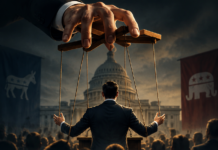
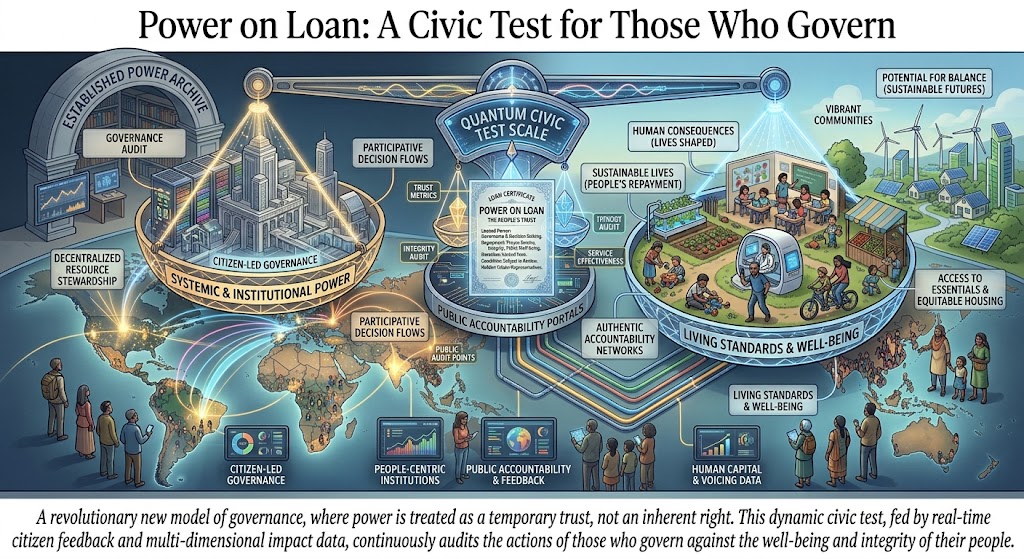
Public office is not property but a temporary mandate held in trust for the community. Its legitimacy depends on more than authority; it depends on answerability. When a policy fails, officials should revise it openly and explain what changed. When a minister fails, replacing that minister may be necessary. When a government fails, voters must be able to replace it. And when a leader fails, that leader must leave office. Consequences are not a sign of institutional weakness; they are evidence that power remains conditional. Without routes to correction, responsibility becomes rhetoric and citizens are left carrying the costs.
Good leadership is measured not only by decisions made during a term, but by whether institutions can continue to function without the person who led them. A capable leader strengthens procedures, develops successors, protects independent oversight, and leaves public services more resilient than before. This standard turns power from personal possession into stewardship: authority is borrowed, limited in time, and answerable to people who may disagree with its use. It also raises a defining question for every government: whom is it building the future for? The answer cannot be only those currently in office, nor an imagined population so distant that the needs of living people become expendable.
Public life must connect the long arc of history with the finite span of individual lives. Asking people to endure avoidable hardship for an abstract future can breed resentment and weaken trust; pursuing immediate electoral comfort by spending tomorrow’s freedom is equally irresponsible. No generation should mortgage the prospects of the next through excessive debt, environmental damage, war, underfunded pensions, depleted resources, neglected infrastructure, or weakened education. These choices transfer costs forward while limiting future citizens’ ability to choose differently. Responsible government therefore weighs present needs against lasting consequences, states trade-offs honestly, and preserves room for renewal. Its test is whether those who inherit its decisions receive both functioning institutions and meaningful options, rather than obligations they never consented to bear.
The state exists to serve human beings, not to demand that they organize their lives around the state’s convenience. Its legitimacy is tested less by grand declarations than by whether ordinary people can obtain safe water, reach functioning hospitals and schools, rely on effective policing and impartial courts, and live under credible national defense. Competent government also administers taxes fairly, supplies reliable energy, and enforces contracts consistently. These are not luxuries reserved for unusually peaceful or wealthy countries; they are the practical foundations of security, opportunity, and public trust.
Citizens should not be expected to accept routine failures simply because leaders invoke geopolitics, inherited difficulties, or the complexity of governing. Such explanations may identify real constraints, but they do not erase responsibility for choices within a government’s control. A leader is not a savior whose personal presence makes institutions function. The proper role is temporary stewardship: maintaining and improving public systems so that they continue to serve people after any individual leaves office. Durable institutions matter precisely because no leader, however capable, can govern forever.
Nor does greater scale or interconnection automatically improve lives. Large systems can create opportunities while spreading risk; their effects depend on political choices, who pays, who benefits, and whether institutions can manage change. Globalization helped generate prosperity and wider exchange, but it also exposed societies to distant disruptions. Technology expanded access to information and personal freedom, while giving authorities and private actors new means of surveillance and control. Alliances can provide security, yet may also create dependency. Democratic representation gives citizens a voice, but can produce political classes increasingly detached from the people they represent. Empires, likewise, may impose order and coordinate vast territories, but their burdens can grow until the costs exceed the gains. These examples do not make complexity inherently harmful. They show why public performance must be judged by outcomes, accountability, and the distribution of benefits and risks—not by the size or sophistication of the system itself.
Political change should be understood as part of a wider reassessment of power, not as the consequence of one leader or one country. Donald Trump accelerated questions about American reliability; he did not create every condition behind U.S. decline. His transactional approach and coercive pressure encouraged allies and adversaries alike to prepare for a world in which American centrality is no longer assured. That shift reflects longer-running changes in economic weight, public confidence, and the willingness of other states to act independently. It is a test of institutions and choices, not simply of personalities.
This scrutiny must be applied consistently. Russia, China, the European Union, Iran, Israel, Palestine, Ukraine, and Romania are not innocent symbols or simple villains. Their histories, responsibilities, and power differ, and those differences matter. But no government should receive exemption from judgment because it claims to resist another power, defend security, or represent a worthy cause. The same civic standard applies wherever authority is exercised: what was done, who bore the cost, what alternatives existed, and whether the stated purpose was achieved?
Rulers must answer for the power they exercise. Citizens, in turn, must not mistake exhaustion for helplessness, cynicism for clear judgment, or resignation for realism. Romania’s anthem says “wake up”; the words can serve as a demand for people to insist on correction rather than wait for it. The practical measure of public life is straightforward: after taxes, wars, reforms, crises, sanctions, alliances, strategies, and victories, are ordinary people better off or worse off? If they are better off, leaders must show the results and explain how they were secured. If they are worse off, leaders must explain why the costs were necessary, how long they will last, how burdens are distributed, and what follows if the policy fails. If they cannot answer those questions, citizens should ask plainly whom their leaders govern for.