

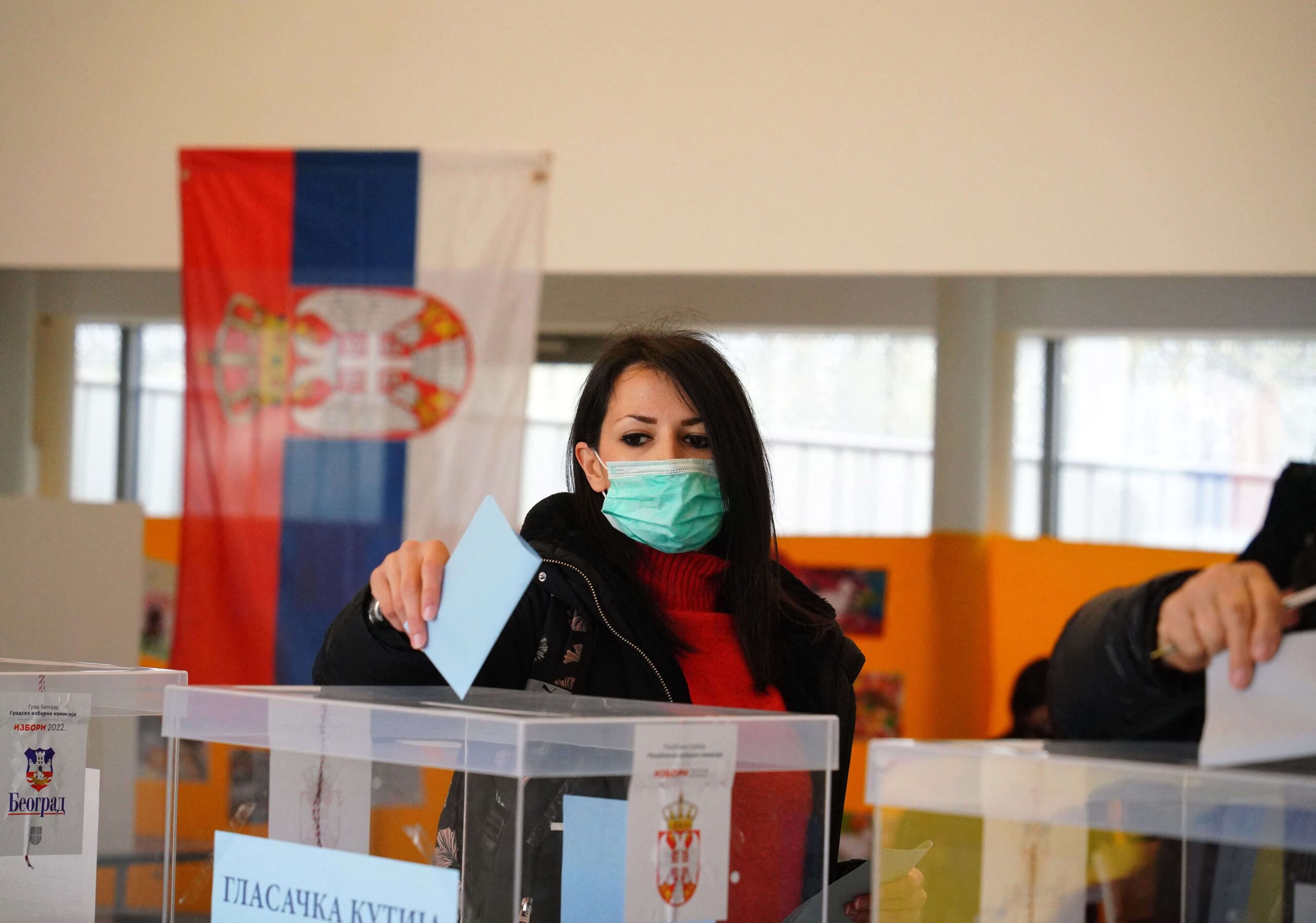
Serbia’s snap parliamentary election, scheduled for 25 October 2026, will determine the composition of the National Assembly, which has 250 seats. Eighteen electoral lists are set to compete, with 2,418 candidates seeking representation. A party or coalition needs at least 126 seats to command a majority. The general electoral threshold is 3%, while national-minority lists are subject to special rules that provide a different route to representation. The electoral roll contains 6,450,523 registered voters, making the organization and accessibility of the vote consequential for a large electorate.
These figures describe the formal structure of the contest: who may stand, how votes translate into seats, and what is required to form a majority. They provide a useful starting point for assessing the stakes, but they do not alone establish whether an election has been competitive or whether its outcome will be broadly accepted. Winning seats is one measure of an election’s significance; the conditions under which voters and candidates participate also matter. A technically orderly count can coexist with concerns about unequal opportunities or barriers to political choice.
Public confidence therefore depends on more than compliance with voting and seat-allocation rules. Relevant considerations include fair competition among electoral lists, transparent election administration, meaningful access to media, effective campaign-finance oversight, and protection of political rights. These conditions shape whether voters can encounter competing viewpoints, whether candidates can campaign on reasonably equal terms, and whether institutions can demonstrate how decisions are made. Formal compliance concerns adherence to the established procedures; broader credibility concerns whether those procedures operate in an environment that allows genuine competition and informed participation.
As the campaign develops, the central question will be how these dimensions interact. The published seat totals and threshold rules can clarify the parliamentary arithmetic, while evidence about administration, media access, financing, and rights will help explain the public’s assessment of the process. Neither dimension should be treated as a substitute for the other. The election’s significance will rest not only on which political forces secure representation, but also on whether citizens regard the competition and its administration as sufficiently fair and transparent for the result to command confidence.
The central contest is framed between the ruling bloc’s electoral list, “Aleksandar Vučić – United Serbia,” led by the Serbian Progressive Party (SNS), and “Student List – Students Win,” headed by Ilija Srdanović. An opinion poll dated 11 October 2026 reported 48.6% support for Vučić’s list and 37.1% for the student list. Those figures offer a snapshot of opinion at one moment, not a prediction or a guaranteed election result; support can shift as campaigning develops and voters assess the candidates, proposals and political conditions.
Vučić has emphasized that politics should be kept out of schools and universities, presenting the principle as a boundary between education and party competition. The student list, meanwhile, represents an effort to carry campus activism into electoral politics and seek support beyond university settings. It has declined to debate Vučić, leaving voters without a direct exchange between the two sides on their priorities and disagreements. The movement’s 11-point programme gives it a platform to explain, but turning a set of demands into a coherent governing offer will require detail on how proposals would be implemented and funded.
That task may be complicated by differing views within the movement on sensitive foreign-policy and national questions, including NATO, Kosovo, Russia, Republika Srpska and Srebrenica. Critics also point to the absence of actual students among the list’s candidates and say its candidates are older on average than those on Vučić’s list. These observations raise questions about representation, though they do not by themselves establish whether the list reflects or serves student concerns. The movement will need to clarify its programme, explain how decisions are made internally and demonstrate transparency about candidate selection and funding. Allegations or suspicions of foreign influence also require careful scrutiny: they should be assessed through verifiable evidence, not treated as established facts. How convincingly the list addresses these questions may shape public confidence in its bid to convert protest energy into electoral support.
The contest extends well beyond the two leading lists, with opposition groups pursuing distinct electoral strategies. European Serbia, associated with Marinika Tepić and Zdravko Ponoš, is among the groupings seeking support from voters who want a change of government. National-conservative, liberal-green and other lists add further choices, while withdrawals and disagreements over tactics have made a united opposition front difficult to sustain. The student movement, frequently described as the “blockaders,” is also seeking backing from voters opposed to the government, creating both an additional mobilising force and competition for support.
The Strength of Serbia movement, associated with Bogoljub Karić and PSS-BK, presents a different profile, emphasising traditional values, entrepreneurship and opportunities for young people. This ideological variety can broaden representation by giving voters more ways to express priorities, but it may also complicate cooperation among parties and movements. For voters, the practical test is whether lists set out clear policy offers and can scrutinise government decisions effectively. Without coordination, opposition voices may struggle to translate electoral support into sustained oversight or influence.
Minority participation is another significant feature: nine of the 18 lists represent communities including Hungarian, Bosniak, Albanian, Russian and Slovak voters. Sandžak and the southern municipalities of Preševo, Medveđa and Bujanovac are important regional contexts, although a place on the ballot does not by itself guarantee political influence. Candidates average 46.3 years of age; 10.8% are under 30, and 46.9% are women, compared with 53.1% men. The gender quota helps secure women’s presence on candidate lists, but representation must also translate into participation in political decision-making. On administration, the OSCE/ODIHR interim report said the Republic Electoral Commission met deadlines, operated transparently and had its rulings upheld by the Administrative Court. These findings are relevant, but credibility also depends on effective handling of complaints, equal conditions for competitors and protection of voters’ rights throughout the process.
Economic indicators give voters a practical way to assess Serbia’s political debate: whether growth is improving household security and supporting longer-term development. Reported annual inflation declined from 12.2% in 2012 to 2.7% in 2025, reaching 2.2% in August 2026, below the euro area’s 3.2% and Slovenia’s 3.4%. But slower price increases do not undo earlier rises or guarantee higher living standards. Purchasing power depends on whether wages and pensions keep pace with everyday costs, including food, housing and energy.
Foreign direct investment rose from €1.009 billion in 2012 to €5.231 billion in 2024, before easing to €3.477 billion in 2025. These inflows place Serbia’s competition with Bulgaria and Croatia in context, but investment figures alone do not show how broadly gains are shared or whether they generate durable productivity improvements. Pension payments increased from €204 in 2012 to €394 in 2024, €437 in 2025 and €484 in July 2026. Further amounts—€520 in December 2026, €650 in 2027 and €750 in 2030—are projections, not achieved outcomes.
The minimum wage followed a similar upward path: €153 in 2010, €256 in 2020, €404 in 2024, €468 in 2025 and €550 in 2026, with €600 projected for 2027. Sustaining these gains requires productivity growth, a balanced pension system and fair market conditions, rather than increases that outstrip the economy’s capacity. The IMF projects growth of 3.3% in 2026 and 4% in 2027; one forecast suggests Serbia could lead the regional economy in 2027. Slowing inflation, declining debt and rising wages and pensions are positive indicators, yet rule of law, transparency, governance and the distribution of growth remain central challenges.
Vučić’s pledge to streamline government to 12 ministries should therefore be judged by accountability and effective delivery, not the number of ministries alone. The election’s longer-term test is whether political authority can be matched by democratic standards and institutional reform, while producing tangible improvements in living standards, social security and opportunities for young people.