





















Ministerial Insights on Higher Education Progress
The recent statements by Sofia Zacharaki, the Minister of Education of Greece, signal a significant shift in the landscape of private higher education within the country. With the implementation of a new educational framework designed to enhance the credibility and seriousness of private institutions, the Greek government is taking concrete steps toward internationalizing its educational offerings. This institutional maturation is poised to elevate Greece’s status on the global educational stage.
One key point highlighted by the minister is the expectation that the first applications for the establishment of private universities will be submitted by 2026. This timeline not only reflects a commitment to quality in higher education but also aligns with Greece’s broader goals of integrating its educational system within the European Union and other international frameworks. The emphasis on submissions showcases the government’s intention to ensure that private universities adhere to stringent academic standards, thereby fostering a competitive higher education environment.
Under this new regime, potential private educational institutions must meet specific criteria before obtaining approval from the Ministry. These criteria aim to promote a cohesive educational experience that aligns with the values of public higher education. The minister has pointed out that this transition represents a move towards a more mature phase of higher education internationalization, which is crucial as Greece seeks to attract not only local but also international students. By enhancing the quality and recognition of private universities, the government is working towards enriching the country’s educational ecosystem and ensuring that it resonates broadly within the context of global education.
Current Landscape of Private Universities in Greece (2025-26)
As of the academic year 2025-26, the landscape of private universities in Greece has evolved significantly, with four main institutions actively offering accredited programs. These institutions are recognized for their commitment to maintaining stringent academic standards while enriching the educational environment in Greece. The recognized private universities have developed specialized curricula that cater to both domestic and international students, thereby bringing a competitive edge to higher education in the region.
The four active private universities are noted for their rigorous quality assurance processes. These institutions ensure that their academic programs not only meet but often exceed the expectations set forth by local regulatory bodies and international accreditation organizations. This diligence plays a crucial role in establishing a reputation for high-quality education, an essential factor in attracting both prospective students and faculty from around the globe.
The selection process for foreign universities seeking to establish branches in Greece is structured and comprehensive. Interested institutions must demonstrate that they possess innovative curricula, effective governance, and sustainable financial models. Additionally, they must prove their commitment to upholding the academic standards that characterize higher education in Greece. Such measures are in place to prevent the rapid expansion of low-quality educational institutions, ensuring that the existing private universities continue to thrive and contribute positively to the educational landscape.
In summary, the current operational status of private universities in Greece is a reflection of strategic adherence to quality assurance practices and a careful selection process for incoming foreign institutions. This commitment not only enhances the academic offerings but also fortifies Greece’s reputation as a destination for quality higher education.
Student Enrollment Trends and Institutional Impact
In recent years, the landscape of higher education in Greece has undergone a transition marked by the proliferation of private universities. This shift has significantly altered student enrollment trends, evident through an increase not only in local students but also in international applicants seeking academic opportunities in Greece. The influx of diverse demographic backgrounds among the student body reflects a globalized approach to education and fosters an enriching multicultural environment.
As private institutions become increasingly recognized for their academic rigor and innovative curriculums, the enrollment rates among Greek students have surged. Families are attracted to the promising prospects these universities offer, often considered more aligned with current job market demands. This trend indicates a growing preference for institutions that can provide quality education with practical applications, which is essential for career advancement in an increasingly competitive workforce.
Moreover, the increase in enrollment from international students has profound implications for the local educational landscape. It encourages a more diversified curriculum and facilitates exchanges of ideas and perspectives, enhancing the overall educational experience for all students. The presence of foreign students also strengthens Greece’s position as a desirable study destination, thereby boosting the local economy through tuition fees and associated expenses.
The impact of these enrollment trends extends beyond just education. Graduates from these private institutions often report better career prospects, attributed to the universities’ focus on skill development and networking opportunities. This, in turn, encourages more students to consider studying in Greece, contributing positively to the country’s image and desirability as a hub for higher education.
Greece’s Vision for a Global Education Hub
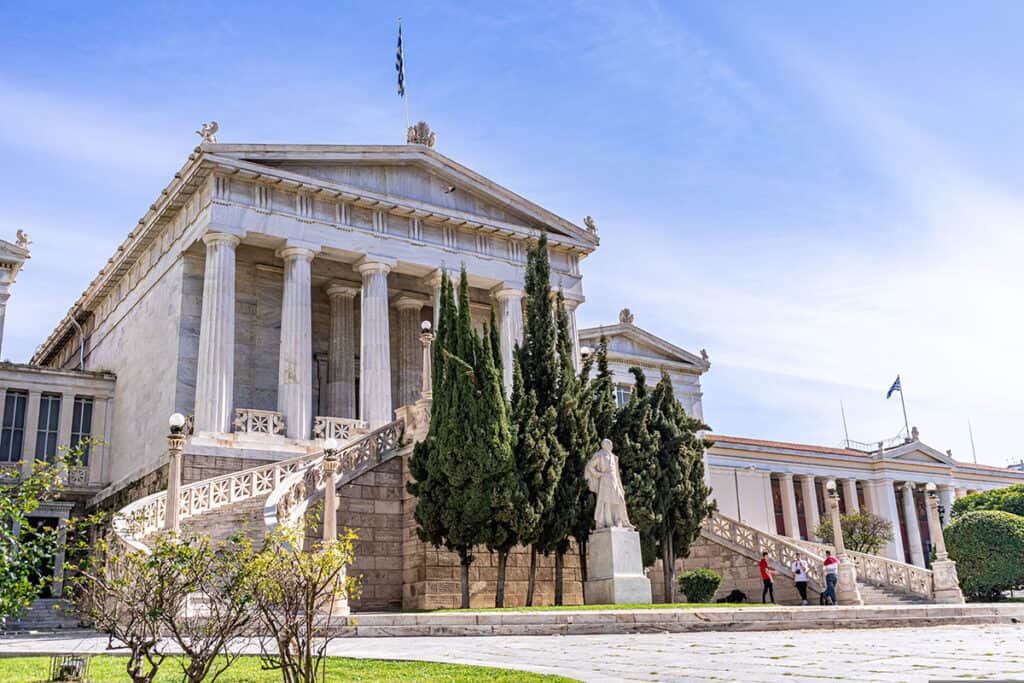
Greece has articulated a compelling vision aimed at transforming its higher education landscape into a globally recognized educational hub. This strategy recognizes the increasing competition among educational institutions worldwide and seeks to leverage Greece’s rich historical and cultural heritage to attract international students and academics. The government is committed to maintaining robust support for public universities while allowing private institutions to flourish. This dual approach not only enhances the diversity of academic offerings but also promotes healthy competition within the educational sector.
Significant governmental investments have been made in infrastructure, research, and innovation, reflecting a strategic commitment to improve the quality of education. These investments aim to elevate the standards of both public and private universities, ensuring that they can compete on an international level. Moreover, Greece is engaged in collaborative initiatives with esteemed international universities, enhancing the knowledge exchange that is pivotal for an effective educational ecosystem. These partnerships not only offer students exposure to global perspectives but also facilitate joint research endeavors that can address pressing global challenges.
The overarching goal of these efforts is to create a forward-thinking academic environment that positions Greece as a leader in shaping global educational trends. By fostering excellence in teaching and research, Greece aims to produce graduates who are not just well-equipped to enter the workforce but also ready to tackle 21st-century challenges on a global scale. Thus, as Greece continues to evolve its private university system alongside its public institutions, its vision to emerge as a global education hub increasingly comes into focus, promising significant impacts on both its economy and societal growth.