





















The Importance of Gender Equality in Democratic Security
Gender equality plays a crucial role in promoting democratic security, as it ensures that all individuals, regardless of gender, have equal rights, opportunities, and protections under the law. This equality is foundational to the principles of human rights and democracy, which are indispensable for a stable and thriving society. When women and girls are afforded the same rights as men, it not only empowers them but also strengthens the fabric of democratic institutions. Such empowerment fosters resilience against societal conflicts and enhances civic participation, which are vital for maintaining peace and order.
However, the increasing incidence of violence against women and girls poses serious threats to the democratic security of societies worldwide. This violence undermines not only the immediate safety of its victims but also sends shockwaves through communities, disrupting social cohesion and trust. As violence persists, it contributes to an environment where human rights are violated, democratic norms are eroded, and the rule of law deteriorates. In this context, it is evident that promoting gender equality is not merely a matter of social justice but a strategic imperative for national and global security.
Addressing gender-based violence and ensuring equal rights for women must be prioritized by governments and international organizations alike. This commitment is essential for cultivating an atmosphere conducive to democracy, where all citizens can exercise their rights freely and without fear. Furthermore, by recognizing the interdependence of gender equality and democratic security, stakeholders can better develop policies and initiatives aimed at fostering stability. Investing in gender equality initiatives not only enhances women’s rights but also fortifies democracy, making societies more resilient to both internal and external threats. Ultimately, ensuring gender equality sows the seeds for robust democratic security, benefitting all members of society.
Council of Europe’s Initiatives for Gender Equality
The Council of Europe has established a robust framework aimed at promoting gender equality and combating violence against women, with a particular emphasis on scenarios aggravated by conflict. One of the pivotal components of this framework is the implementation of the Istanbul Convention, which serves as a comprehensive legal instrument designed to prevent and combat violence against women. The Convention obliges its signatory states to take necessary measures to ensure that women, irrespective of the circumstances they find themselves in, have access to effective support services and justice.
In the context of the ongoing conflict in Ukraine, the Council of Europe has initiated specific projects tailored to protect the rights and safety of women. These initiatives seek to address and mitigate the risks of gender-based violence that women face in times of war and insecurity by establishing safe spaces and providing mental health support. Additionally, the Council has launched campaigns to raise awareness about the plight of women affected by the conflict, advocating for their rights and encouraging their participation in peace-building processes.
Furthermore, the Council of Europe actively promotes gender equality through various policy measures and programs. These policies are designed to empower women economically, socially, and politically. For instance, initiatives focus on increasing women’s representation in leadership roles and decision-making processes, which are crucial for ensuring that women’s voices are heard and considered in shaping public policies and responses to issues such as safety and security.
In conclusion, the Council of Europe’s concerted efforts to promote gender equality and combat violence against women reflect a commitment to safeguarding the rights of women, particularly in conflict-affected areas. The multifaceted approach, encompassing legal frameworks, awareness campaigns, and targeted projects, underscores the importance of integrating gender perspectives into broader security and peace-building strategies.
Addressing Emerging Threats to Women’s Rights in the Digital Age
The rapid advancement of technology and artificial intelligence (AI) poses significant emerging threats to women’s rights across the globe. The Council of Europe has recognized these challenges, which include increased online harassment, cyberbullying, and the perpetuation of gender-based violence facilitated by digital platforms. These issues not only undermine the safety of women but also impede their ability to participate fully in social, political, and economic spheres. Thus, a comprehensive response is imperative to safeguard women’s rights in this evolving landscape.
In recent years, the Council of Europe has undertaken initiatives aimed at addressing the intersection of technology and women’s rights. Key recommendations have been established to combat discrimination and violence against women, particularly in digital environments. These recommendations include the promotion of digital literacy among women, ensuring that they have the knowledge and skills needed to navigate online spaces safely and effectively. Furthermore, the Council advocates for the development of stronger legal frameworks that hold perpetrators of online violence accountable.
The implications of technological advancements extend beyond individual safety; they particularly affect women in high-profile roles. Women leaders in various sectors often experience heightened scrutiny and targeted attacks online, which can deter them from engaging in public discourse. By focusing on protecting these individuals, the Council of Europe aims to foster an environment where women can exercise their rights without fear of violence or retaliation.
Overall, addressing the challenges posed by technology to women’s rights requires a multifaceted approach that combines legal, educational, and advocacy efforts. This collaborative response will ensure that as technology continues to evolve, women can secure their rights and contribute meaningfully to society without the threats imposed by digital spaces.
High-Level Engagements at CSW70
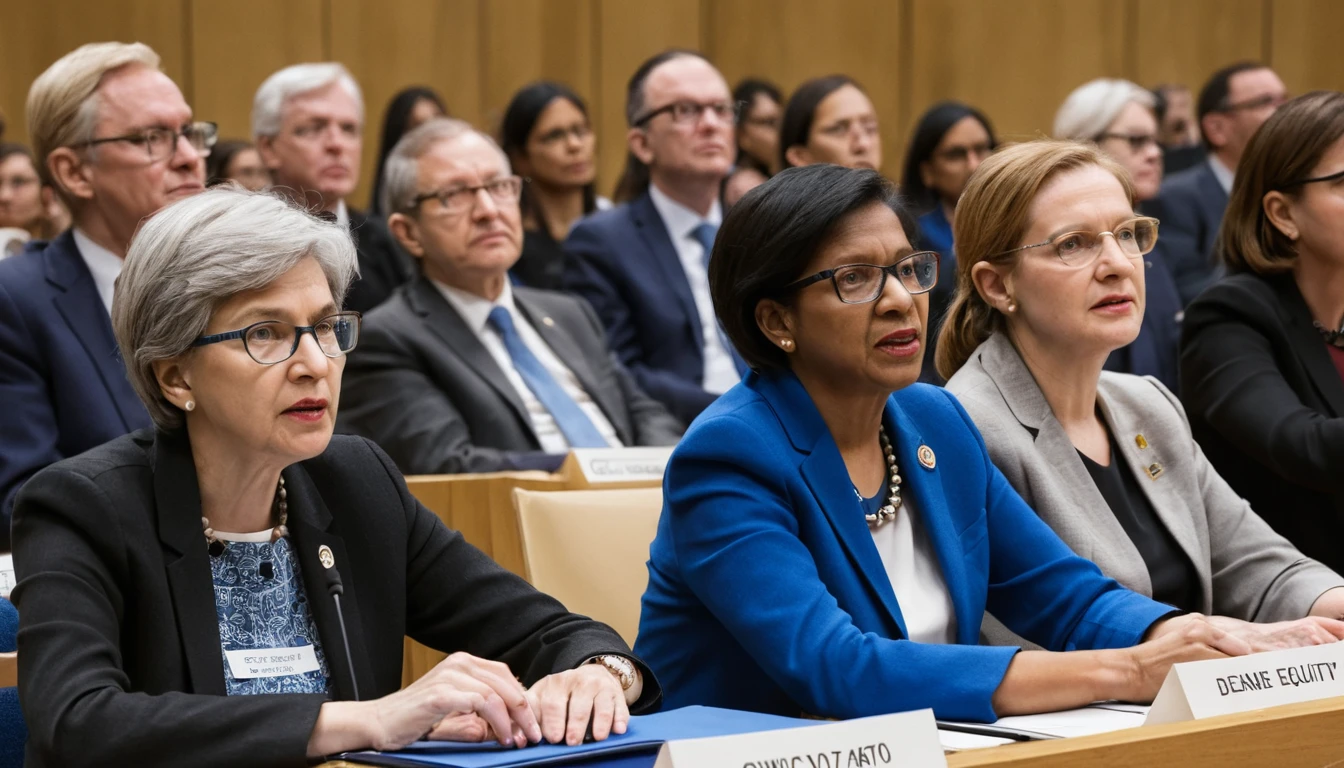
During the 70th session of the Commission on the Status of Women (CSW70), Secretary General Alain Berset engaged in a series of high-level meetings and speeches focused on vital discussions surrounding gender equality and the imperative to address violence against women. His schedule included dialogues with various stakeholders, including heads of state, non-governmental organizations, and influential activists advocating for the promotion of women’s rights across the globe.
A significant aspect of Secretary General Berset’s engagement was his emphasis on the correlation between gender equality and democratic security. These discussions highlighted the necessity of prioritizing women’s voices in decision-making processes at all levels of governance. This approach aims not only at improving individual lives but also at fostering peaceful societies through inclusive policies. The Secretary General underscored how empowering women can lead to more robust and resilient democracies, which is essential in the contemporary socio-political landscape.
Furthermore, sessions focused on innovative solutions to combatting violence against women were pivotal in raising awareness and galvanizing international support. Berset called for enhanced collaborations among member states to implement effective strategies that tackle the root causes of gender-based violence. His speeches resonated with the delegates, spurring commitments to increase funding for initiatives aimed at protecting and empowering women.
The expected outcomes of these high-level engagements are manifold. Firstly, they are anticipated to catalyze stronger international commitments to uphold and promote women’s rights, illustrating a concerted effort to create a safer, more equitable world. Additionally, the discussions are likely to reinforce the notion that collaborative action is necessary for significant progress in achieving gender equality. With the concerted efforts highlighted during CSW70, the path to realizing comprehensive gender equality may become significantly clearer, inviting enhanced cooperation among nations.