
Historical Significance of the Security Council
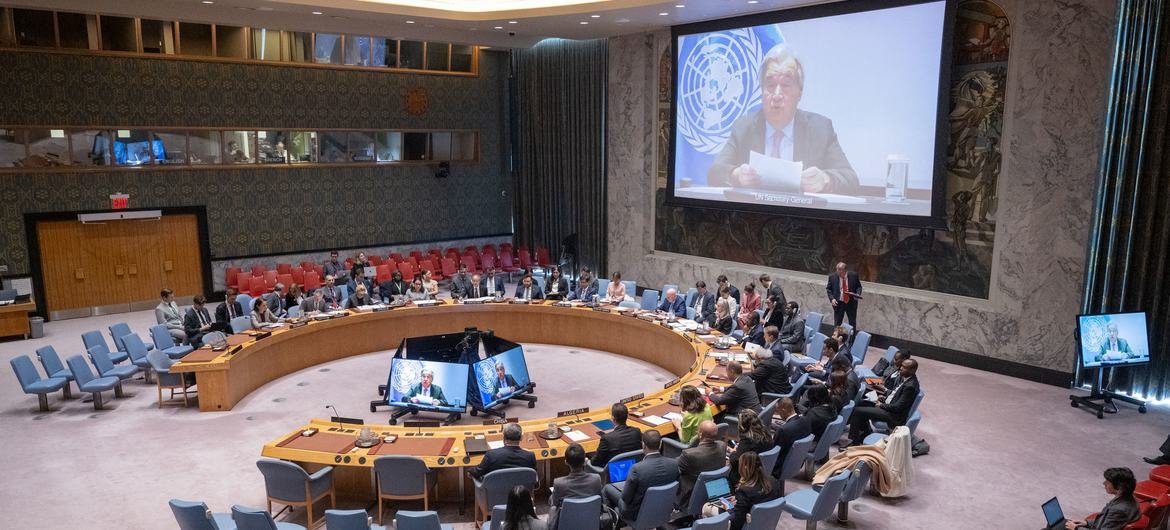
The establishment of the United Nations Security Council in 1946 marked a pivotal moment in the pursuit of international peace and security. Emerging from the ashes of World War II, the Security Council was conceived to prevent the recurrence of such catastrophic conflict. The significance of this newly formed entity was encapsulated in its first official act, the use of the inaugural ballot box crafted by Paul Antonio, a skilled mechanic. His heartfelt message attached to the ballot box symbolized the hope for a new era defined by cooperation and collective action among nations.
Over the last 80 years, the Security Council has played an instrumental role in shaping international relations. Its primary responsibility—to maintain international peace—has led to critical interventions in various conflicts, while its peacekeeping missions have aimed to stabilize regions afflicted by war. Notable achievements include successful resolutions during the Korean War and the United Nations peacekeeping efforts in places like Rwanda and the former Yugoslavia. These interventions underscore the Council’s importance as a mediator and enforcer of peace, albeit not without challenges and criticisms regarding its effectiveness and representation.
The Security Council’s methods, while effective at times, also reveal complexities that highlight the need for reform. As the world evolves, the Council’s decision-making processes and its composition have come under scrutiny. The call for reform is a recognition of the changing geopolitical landscape and the necessity for the Council to better reflect contemporary global dynamics. The integration of diverse voices in its structure is essential for the legitimacy and effectiveness of the Council’s decisions moving forward. This historical context serves to remind us that the Security Council is not only a product of its time but also a platform that continues to adapt and address contemporary challenges in international politics.
The Imperative for Reform
The Security Council, a cornerstone of the United Nations, faces an urgent need for reform to uphold its legitimacy and efficacy in addressing contemporary global challenges. Over the years, it has become increasingly evident that member states sometimes operate outside the guiding principles of the UN Charter, leading to significant implications for international peace and security. This divergence from established norms often contributes to global instability, undermining the essential framework that is necessary for collective action in addressing crises.
One of the primary issues driving the call for reform is the disproportionate representation of current member states, particularly among the permanent members. This limited composition does not reflect the geopolitical realities of the 21st century, where nations such as those in Africa and Latin America wield considerable influence. Expanding the Security Council to include representatives from underrepresented regions not only enhances the Council’s legitimacy but also fosters improved cooperation among nations with varying interests. Such reforms could lead to more equitable decision-making processes that recognize and address the diverse needs of today’s multipolar world.
The proposed reform of the Security Council is not merely a structural adjustment; it represents a fundamental shift toward inclusivity and greater accountability. By ensuring that various regions have a voice in global governance mechanisms, the Security Council can strengthen its role in international affairs, enhancing its ability to respond effectively to conflicts and humanitarian crises. A reformed Council, reflective of a broader range of perspectives, would be better positioned to counteract unilateral actions by member states and promote cooperation, thereby contributing to a more stable and peaceful world.
Challenges Faced by the Council
The United Nations Security Council stands at a critical juncture, facing numerous challenges that significantly hinder its ability to fulfill its mandate effectively. One of the primary challenges stems from escalating geopolitical tensions among member states. These rivalries often impede consensus-building and decision-making, leading to stagnation in times of urgent international crises. For instance, the ongoing conflicts in regions such as the Middle East and Eastern Europe have highlighted how divergent interests can paralyze the Council’s responsiveness to pressing global issues.
Another serious challenge is the misuse of veto power by the permanent members. The right to veto, designed to prevent unilateral action, has frequently been employed to block resolutions that serve the interests of individual states rather than the collective good. This practice undermines the Council’s credibility and raises fundamental questions about its legitimacy within the international community. The disproportionate influence exercised by the five permanent members—China, France, Russia, the United Kingdom, and the United States—leads to feelings of disenfranchisement among non-permanent members and smaller nations, which can further exacerbate disputes among member states.
Moreover, the inconsistent application of international law poses another significant challenge. The Council’s selective enforcement of resolutions and sanctions often results in perceptions of bias. This inconsistency not only damages the Council’s reputation but also diminishes its authority to act as a neutral arbiter in conflicts. As a result, nations may feel compelled to seek alternative means of conflict resolution, thereby weakening multilateral frameworks that are crucial for maintaining global peace and security. Addressing these challenges requires a collaborative approach, integrating the perspectives and concerns of diverse stakeholders to regain trust and enhance the efficacy of the Security Council.
A Vision for the Future
Envisioning the future of the United Nations Security Council involves a critical reassessment of its structures and powers to better align with its foundational mission of promoting global peace and security. As the geopolitical landscape continues to evolve, there is an urgent need to adapt the operational framework of the Security Council, particularly concerning the utilization of veto power. Currently, the veto is wielded by a select few, which can obstruct meaningful action in urgent situations. A proposed reform could involve limiting the veto’s applicability, ensuring that it cannot be used in instances of severe humanitarian crises or threats to international peace. This shift could foster greater accountability and responsiveness to global needs.
Moreover, incorporating perspectives from historically marginalized regions is essential for a more equitable representation within the Council. A broader membership base that reflects geographic diversity and local grievances will facilitate enhanced dialogue that resonates with the pressing needs of various populations. Establishing advisory committees composed of representatives from different regions could provide valuable insights and recommendations, ensuring that their voices and experiences actively shape the Security Council’s decisions.
In listening to the cries for peace emanating from communities around the world, the Security Council must affirm its commitment to justice and safety for all people. This entails not only reacting to crises but also proactively addressing the root causes of conflict, such as poverty, inequality, and injustice. Engaging with non-governmental organizations and grassroots movements can provide vital intelligence on local dynamics, informing policies that are more aligned with humanitarian needs.
Ultimately, a reformed Security Council poised to prioritize inclusivity, accountability, and responsiveness would be a monumental step towards realizing lasting global peace, ensuring that international responsibilities are fulfilled with a renewed dedication to justice and the safety of all nations.

