

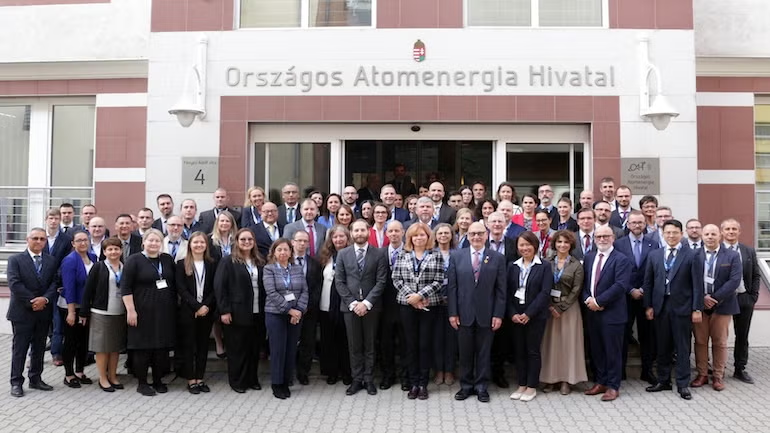
Overview of the IAEA Mission in Hungary
From October 6 to October 17, the International Atomic Energy Agency (IAEA) conducted an Integrated Regulatory Review Service (IRRS) mission in Hungary, aimed at enhancing the nation’s nuclear and radiation safety frameworks. The IRRS mission is designed to review and assess the regulatory systems of member states to ensure they are in line with international best practices. Hungary’s request for this mission underscores its commitment to maintaining and improving the safety of its nuclear facilities and practices, which are a critical part of the nation’s energy supply.
The objectives of the IRRS mission included evaluating the effectiveness of Hungary’s regulatory framework concerning its nuclear energy program, assessing compliance with international safety standards, and identifying areas for improvement. During the mission, a team of international experts analyzed various aspects of Hungary’s nuclear regulatory body, including licensing procedures, inspections, oversight, and emergency preparedness. This review also encompassed the management of radioactive waste and decommissioning processes.
The significance of such missions cannot be understated. They provide an opportunity for countries like Hungary to benefit from the expertise and experiences of other nations, fostering a collaborative environment for nuclear safety. Furthermore, the outcomes of the IRRS mission serve as a roadmap for regulatory enhancements, demonstrating a proactive approach to addressing safety challenges. The findings and recommendations from the mission are expected to play a crucial role in shaping future policies and practices in Hungary’s nuclear sector, reflecting a dedication to systematizing and fortifying its nuclear safety infrastructure in alignment with the IAEA’s overarching objectives.
Hungary’s Nuclear Regulatory Framework and Compliance
The Hungarian Nuclear Regulatory Framework is grounded in a robust legal structure that aligns with international safety standards. The primary regulatory body overseeing nuclear safety is the Hungarian Atomic Energy Authority (HAEA). This independent regulator is charged with ensuring compliance with the International Atomic Energy Agency (IAEA) safety standards, which encompasses oversight of all nuclear facilities in Hungary, including their construction, operation, and decommissioning. The HAEA operates under the auspices of the Ministry of Innovation and Technology, enhancing its capabilities through a well-defined governance structure that maintains transparency and accountability.
Recent findings from the IAEA’s Integrated Regulatory Review Service (IRRS) mission reaffirm that Hungary’s regulatory practices have developed positively since the previous review in 2018. During this mission, the IAEA team noted that Hungary’s regulatory framework demonstrates a strong commitment to compliance with IAEA safety standards. The legal framework ensures that both existing and future nuclear projects are evaluated rigorously, with the HAEA empowered to issue licenses based on comprehensive hazard assessments and safety evaluations.
Key responsibilities of the HAEA include conducting safety inspections, enforcing regulations, and providing enforcement actions when necessary. The Authority’s management system is highly structured and integrates a risk-informed regulatory approach. This approach enhances the overall safety culture within nuclear facilities across Hungary, which is critical to maintaining nuclear safety standards. Furthermore, Hungary has made significant investments in staff training and development within the HAEA, ensuring that regulatory personnel remain at the forefront of industry developments and innovations in nuclear technology.
In conclusion, Hungary’s commitment to maintaining a rigorous nuclear regulatory framework has been acknowledged by the IAEA. The positive steps taken since the last review demonstrate the country’s proactive stance towards ensuring nuclear safety and compliance with international standards, reinforcing its position as a leader in nuclear governance.
Significant Findings and Good Practices Identified
During the Integrated Regulatory Review Service (IRRS) mission, several notable achievements and exemplary practices were recognized in Hungary’s approach to nuclear and radiation safety. One of the most significant findings was the Hungarian Atomic Energy Authority’s (HAEA) direct reporting structure to the parliament. This approach not only enhances transparency but also ensures that regulatory activities are aligned with national interests and priorities, thereby fostering a robust safety culture.
Another vital initiative highlighted by the IRRS team is Hungary’s commitment to enhancing safety culture across the nuclear sector. The emphasis on a safety-first mindset is cultivated through continuous training and awareness programs. These initiatives strive to integrate safety principles into everyday operations, thereby promoting a regulatory environment where safety is prioritized at all levels of operation. Engaging stakeholders, including employees and the public, in safety discussions cultivates a shared responsibility for safety standards.
Moreover, the establishment of a comprehensive national safety policy has laid the groundwork for effective regulatory oversight. This policy serves as a guiding framework to ensure that safety measures are consistently implemented and evaluated. By committing to a proactive approach to regulatory improvement, Hungary demonstrates its dedication to continually assess and address potential risks associated with nuclear and radiation practices.
The IRRS mission also underscored the importance of international collaboration in strengthening nuclear safety frameworks. Hungary’s willingness to engage with global partners exemplifies the benefits of sharing knowledge and best practices within the international nuclear community. Overall, the insights from the IRRS mission corroborate Hungary’s ongoing efforts to maintain high safety standards, reflecting an organizational commitment to continuous improvement and regulatory excellence in the field of nuclear safety.
Recommendations for Future Enhancement and Conclusion
The Integrated Regulatory Review Service (IRRS) team has provided Hungary with a framework of recommendations aimed at enhancing its regulatory framework in the domains of nuclear and radiation safety. One of the foremost suggestions is the clarification of regulatory responsibilities. This involves delineating the roles and expectations for the various agencies involved in nuclear safety to foster a more efficient and streamlined regulatory process. Clear assignments of responsibility are critical to ensuring that all aspects of safety are adequately addressed, from license issuance to routine oversight.
Another key recommendation is the establishment of an integrated management system. Such a system would facilitate better coordination among the various governmental bodies involved in nuclear safety and radiation protection. Integration would not only improve the efficacy of regulatory practices but also promote a culture of safety that incorporates lessons learned from past experiences across different sectors. By creating a centralized approach, Hungary can ensure a cohesive regulatory environment that proactively addresses challenges in nuclear safety.
Improving coordination among regulatory authorities is also essential for enhancing nuclear safety. The IRRS team emphasized the importance of fostering collaboration between agencies, stakeholders, and the public. By improving communication channels and sharing information in a timely manner, Hungary can cultivate a more robust safety culture that prioritizes transparency and public engagement. Ensuring that all parties are informed and involved will ultimately bolster public trust in nuclear facilities and regulatory measures.
In conclusion, Hungary’s commitment to nuclear and radiation safety is exemplified by its proactive approach to regulatory enhancement. The recommendations provided by the IRRS team serve as significant steps forward, underlining the need for continued government support in advancing regulatory capacity. Sustained investment in safety measures and an unwavering dedication to regulatory excellence will fortify Hungary’s standing as a leader in the realm of nuclear safety on an international scale.

