

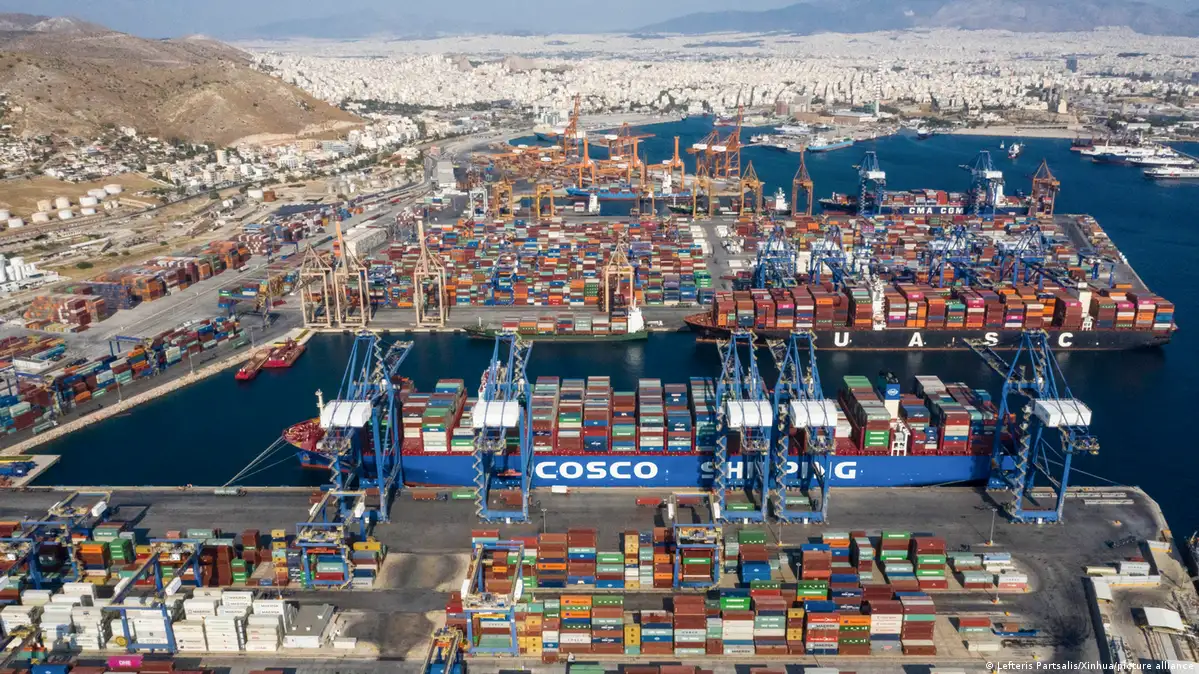
Background on the Piraeus Port and Its Current Management
Piraeus Port, located in southeastern Europe, is one of the largest and most significant ports on the continent. Its strategic position as a gateway to the Mediterranean Sea makes it a critical hub for global maritime trade. Serving as a container and passenger port, it facilitates numerous shipping routes connecting Europe, Asia, and Africa. The port’s importance is heightened by its advanced infrastructure, which includes extensive berthing spaces for large vessels and modern terminal facilities.
In 2016, amid Greece’s economic crisis, Piraeus Port was acquired by the Chinese state-owned shipping and logistics company, COSCO Shipping. This acquisition was part of a broader privatization effort by the Greek government aimed at stabilizing the economy. According to the terms of the deal, COSCO initially took over a 51% stake in the port’s management, with plans to increase ownership to 67% following the successful investment and operational improvements. This strategic investment has transformed Piraeus into one of the fastest-growing ports in Europe, reinforcing its role in international trade and logistics.
The impact of COSCO’s management on Greece’s economy is notable. The port has not only provided significant employment opportunities but has also attracted additional foreign investment. As a result, Piraeus has seen an increase in cargo traffic, solidifying its position as a pivotal transit point for goods destined for various European markets. Furthermore, the port’s expansion has initiated discussions surrounding its geopolitical significance, raising concerns about the influence wielded by a Chinese entity in critical infrastructure within the European Union. Ultimately, Piraeus Port continues to be a focal point in the nexus of global trade, economics, and international relations.
Recent Statements from U.S. Officials and the Chinese Response
In recent discussions surrounding the geopolitical dynamics at Piraeus Port, U.S. Ambassador Kimberly Guilfoyle has made several noteworthy remarks concerning the operations of the Chinese firm COSCO Shipping. Ambassador Guilfoyle emphasized that the United States holds significant interests in the Eastern Mediterranean and is highly vigilant regarding potential foreign influence over critical infrastructure. Her statements have sparked considerable discourse regarding the implications for U.S.-Greek relations, particularly as Greece balances its economic partnerships with both the United States and China.
The Ambassador articulated concerns that foreign investments, particularly those from China, may not align with the strategic priorities of the United States. By framing American interests as intertwined with the security of the region, Guilfoyle’s comments suggest a clear stance against potential dominance by foreign entities, particularly those controlled by the Chinese government. This position underscores the increasing complexity of international relations in the region, where economic interests often intersect with national security considerations.
In response to these comments, the Chinese embassy issued a statement reaffirming that the port is “not for sale” and criticized the implications of U.S. interference in Greek sovereignty. The Chinese government has expressed a commitment to furthering Sino-Greek relations, highlighting the investments made in Piraeus as part of the broader Belt and Road Initiative, which they argue contributes to Greece’s economic development and regional connectivity. The embassy’s response reflects a desire to maintain diplomatic relations while also signaling a firm stance against what they perceive as unwarranted foreign pressure.
The exchange illustrates the growing diplomatic tensions between the U.S. and China regarding Piraeus Port, with both nations keen on asserting their influence over this strategic maritime hub. As these discussions continue, it remains to be seen how they will shape the future of not only U.S.-Greek relations but also the broader geopolitical landscape in the Eastern Mediterranean.
Geopolitical Implications of the Piraeus Port Controversy
The Piraeus Port, situated in Greece, has emerged as a focal point of geopolitical contention, particularly between the United States and China. This strategic maritime hub not only serves as a critical gateway for goods entering Europe but also embodies the broader tensions that characterize global trade dynamics. China’s acquisition of a majority stake in Piraeus Port through the China Ocean Shipping Company (COSCO) has intensively raised concerns in Washington regarding the shifting balance of power in the region.
Control over key ports like Piraeus is increasingly recognized as vital for safeguarding international trade routes and ensuring economic resilience. The U.S. aims to bolster its presence in Greece, viewing the port as a critical asset in its strategy to counteract Russian influence in Europe. The Eastern Mediterranean has seen growing significance due to its energy resources, trade routes, and military positioning, making Piraeus a pivotal player in U.S. foreign policy initiatives.
From various perspectives, the ongoing controversy surrounding the port underscores a struggle for influence that could affect regional stability. On one hand, China’s investment in infrastructure is perceived as an opportunity for economic development in Greece, potentially leading to enhanced job creation and trade growth. Conversely, fears that such investments could lead to increased Chinese dominance in the region manifest concerns over economic dependency.
Furthermore, the outcomes of the current standoff may resonate beyond Greece and affect relations among NATO allies. Countries that feel the repercussions of diminished U.S. influence may reconsider their own alliances and trade partnerships. Thus, the Piraeus Port’s geopolitical significance extends beyond immediate economic implications, shaping the future of international relations in a multipolar world.
Looking Ahead: Future of the Piraeus Port and U.S.-China Relations
The future of Piraeus Port stands at a crucial intersection of geopolitical interests, particularly between the United States and China. As the world’s largest container port operated by Chinese state-owned enterprises, Piraeus has become a significant strategic asset in the broader context of international trade and regional influence. In the wake of growing tensions between these two world powers, various scenarios may unfold that will shape not only the port’s operations but also the broader dynamics of U.S.-China relations.
One potential direction is increased U.S. involvement in Greek ports beyond Piraeus. As Washington seeks to counter China’s influence, it may look to bolster its presence in the region, possibly through investments or partnerships in other ports along the Greek coastline. Such actions could serve to strengthen Greek economic interests while positioning the U.S. more favorably against China’s expanding footprint in the Mediterranean. This shift would likely be met with assertive responses from Beijing, aiming to maintain its competitive edge in Piraeus and beyond.
As these geopolitical currents evolve, the implications for diplomatic negotiations could be significant. The complexity of U.S.-China relations, strained further by economic rivalry and security concerns, means that any alteration in the operations at Piraeus could reverberate across the global stage. For Greece, balancing the interests of the two powers will remain critical. Ensuring sustainable economic growth while navigating these complex dynamics will necessitate careful diplomatic maneuvering and may impact Greece’s role within the European Union.
In conclusion, the outlook for Piraeus Port, amid the ongoing geopolitical shifts, presents both challenges and opportunities. Striking a balance between U.S. engagement and Chinese operations will be pivotal, and the future trajectory will undoubtedly influence not only the port’s role in global trade but also the viability of Greece’s economic pursuits in a multipolar world.

