


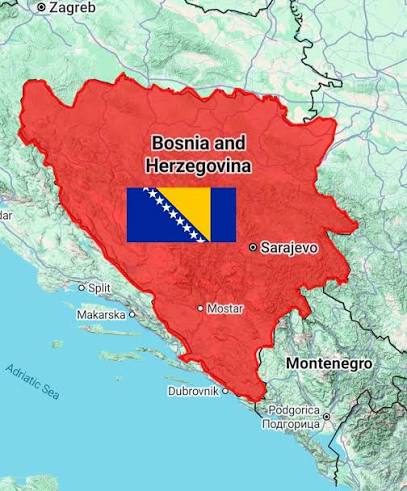
Understanding the Institutional Crisis in Bosnia and Herzegovina
Bosnia and Herzegovina (BiH) is currently grappling with a profound institutional crisis, marked by ongoing political instability and divisive ethnic tensions. At the heart of this crisis are the internal divisions that have historically plagued the nation, resulting in a fragmented political landscape. These divisions are particularly pronounced in the entity of Republika Srpska, where certain political leaders have consistently challenged the authority of the central government, undermining efforts for cohesive governance.
The challenges facing BiH extend beyond mere territorial disputes; they critically impact the nation’s governance framework and overall stability. Public opinion indicates a strong desire for EU integration and support for development initiatives. Despite this, the actions of some political leaders appear aimed at obstructing these pathways, fostering an atmosphere of institutional chaos. This resistance to reform is often rooted in a broader strategy to maintain power and control within their respective constituencies, which in turn exacerbates the crisis.
The implications of this ongoing institutional crisis are significant. The challenges to the constitutional order and the rule of law threaten not only the effectiveness of state institutions but also the prospects for long-term peace and stability. The continuous struggle for power among various political factions leads to repeated institutional deadlocks, hindering progress on critical reforms that are essential for the country’s EU accession process.
Moreover, as certain leaders perpetuate a narrative that emphasizes division and discord, the potential for inclusive national dialogue diminishes. For BiH to navigate the complexities of its political landscape successfully, it must confront the underlying issues contributing to this institutional crisis and strive for unity in its governance approach.
NATO Membership: A Legal Obligation and Strategic Goal
NATO membership represents both a legal obligation and a strategic objective for Bosnia and Herzegovina (BiH). This dual role arises from the country’s aspiration for stability, security, and integration into Euro-Atlantic structures. Fundamentally, the legal commitment to pursue NATO membership is articulated in various national laws and strategic documents, echoing BiH’s dedication to international cooperation and defense.
Currently, BiH participates in NATO’s Membership Action Plan (MAP), a program aimed at assisting aspiring members in preparing for future accession. This participation underscores the country’s ongoing commitment to meeting the necessary criteria for NATO membership, which encompasses political, military, economic, and defense reforms. BiH’s involvement in the MAP is not merely symbolic; it necessitates significant domestic changes aimed at enhancing institutional capacity, improving security frameworks, and fostering regional stability.
The strategic implications of NATO membership extend far beyond mere military alignment. By integrating with NATO, BiH aims to bolster its national security while reinforcing institutional integrity and resilience against regional challenges. Such integration also serves to enhance the overall geopolitical stability of the Western Balkans, a region historically fraught with tension and conflict. As BiH navigates the complexities of its international obligations, its aspirations for NATO membership reflect a broader desire for defense partnerships that promote peace and cooperation.
Moreover, achieving NATO membership is indicative of a broader democratic commitment and alignment with Western values and standards. As BiH continues to enact necessary reforms and build consensus among its political entities regarding NATO’s role, it shapes not only its future but also contributes to the stability and security of the region.
The Office of the High Representative and Its Importance
The Office of the High Representative (OHR) serves as a crucial institution in safeguarding the principles established by the Dayton Peace Agreement, which has been instrumental in maintaining peace in Bosnia and Herzegovina (BiH). The OHR primarily oversees the implementation of the peace agreement and works to ensure that the political environment remains conducive to stability and democracy. This role is of paramount importance given the complex ethnic and political landscape of BiH.
Recently, various factions within the country have sought to undermine the authority of the OHR. Efforts to diminish the High Representative’s powers or question its legitimacy have emerged, raising concerns about the future of constitutional stability. Moreover, such actions pose a direct threat to the peace that has been established since the 1990s. Any instability generated by these challenges can lead to an erosion of public trust in governmental institutions and can potentially rekindle ethnic tensions.
Thus, there is an urgent need for a new High Representative who can effectively navigate these political challenges while reinforcing the OHR’s mandate. This new representative must promote dialogue among the various ethnic communities to create a collective investment in the political process. Furthermore, enhancing the European Union’s oversight roles is essential. With the EU’s robust diplomatic presence, it can offer critical support for BiH in adhering to its constitutional framework and moving towards deeper integration with Europe.
Strengthening the OHR, alongside the EU’s support, will not only help in maintaining peace but also in ensuring that BiH progresses toward long-term stability and democratic governance. A collaborative approach among local leaders, the OHR, and EU representatives is necessary to combat ongoing challenges and to foster an environment conducive to reconciliation and development.
Governance Challenges: Combatting Corruption and Building Accountability
The political landscape of Bosnia and Herzegovina is notably marked by significant governance challenges, particularly in the realms of corruption and accountability. Corruption remains a pervasive issue that undermines public trust and hinders effective governance. The politicization of public institutions has resulted in a system where mutual benefit among political networks often takes precedence over the collective good. The misuse of public resources for personal gain not only erodes democratic ideals but also damages economic stability and growth, exacerbating societal inequalities.
Political networks in Bosnia and Herzegovina have been reported to prioritize loyalty over expertise, leading to ineffective governance and an erosion of professional standards within public institutions. As a result, entities that are meant to serve the public interest become channels for political patronage. This dynamic hampers the delivery of essential public services and engenders a culture of mistrust, where citizens feel disempowered and disconnected from their government.
To address these challenges, a comprehensive approach to reform is imperative. Enhancing institutional independence is crucial to regaining public confidence and ensuring transparency in government action. Institutions must operate without undue influence from entrenched political entities, allowing them to fulfill their mandates effectively. Additionally, international cooperation can play a pivotal role in restoring financial integrity. By engaging with international organizations and stakeholders, Bosnia and Herzegovina can align its governance frameworks with international standards and practices that prioritize accountability.
Ultimately, combatting corruption and fostering accountability requires not only systemic reforms but also a commitment from all political players to foster a culture of transparency and ethical governance. Initiatives that promote civic engagement and public oversight can enhance the democratic process and contribute to building a resilient political environment that prioritizes the needs of its citizens.


